
Social Leverage: Transforming Electrical Engineering Education via Web 2.0 and Social Networks
Enhancing students' activity in electrical engineering through Web and social networks
The paper introduces a hybrid e-learning framework for Electrical Engineering that integrates institutional Learning Management Systems (LMS) with thematic Web-thesauri and social networks (Facebook). Conducted over three years at Tallinn University of Technology, the study demonstrates that decentralized learning content significantly boosts student engagement and academic performance.
TL;DR
Higher education in engineering is facing a pedagogical crisis—traditional Learning Management Systems (LMS) are too rigid for the "Net-Gen" student. This paper details a three-year longitudinal study at Tallinn University of Technology that breaks the "black box" of the classroom by integrating Facebook and interactive Web-thesauri into the curriculum. The result? A measurable boost in participation and a permanent upward trend in quiz scores.
The Problem: The "Reporting" Trap of Institutional LMS
For decades, universities have relied on systems like Moodle or WebCT. While effective for administration (attendance, grades), these systems often fail to:
- Foster Content Creation: They are top-down repositories rather than collaborative spaces.
- Adapt to Learning Styles: They don't account for the fact that some students thrive on visual data while others prefer mathematical models.
- Engage "Digital Natives": Traditional lectures often feel disconnected from the "wired" reality of modern students.
The authors argue that to fix this, we must shift from a time-based education model (attending X hours) to an achievement-based model (mastering Y objectives).
Methodology: A Three-Pillar Approach
The study restructured three core disciplines: Electronics, Power Electronics, and Electric Drives. The intervention was built on three technical pillars:
1. The 20/80 Content Split
The curriculum was divided into a Mandatory Layer (the 20% essentials required for basic competency) and an Optional Layer (the 80% consisting of simulations, calculations, and advanced assessments). This allowed students to voluntarily navigate their own educational depth.
2. Interactive Concept Mapping (Thesauri)
To overcome the barrier between abstract theory and practical application, the authors built hierarchical thesauri. Unlike Wikipedia, these tools use "Parent/Kid" relationships to show how concepts like Rectifiers or Inverters relate to the broader field.
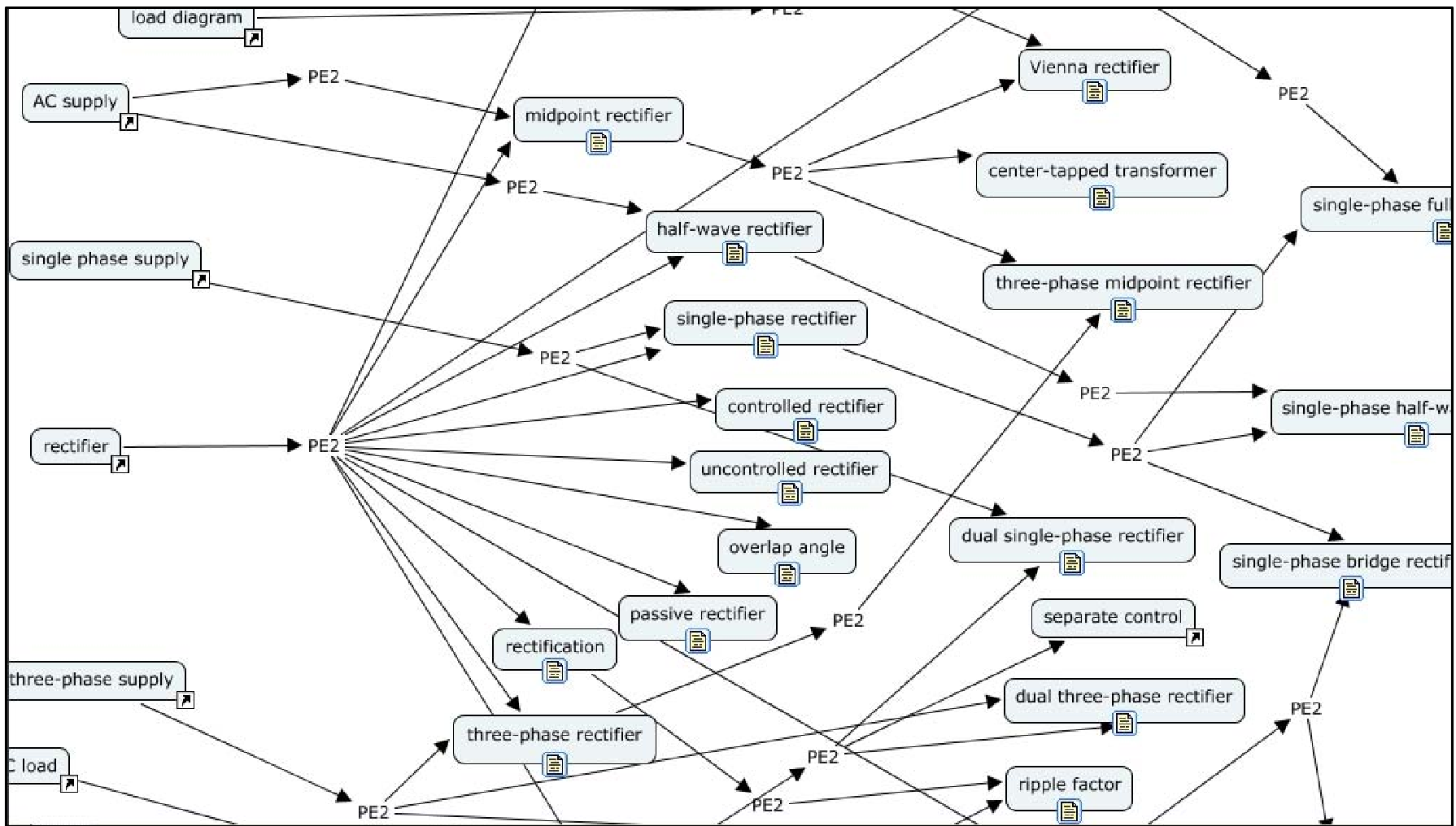 Figure: A fragment of the thesaurus shown as a concept map, illustrating the semantic relationships between engineering components.
3. The Facebook LCMS
Perhaps the most radical move was moving parts of the Electric Drives course to Facebook. This provided:
- Informal Communication: Real-time comments on quiz "bugs" and errors.
- Social Pressure/Motivation: Publicly shared weekly ratings and top-bug lists.
- Multimedia Integration: Easy sharing of lab videos and circuit traces.
Experimental Results: Proving the Hype
The data suggests that social networking acts as a "gateway" for students who typically struggle with formal systems.
- Engagement: As shown in the attendance trends, the shift to active learning helped maintain high engagement throughout the semester.
- Quiz Performance: Unlike the standard Web-based LMS, which saw a slump in scores mid-semester, the Facebook-integrated course showed consistent growth in average quiz scores.
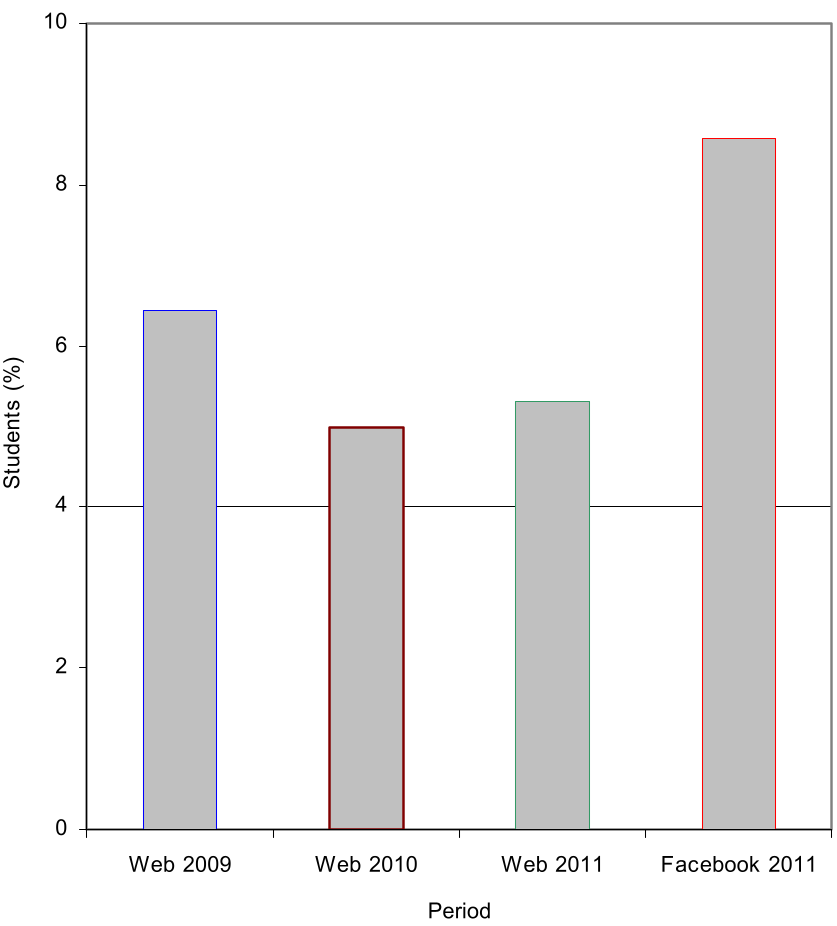 Figure: The comparison of average quiz scores reveals that social networking helps maintain a positive learning trajectory.
Furthermore, the number of students who succeeded via self-assessment (meaning they earned a high enough rating during the semester to skip the final exam) was highest in the course using social media tools.
Critical Analysis & Takeaways
The core insight here is that intervention alone does not create motivation, but it provides the infrastructure for it to thrive.
- Why it works: By moving education to a space where students already spend their time (Facebook), the "activation energy" required to start studying is lowered. The social aspect adds an layer of peer-to-peer accountability that an institutional portal cannot replicate.
- Limitations: In high-risk areas like Electric Drives (involving high voltage), self-learning has physical risks. The authors mitigated this with virtual labs, but the manual "hand-on" requirement remains a challenge for pure digital scaling.
- Future Outlook: While this study used Facebook, the principles of decentralized, collaborative knowledge generation can now be applied to modern platforms like Discord or AI-driven study groups.
Final Thought: If you want to engage the next generation of engineers, stop treating your LMS as a filing cabinet and start treating it as a social network.