
Intelligent Irrigation: Scaling Precision Agriculture with Ensemble Learning and IoT
An Ensemble Learning Model for Agricultural Irrigation Prediction
This paper presents a robust agricultural irrigation prediction model integrated into a LoRa-based IoT system. The core approach utilizes an ensemble learning framework, combining multiple weak learners via Stacked Generalization and Adaptive Boosting (AdaBoost) to accurately forecast daily watering volumes for organic crops.
TL;DR
The transition from human intuition to data-driven decision-making in agriculture is often hindered by small datasets and environmental noise. This paper introduces an Ensemble Learning Irrigation Model that combines the strengths of various algorithms (SVR, SVC, RF, and AdaBoost DT) through a two-stage Stacked Generalization framework. Integrated into a LoRa P2P IoT system, it predicts organic crop watering volumes with high accuracy and low system latency.
Problem & Motivation: The "Small Data" Challenge in the Field
In modern organic farming, irrigation is the most critical yet hardest-to-quantify variable. While IoT sensors can track soil moisture and temperature, translating that raw data into a precise "number of seconds" for a water valve is complex.
The authors identified two primary hurdles:
- Data Scarcity: Unlike industrial datasets, agricultural cycles are slow, resulting in insufficient data for a single "strong" deep learning model.
- Environmental Noise: Man-made deviations (sensor placement, manual overrides) create inconsistencies that "weak" individual classifiers cannot handle, often leading to extreme outliers.
Methodology: The Power of the Ensemble
To solve the limitations of individual algorithms, the researchers adopted Ensemble Learning—a paradigm where multiple learners are trained to solve the same problem.
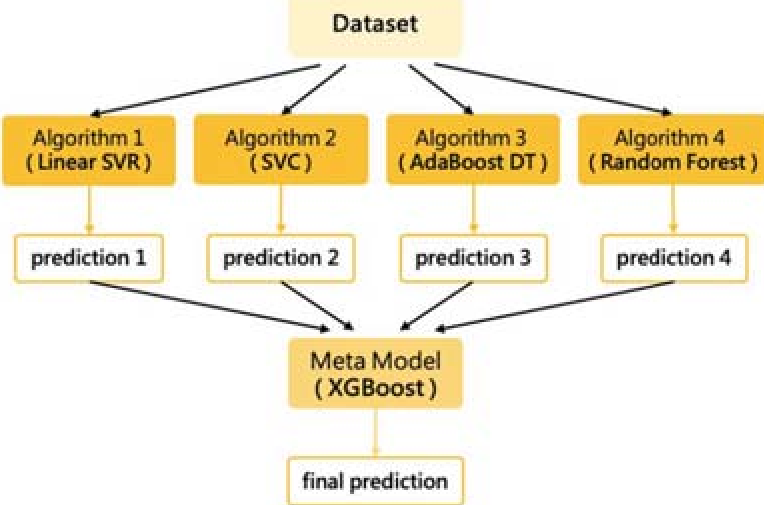
1. Two-Stage Stacked Generalization
The architecture functions like a specialized committee:
- Stage 1 (Base Learners): Diversified models including Linear SVR (Regression), SVC (Classification), Random Forest, and Decision Trees are trained.
- Adaptive Boosting (AdaBoost): Used specifically to "strengthen" the Decision Tree by focusing on previously misclassified samples.
- Stage 2 (Meta-Learner): Predictions from Stage 1 are fed into an XGBoost model. This meta-model learns which base learners are most reliable under specific environmental conditions (e.g., high light intensity vs. high soil temperature).
2. IoT System Optimization
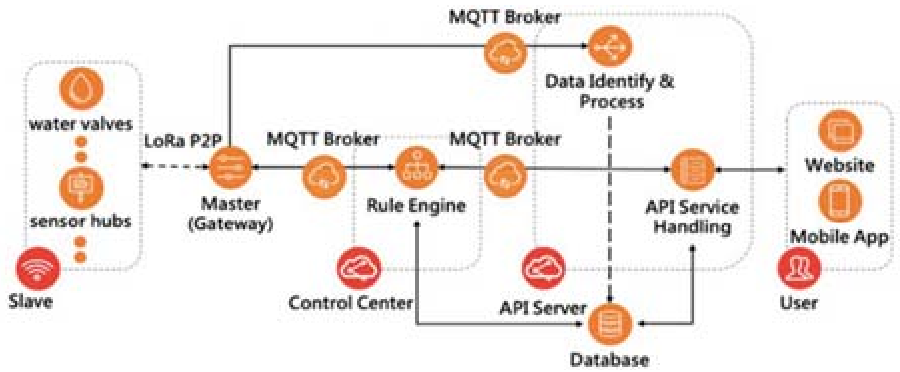
The paper provides a brilliant Insight into system engineering. Recognizing that running complex Python models on-demand caused a 35-second lag in the mobile app, the authors decoupled the prediction logic. By implementing a Python Process Scheduler, predictions are pre-calculated and cached, slashing the user's wait time to under 5 seconds.
Experiments & SOTA Results
The model was validated on an organic vegetable farm in Hsinchu, Taiwan across 13 greenhouses.
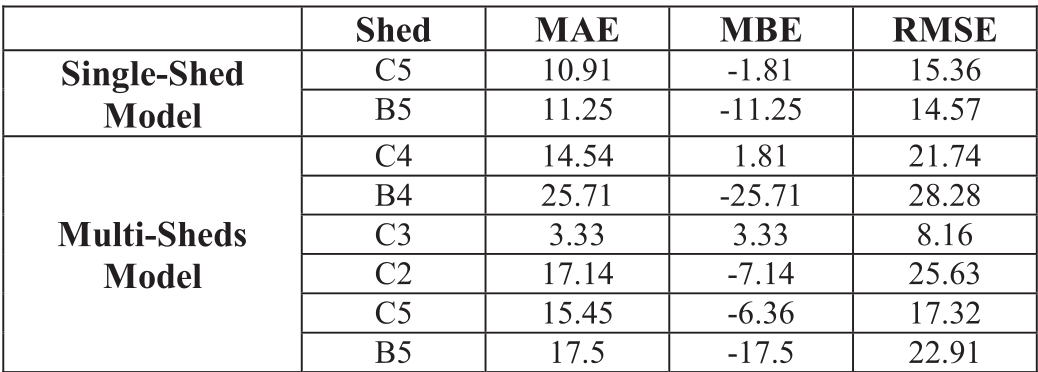
- Single-Shed Strategy: Models trained for specific greenhouses achieved the best results (MAE ~10.9s), proving that local micro-climates matter significantly in irrigation.
- Multi-Shed Strategy: A generalized model across all sheds remained highly functional (MAE ~15.4s), offering a balance between ease of deployment and accuracy.
The researchers used RMSE (Root Mean Square Error) and MBE (Mean Bias Error) to ensure the model didn't just guess averages but followed the actual physiological needs of the plants.
Critical Analysis & Future Outlook
The beauty of this work lies in its Inductive Bias—the choice to favor classification over regression. Since irrigation systems often operate in discretized steps (e.g., 60s, 90s, 120s), treating the problem as a classification task effectively "tamed" the outliers that traditional regression models produced.
Limitations: Currently, the model focuses on morning irrigation. In extreme heat, farmers often perform "cooling" irrigation in the evening. Future iterations will need to account for these multi-modal watering patterns.
Takeaway: For technical leaders, this paper is a masterclass in System-Model Co-design. By optimizing both the ensemble mathematics and the backend process scheduling, the authors created a tool that is not only accurate but actually usable by farmers in the field.