
The Invisible Architects: Entanglements of Gender and Power in IT Design
Entanglements of participation, gender, power and knowledge in IT design
This paper explores how participation in IT design is inextricably linked with gender, power, and knowledge within a Swedish government agency. Utilizing feminist technoscience and agential realism, the author analyzes an ethnographic study of a business process analysis project, ultimately arguing that broadening the definition of IT design reveals women as central, albeit marginalized, participants.
TL;DR
Is IT design merely about writing code, or is it about dreaming of a shared future? This paper investigates a Swedish government IT project to reveal how participation is not just a seat at the table, but a complex entanglement of gender, power, and knowledge. By broadening the definition of design, the author makes visible the critical role of women in shaping technology, while exposing how organizational shifts can simultaneously marginalize their expertise.
Background Positioning
In the landscape of Participatory Design (PD), this work is a critical theoretical intervention. It moves beyond the binary of "designer vs. user" to explore how sociomaterial practices—definitions, boundaries, and project goals—create the very subjects who are allowed to participate. It challenges the "woman-in-IT" deficit model by showing that women are already there; we just aren't looking at them through a wide enough lens.
The Core Problem: The Myth of Absence
The paper identifies a paradox: while statistics often show an absence of women in IT (the "narrow" definition of programmers and architects), ethnographic reality shows women-dominated professions—nurses, librarians, and administrative officers—shaping IT systems daily.
The author argues that the "existing" system is never innocent. Those who "dream" of the future technology do so from a specific standpoint. When we fail to recognize administrative work as part of the design process, we effectively erase the contribution of female experts.
Methodology: Agential Realism in the Project Room
The author spent six months as a participant-observer at a Swedish government agency (TGA). The "actors" analyzed weren't just the humans, but also:
- Organizational Boundaries: The rigid wall between "Business" and "IT."
- Project Objectives: The shift from "Supporting Workers" to "Automation/Rationalization."
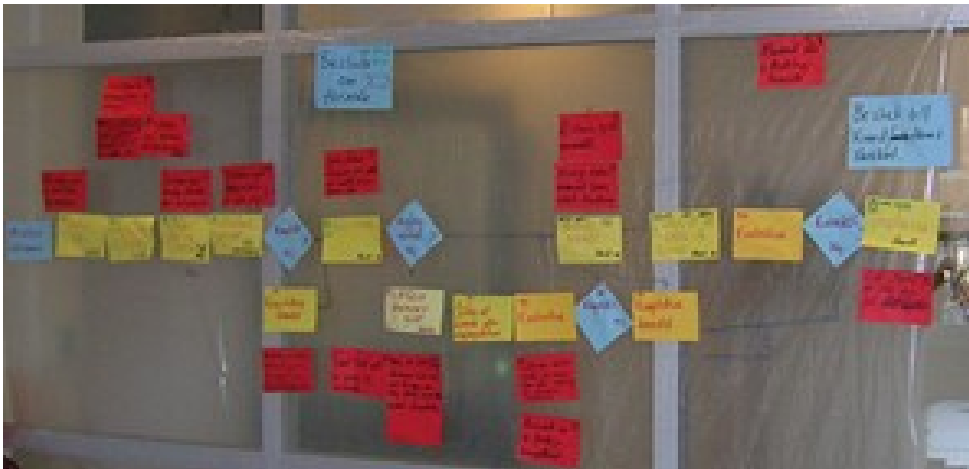
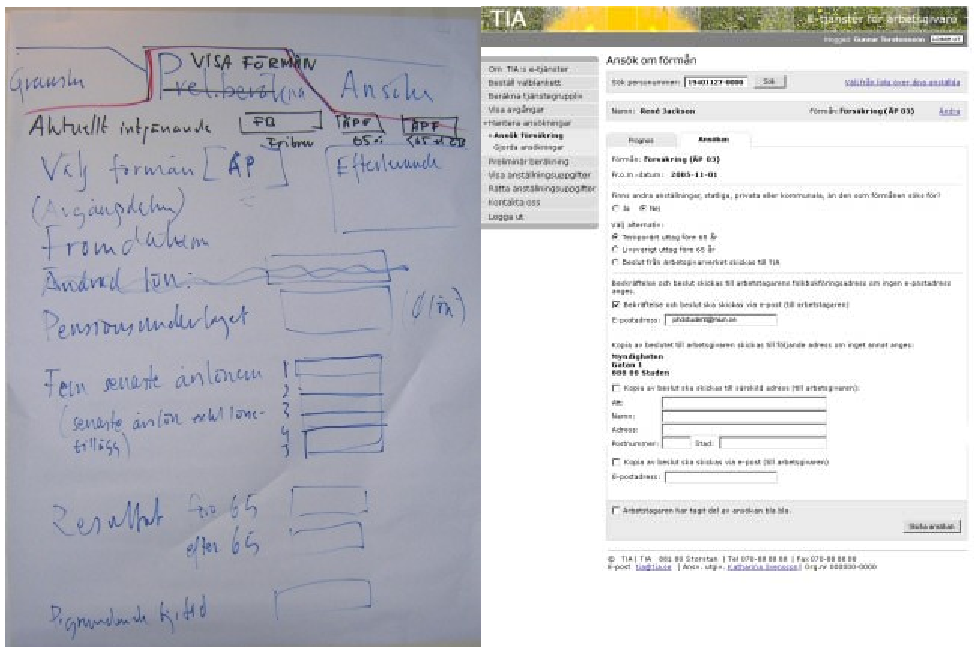
- Sociomaterial Practices: The physical process maps and GUI sketches used in meetings.
The Architecture of Design
The business analysts (mostly women) used physical maps and prototypes to visualize the flow of work.
Critical Insight: Knowledge as a Double-Edged Sword
The most striking finding involves the reconfiguration of knowledge.
- Phase A (Support focus): Administrative officers are "experts." Their knowledge of the current system is the gold standard. They are seen as central participants.
- Phase B (Automation focus): As the goal shifts to replacing labor with automated awarding, the officers' knowledge is reframed. Suddenly, "knowing the system too well" is treated as being "locked in" or unable to innovate.
The dialogue in the paper reveals a chilling moment: the administrative officers describe their own expertise as a "problem" because they "think from the current functionality." This demonstrates how power works through discourse to delegitimize female knowers the moment their interests conflict with "rationalization."
Critical Analysis & Conclusion
Takeaways
- Participation is Fluid: It is not a fixed status but something "enacted" in every meeting and document.
- The Gender of Innovation: Innovation in this context was mythologized as a "rejection of the past." Since the women represented "the past" (the current system), they were excluded from the "future" (the innovation).
Limitations & Future Work
The study is deeply situated in a specific Swedish cultural and bureaucratic context (eGovernment). While the theoretical framework of agential realism is powerful, future research could explore if these power-knowledge entanglements manifest differently in private-sector "Agile" environments where roles are supposedly more fluid.
Final Thought: To build sustainable technology, we must "live with fuzziness." We must refuse the narrow definitions that exclude voices and instead embrace the contradictions and tensions that come from involving a multiplicity of realities.