
The Human Bottleneck: Why Managers Struggle with Enterprise Social Networks
Enterprise Social Networks from a Manager's Perspective
This paper presents a qualitative case study investigating the integration of Enterprise Social Networks (ESN) from a managerial perspective. By conducting interviews with 15 managers at a major financial services provider, the authors identify 19 obstructing factors categorized into three competence components: Knowledge, Skills, and Attitudes.
TL;DR
Deploying an Enterprise Social Network (ESN) like Yammer or Jive isn't just a technical upgrade—it's a pedagogical challenge. This study identifies 19 "obstructing factors" that prevent managers from embracing ESNs, ranging from the fear of information cemeteries to the psychological discomfort of radical transparency. By categorizing these barriers into Knowledge, Skills, and Attitudes, the research provides a roadmap for turning skeptical managers into digital role models.
Background: The Role Model Reflex
In the world of corporate digital transformation, managers act as "multipliers." If a manager treats an ESN as a distraction, the staff follows suit. This paper argues that ESN success is tied to a "didactic perspective"—viewing implementation as a learning process where managers must evolve from top-down controllers to "primus inter pares" (first among equals) facilitators.
The Core Friction: What’s Stopping Them?
The authors interviewed 15 managers at a global financial services provider to uncover the "interference factors" blocking this evolution. They found that the friction isn't just "not knowing how to click buttons"; it's a structural and psychological resistance.
1. Methodology: The Competence Framework
The researchers used a three-tier model to categorize why managers resist ESNs:
- Knowledge: Missing professional or methodological expertise (e.g., "I can't find information in this structure").
- Skills: Lack of consolidated action patterns (e.g., "I don't have time to coordinate five different communication channels").
- Attitudes: Deep-seated values and resistance to change (e.g., "Knowledge is power; why should I share it publicly?").
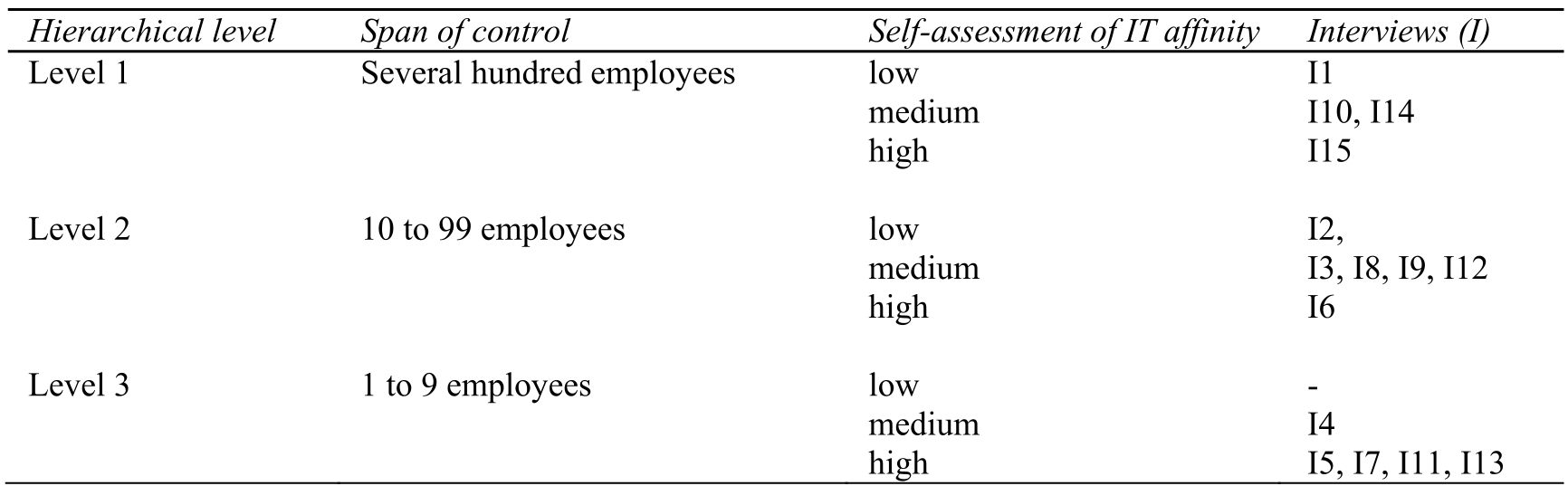 The study gathered perspectives across three levels of management to ensure a holistic view of the hierarchy.
Key Findings: The 19 Blockades
The study’s most valuable contribution is the taxonomy of resistance.
The Knowledge Gap
Managers feared that ESNs would become "data cemeteries" where relevant information is lost in the noise. There was significant skepticism about ESNs replacing existing tools like email, leading to a "fear of missing out" on critical information cascades if they didn't check every channel.
The Skill Deficiency
"Expenditure of time" was a dominant theme. Managers viewed ESNs as additional work rather than a new way of working. They struggled with the "context loss"—reading a post and not knowing how to interpret the sender's intent.
The Attitude Barrier
This is the hardest to change. Factors included:
- Hierarchy Protection: Dislike of "skipping" levels where subordinates talk directly to senior leaders.
- Public Display Rejection: Managers felt "scared" by the transparency and the pressure to take a public stand on controversial topics.
- Knowledge Secrecy: A persistent culture of treating expertise as "arcane knowledge" to be guarded.
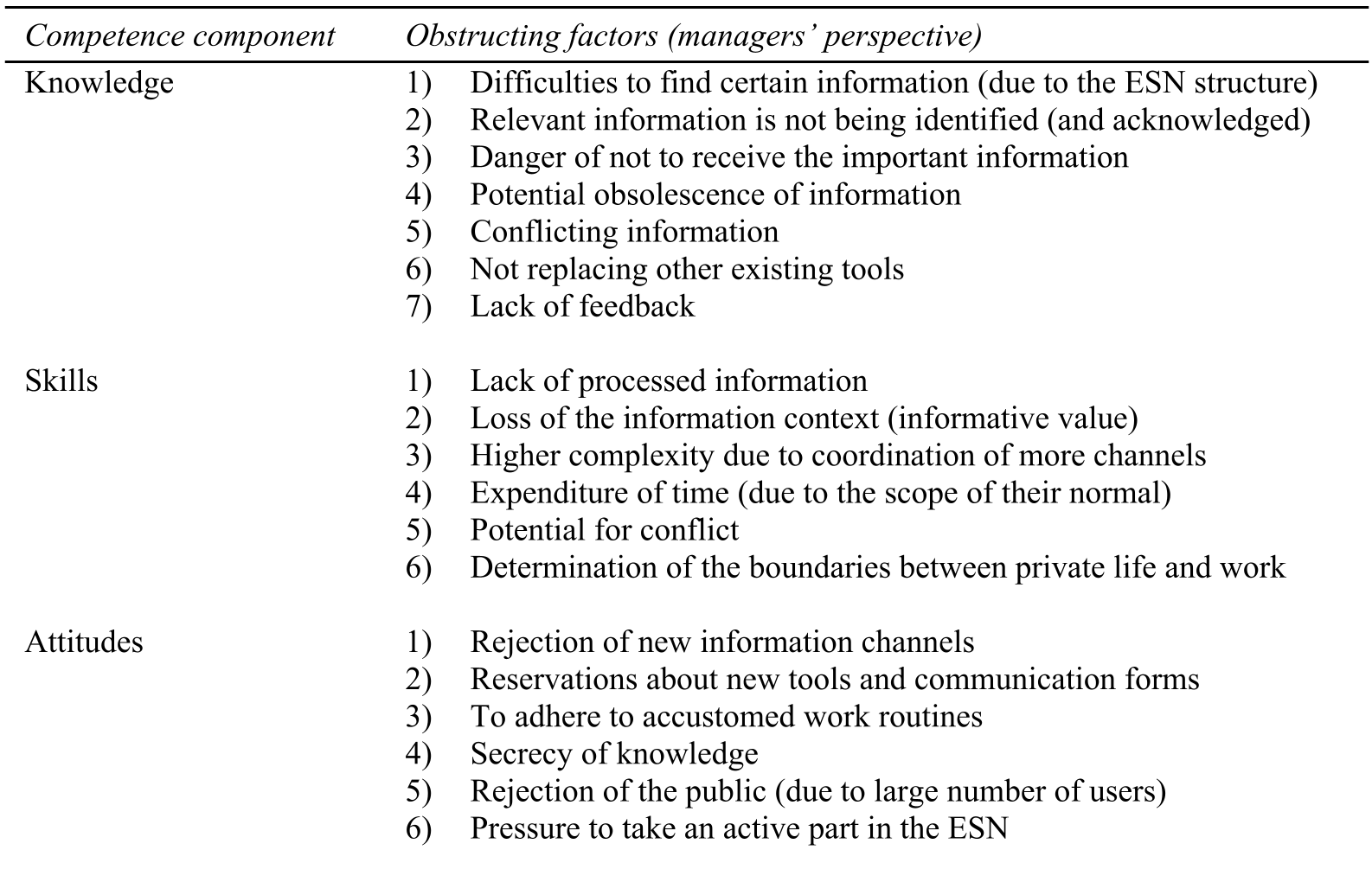 The 19 factors clearly show that as we move from Knowledge to Attitudes, the complexity of the "unlearning" required increases significantly.
Critical Insight: Education vs. Experience
The paper makes a crucial distinction in its discussion:
- Knowledge barriers can be solved with training and workshops (explaining tags, following, and search).
- Skill barriers require coaching and strategy exercises (how to integrate ESN into a daily routine).
- Attitude barriers can ONLY be solved through positive personal experience. You cannot "teach" someone to value transparency; they have to see a project succeed because of it.
Conclusion & Future Outlook
The study concludes that ESN implementation is failing because we treat it as an IT project rather than a "Competence Development" project.
Takeaway for Organizations:
- Stop focusing purely on "Ease of Use." Focus on "Benefit of Use."
- Target managers first. If they don't develop the attitude for networking, the skills and knowledge of the staff will remain underutilized.
- Bridge the "Time Expenditure" gap by officially recognizing ESN activity as "real work," not a peripheral hobby.
Limitations: As a single case study in the financial sector, the specific cultural resistance (like secrecy) might be higher than in tech startups. Future research should investigate if these 19 factors hold true in more "agile" industries.