
Beyond Likes: How Entrepreneurs Truly Use Online Networks
Questions, inspiration, feedback, and contributions: how entrepreneurs network online
This paper investigates the adoption of social networking sites by entrepreneurs for business purposes via a multi-method study (surveys, interviews, and focus groups). It reveals how small business owners leverage platforms like Facebook, LinkedIn, and specialized forums for "networking beyond existing circles," marking a departure from typical personal social media usage.
TL;DR
This study explores the transition of social media from a "digital diary" to a "business engine" for entrepreneurs. Unlike typical social media users who use platforms to talk to current friends, entrepreneurs use them as a "Super-Network" to find strangers, hunt for expert facts, and even host their entire business infrastructure. Despite high engagement, the study highlights a gap: social networking is great for inspiration, but still struggles to convert into cold, hard cash for the majority.
The "Friendship" Trap vs. The Professional Reality
In the early 2010s, the academic consensus on social media (like Facebook) was that it served as a digital "reification" of offline life—you added people you already knew.
However, Nylander and Rudström’s research uncovers a fundamental shift in Inductive Bias when the user is an entrepreneur. For a business owner, a network of people you already know is a redundant network. To grow, you need "weak ties"—access to people outside your current bubble. The study finds that entrepreneurs are the first group to use social media specifically to break the "echo chamber" of existing friendships.
Methodology: Peering into the Swedish "Early Adopters"
The researchers focused on Sweden, a high-Internet-maturity market, to predict global trends. They analyzed four types of digital spaces:
- News sites with forums: For domain-specific Q&A.
- Pure Communities: Like driftig.nu, focused on peer exchange.
- Facebook Groups: Leveraging "Likes" as a low-cost promotion.
- LinkedIn: Used primarily as a "Living Address Book."
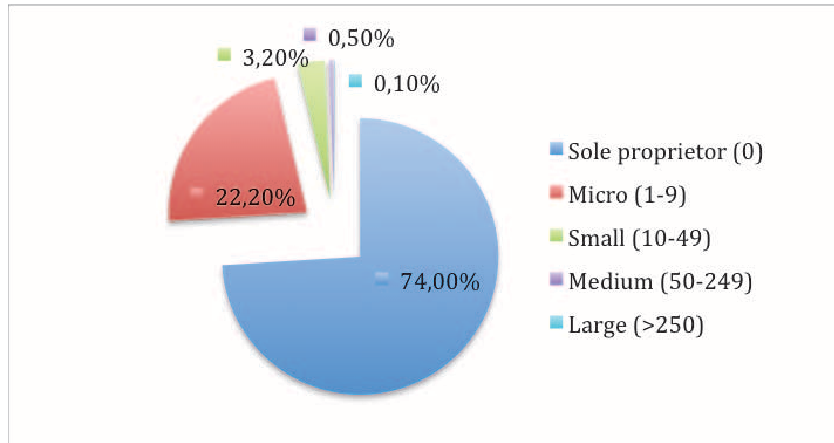 The study primarily targets the 'Sole Proprietor' and 'Micro-Business' segments (1-10 employees), who are the most active and vulnerable in the digital ecosystem.
Key Insights: Why It Works (and Why It Doesn't)
1. The Fact-Finding Mission
Entrepreneurs use forums for highly specific technical questions (e.g., "Does the law require a certified accountant?"). Interestingly, the study found the community itself often couldn't answer these—forcing sites to bring in "associated experts." This highlights a limit to Crowdsourced Wisdom: while social networks are great for inspiration, they are often insufficient for specialized legal/financial facts.
2. Facebook as a "Web Hotel"
A standout observation is the emergence of Facebook as a "Web Hotel." For a one-person business (like a jewelry maker), a Facebook page provides:
- Latency-free hosting (no need for an ISP).
- Built-in CMS (storing product photos and updates).
- Asynchronous Support (the ability to respond to customers on the go).
3. The "Inspiration" vs. "Income" Gap
The data reveals a striking irony:
- 71% of users report "New Contacts" as a major benefit.
- 64% report getting "New Ideas and Inspiration."
- Only 33% actually generated frequent business or customers.
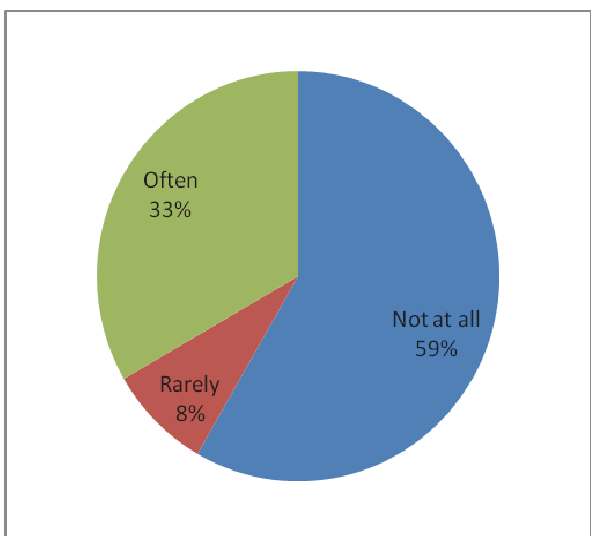 The majority of entrepreneurs are "Networking" but not "Transacting."
Critical Analysis: The Power of Informality
The authors argue that the current value of these sites lies in their Informal Status. Because social media wasn't yet "incorporated in traditional work routines," it offered:
- Lower friction: You can ask a "dumb" question without corporate oversight.
- Direct access: Twitter and LinkedIn act as "networks of networks," allowing a junior founder to reach a senior CEO through a single "retweet" or "connection."
However, the study notes a "Spam Problem." As the barrier to entry drops, promotion-heavy posts can create a "spammy look," drowning out the high-quality Sharing of Experience that entrepreneurs actually value.
Conclusion & Future Outlook
This paper serves as a vital snapshot of the "Micro-Business Digitization" era. It concludes that while the technology bridges physical distance, the Social Capital is still building. The future of these platforms depends on moving beyond "Self-Marketing" and fostering deeper, moderated spaces for real experience sharing—protecting users from "idea theft" while encouraging collective growth.
Takeaway for Practitioners: If you represent a small business, don't just use social media to post "Ads." Use it as a "Super-Address Book" to hunt for the expert knowledge and weak ties that your offline life cannot provide.