
Data-X: Revolutionizing STEM Education with an Entrepreneurial Edge
Applying entrepreneurial teaching methods to advanced technical STEM courses Data-X as a Framework for Introducing Innovation Behaviour into Applied Technical Subjects
The paper introduces Data-X, a novel pedagogical framework that integrates the Berkeley Method of Entrepreneurship (BMoE) into advanced technical STEM subjects like Data Science and AI. It shifts the focus from purely theoretical, deductive teaching to an inductive, project-based approach that emphasizes real-world problem-solving and entrepreneurial mindsets.
TL;DR
Researchers at UC Berkeley have developed Data-X, a pedagogical framework that fixes the "siloed" nature of traditional STEM education by applying the Berkeley Method of Entrepreneurship (BMoE) to AI and Data Science. Instead of just learning algorithms, students learn to build entire systems through a narrative-driven, agile process supported by an external mentor ecosystem.
Problem & Motivation: The "Golf" Analogy of Modern Education
The authors argue that current STEM education is fundamentally flawed. In most technical courses, students are taught specialized components in isolation—much like teaching a student how to place a golf ball in Year 1 and the theory of a swing in Year 2, but never actually letting them play a round of golf.
By the time students graduate, they may have deep theoretical knowledge of an algorithm (like Stochastic Gradient Descent) but lack the holistic perspective to:
- Frame an open-ended problem.
- Work in a diverse, cross-disciplinary team.
- Communicate technical value through storytelling.
- Adapt to changing requirements using agile methodologies.
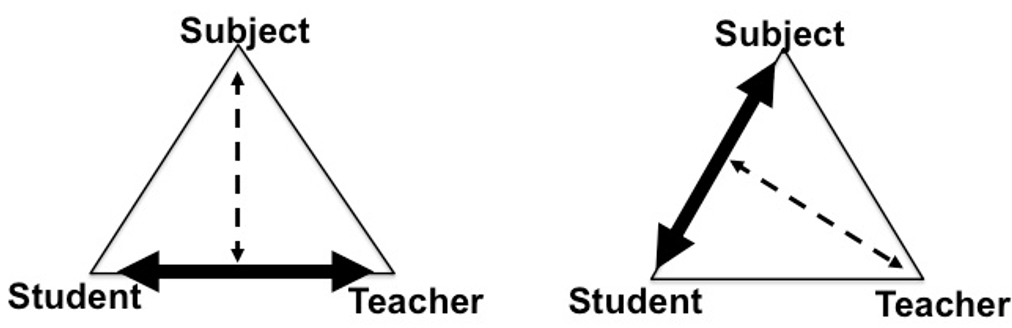
The motivation behind Data-X is to move from deductive teaching (teacher as the source of truth) to inductive learning (the subject/problem as the teacher), as illustrated by the shift in the "Didactic Triangle."
Methodology: The Data-X Framework
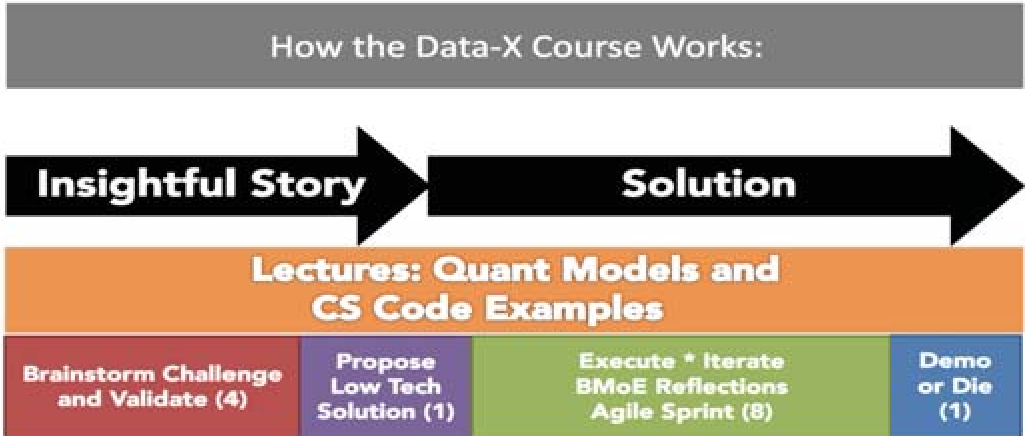
The core of Data-X is a semester-long project that emphasizes building a functioning system over re-creating standard library algorithms. The methodology rests on several pillars:
1. Narrative-Driven Implementation
Before a single line of code is written, teams spend four weeks developing a "story." This culminates in a low-tech demo—a verbal and visual road-map outlining objectives, user interfaces, and technical risks.
2. Breadth Over Depth: Systems Architecture
Rather than obsessing over the mathematical proof of every algorithm, Data-X prioritizes System Architecture. Students learn to navigate the state-of-the-art open-source stack (Tensorflow, Scikit-learn, etc.) to understand how different components connect to solve a specific challenge.
3. The Innovation Ecosystem
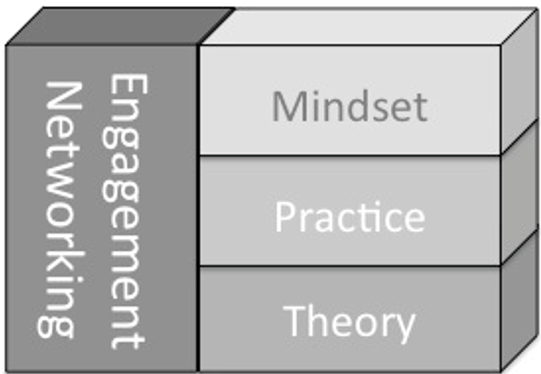
A critical element borrowed from entrepreneurship is Network Engagement. Students are not just evaluated by professors but are guided by a network of CEOs, venture capitalists, and industry experts.
Experiments & Results: Real-World Impact
The Data-X framework was tested over three semesters at UC Berkeley. The results were not just academic; they were entrepreneurial:
- Venture Output: Many student projects received offers for venture backing or were submitted for academic publication.
- Skill Transfer: Testimonials from students indicated that after taking the class, they arrived at internships already proficient in the "tech stack" used by major technology firms.
- Scale: Enrollment doubled within semesters solely through word-of-mouth.
Key Comparison: Traditional vs. Data-X
| Feature | Traditional STEM Course | Data-X Framework |
|---|---|---|
| Learning Style | Deductive (Transfer-focused) | Inductive (Subject-focused) |
| Problem Type | "Cookie-cutter" assignments | Open-ended real-world problems |
| Interaction | Siloed individual work | Diverse, cross-disciplinary teams |
| Goal | Technical Precision | Resource Allocation & Effectiveness |
Critical Analysis & Conclusion
The success of Data-X suggests that behavioral training and system-level thinking are just as important as mathematical rigor in modern STEM. By forcing students to "play the game" of innovation, the framework bridges the gap between the classroom and the workforce.
Limitations: Implementing Data-X requires a massive overhead in terms of maintaining an expert mentor network and managing the high levels of uncertainty inherent in open-ended projects.
Future Outlook: As AI continues to automate the "coding" of standard algorithms, the value of a human engineer will shift toward innovation behavior—ideation, stakeholder management, and the ability to integrate complex systems. Data-X provides the roadmap for this educational evolution.