
Entropy-Driven Security: Defending SDN-Cloud Social Networks Against DDoS
Entropy based Defensive Mechanism against DDoS Attack in SDN-Cloud enabled Online Social Networks
The paper proposes an entropy-based defensive mechanism to detect and mitigate Distributed Denial of Service (DDoS) attacks in SDN-Cloud enabled Online Social Networks (OSNs). By utilizing a POX controller and Shannon entropy calculations, the system identifies anomalies in destination IP distributions to trigger automated port blocking and flow table cleansing.
TL;DR
Online Social Networks (OSNs) are increasingly migrating to SDN-Cloud architectures for scalability, but this centralization creates a massive target for DDoS attacks. This paper introduces a proactive defensive mechanism that uses Shannon Entropy to detect the sudden loss of "randomness" in network traffic. By implementing this logic within a POX controller, the authors achieve rapid detection and automated mitigation, effectively blocking malicious flows before they cripple the controller.
Problem & Motivation
The transition to Software Defined Networking (SDN) in cloud environments simplifies management but introduces a critical "single point of failure": the Control Plane. In a DDoS scenario, the attacker floods the Data Plane with packets that have no matching flow entries (table-misses). This forces the switch to send every packet to the controller, leading to:
- Controller Exhaustion: The CPU and memory of the controller are overwhelmed.
- Resource Depletion: OSN services become unavailable to legitimate users.
The authors observed that existing solutions (summarized in the paper's literature review) often struggle with False Positive Rates or are too complex for real-time deployment. Their insight? Network traffic behaves like information. In a healthy state, traffic is distributed (high entropy/randomness); during an attack, traffic concentrates on specific targets (low entropy).
Methodology: The Entropy Guardian
The proposed system operates through a two-stage logic integrated into the SDN controller and application planes.
1. Detection via Shannon Entropy
The model monitors the probability of packets directed toward destination IP addresses. The entropy is calculated as: When an attack occurs, the probability of certain destination IPs spikes, causing the entropy to plunge. The system uses a hierarchical thresholding approach:
- Threshold : Monitors Flow Rate to trigger the entropy calculation.
- Threshold : The entropy floor. If , a DDoS alert is raised.
2. Automated Mitigation
Once the alert is triggered, the Mitigation Module (Algorithm 2) takes surgical action:
- Flow Rule Purging: Identifies and removes the specific flow entries associated with the high-hit counters.
- Port Blocking: Instructs OpenFlow switches to drop all subsequent requests from identified attacking IPs at the hardware level (Data Plane).
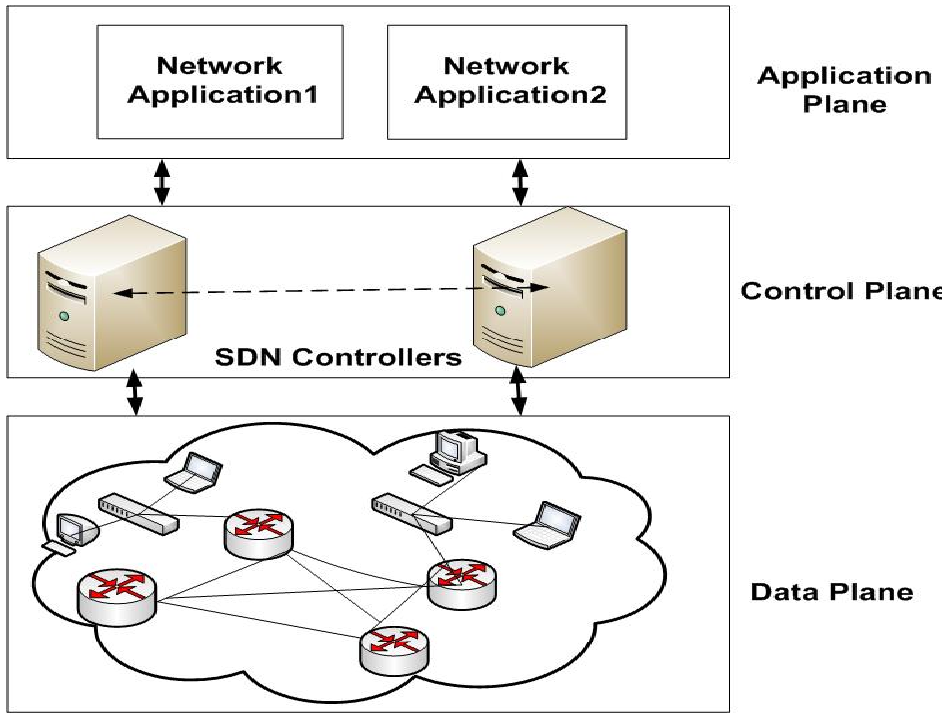 Figure 1: The SDN Architecture showing the separation of Application, Control, and Data planes used for this defense.
Experiments & Results
The authors validated their approach using Mininet (emulator), POX (controller), and Scapy (packet generation).
Entropy Response
As shown in the experimental graphs, the entropy for normal traffic remains high and stable. However, under an attack, the entropy falls sharply as the window size fluctuates. This confirms that the statistical "uniqueness" of the traffic is a reliable indicator of malicious intent.
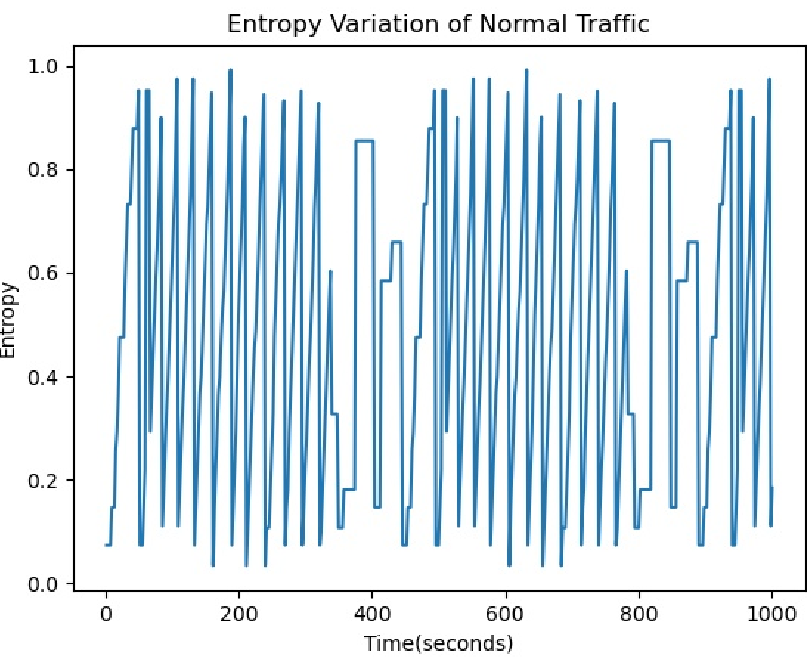 Figure 2: Sharp decline in entropy during a simulated DDoS attack.
Performance Accuracy
The ROC Curve analysis shows a strong Detection Rate vs. False Positive Rate balance. Furthermore, the Throughput analysis (Figure 4 in the paper) demonstrates that while an attack nearly zeros out legitimate throughput, the mitigation strategy effectively restores communication by offloading the filtering to the switch level.
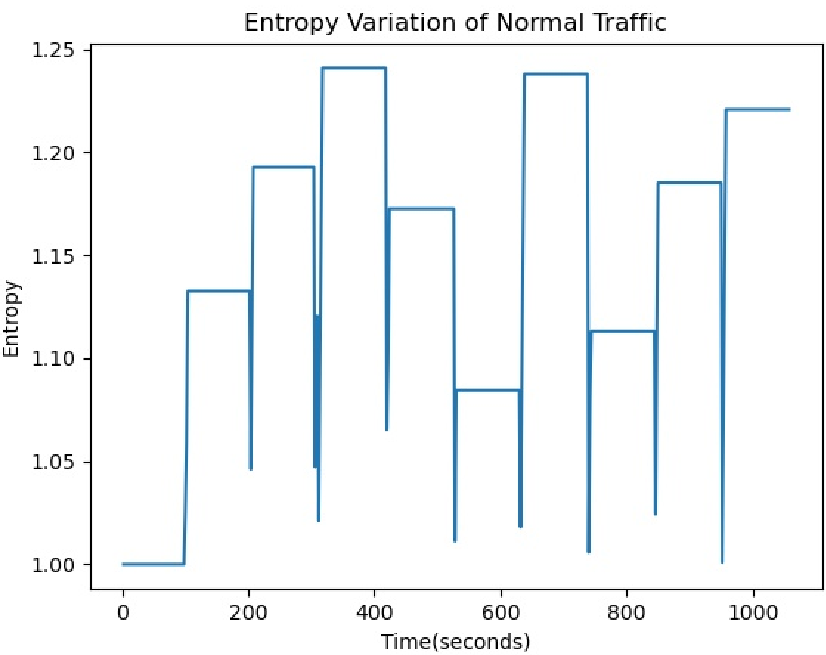 Figure 3: ROC Correlation for identification accuracy.
Critical Analysis & Conclusion
Takeaway: This research highlights that defense doesn't always require "heavy" AI. A mathematically sound statistical approach like Shannon Entropy, when combined with the programmability of SDN, can provide a lightweight and effective firewall for modern cloud-based social platforms.
Limitations:
- Dynamic Thresholding: The paper uses fixed thresholds (). In highly volatile OSN environments, these might need to be dynamic to avoid false alarms during "viral" social media events.
- Slow Attacks: As noted in the paper's comparison table, entropy-based methods are excellent for volumetric (fast) attacks but may struggle with "Low and Slow" DDoS that mimics human behavior.
Future Outlook: Integrating Bayesian game theory or moving towards adaptive thresholding could further refine this mechanism, making it robust enough for the next generation of 6G-enabled social networks.