
Sound vs. Sight: The Rise of Autonomous Acoustic Surveillance
14239_Environmental Audio Scene and Sound Event Recognition for Autonomous Surveillance A Survey and Comparative Studies.
This paper provides a comprehensive survey and comparative study of Environmental Audio Scene Recognition (EASR) and Sound Event Recognition (SER) specifically for autonomous surveillance. It categorizes audio features (engineered, auditory-image, and learned), reviews benchmark datasets like DCASE and UrbanSound8K, and evaluates state-of-the-art machine learning methodologies including GMM, SVM, and Deep Learning.
TL;DR
While cameras are the eyes of security, audio sensors are becoming its ears. This survey explores the shift from manual audio feature engineering (like MFCCs) to deep learning models that treat sound as visual spectrograms. By analyzing datasets like DCASE and UrbanSound8K, the research proves that deep "Auditory Images" are the key to recognizing gunshots, screams, and environmental contexts in chaotic, real-world scenes.
The Blind Spots of Vision
Video surveillance is far from perfect. Shadows, sudden lighting changes, and physical occlusions create "blind spots." This is where Computational Auditory Scene Analysis (CASA) enters. Unlike speech, environmental sounds—a car horn, breaking glass, or a rushing wind—lack phonetic structure, making them incredibly difficult to model. The core challenge lies in the Signal-to-Noise Ratio (SNR): how do you pick out a scream in a busy metro station?
Methodology: From Waveform to "Deep Vision"
The paper categorizes the evolution of audio representation into three distinct eras:
- Feature Engineering (The Baseline): Utilizing MFCC (Mel-Frequency Cepstral Coefficients) and Zero-Crossing Rates. These are the "bread and butter" of audio but struggle with non-stationary, overlapping sounds.
- Auditory-Image Based Features: This is the "bridge" era. By converting sound into a spectrogram and applying LBP (Local Binary Patterns) or HOG (Histogram of Oriented Gradients), researchers began treating audio like a texture.
- Feature Learning (Modern SOTA): Using CNNs and i-vectors to automatically learn discriminative filters.
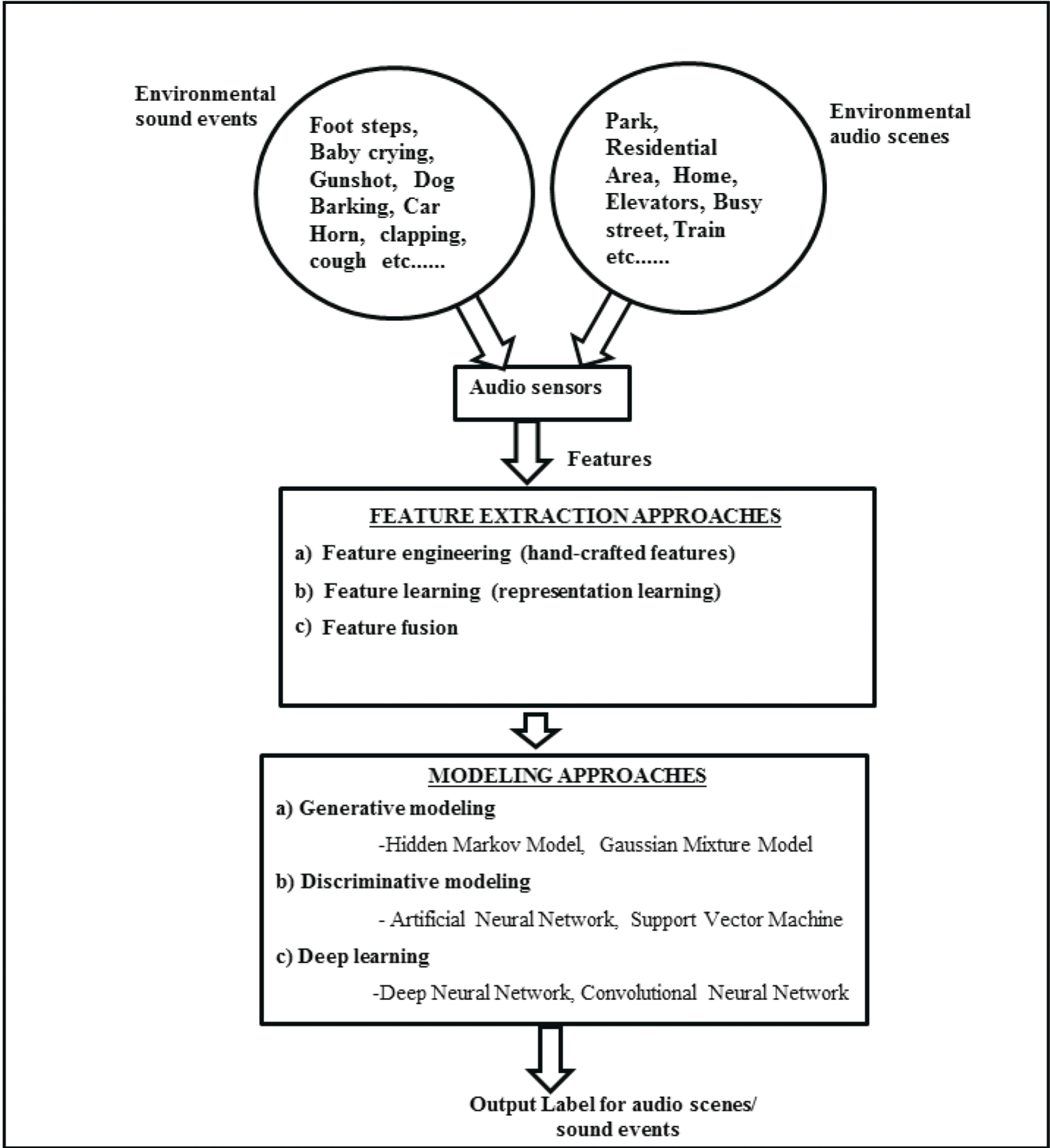 Figure 1: A generic methodology for modern audio surveillance systems.
The Power of Spectrograms
One of the most profound shifts highlighted is the use of Spectrogram Image Features (SIF). Deep Learning models, particularly CNNs, excel at finding patterns in images. By representing frequency over time as an image, models can apply local translation invariance to detect "sound textures."
For example, a gunshot has a distinct "impulsive" vertical signature on a spectrogram, while a car idling produces steady horizontal bands. CNNs can "see" these differences far more accurately than an HMM can "calculate" them.
Experimental Showdown: GMM vs. CNN
The paper’s comparative study on the DCASE 2016 and UrbanSound8K datasets yields clear winners:
- GMMs and HMMs: Effective for simple, stationary sounds but fail when classes are "confusable" (e.g., Park vs. Residential area).
- Deep Learning (CNN/CRNN): Currently the gold standard. Techniques like Data Augmentation (shuffling and mixing sounds) have significantly boosted the robustness of these models against background noise.
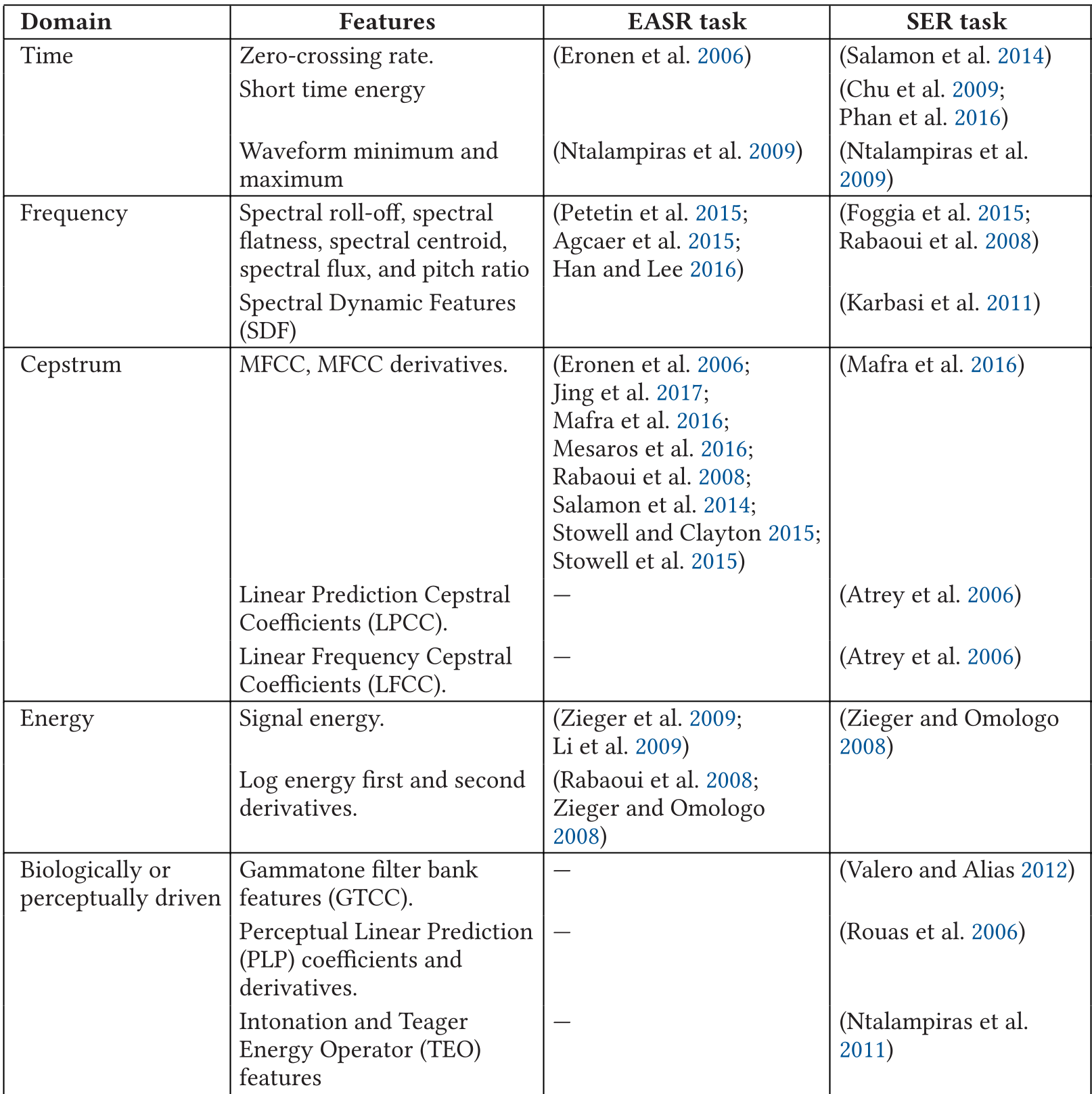 Table 1: Evolution of generic audio features for EASR and SER.
Deep Insights & The Future of Detection
The survey concludes that the future of surveillance isn't just audio or video—it's Multi-modal.
- Acoustic Localization: Using microphone arrays to "point" a camera toward a sound source.
- Polyphonic Recognition: The ability to isolate three different people talking at once over a background of rain—a task that remains a "holy grail" for autonomous systems.
Final Takeaway
We are moving away from "listening" to sound and toward "imaging" it. By applying computer vision principles to acoustic data, we are finally building systems that can "hear" with the same spatial and contextual awareness as a human security guard.
Keywords: EASR, Sound Event Recognition, MFCC, CNN, Spectrogram Image Features, Audio Surveillance.