
Infrastructureless Monitoring: Fusing LoRa and Edge AI for Remote Sensing
Environmental Monitoring Using Low-Cost Hardware and Infrastructureless Wireless Communication
The paper introduces a low-cost, flexible hardware/software platform for environmental monitoring using infrastructureless wireless communication. It combines microcontrollers (MCUs) and single-board computers (SBCs) with LoRa and Bluetooth Low Energy (BLE) to enable long-range data transmission and on-device machine learning for bandwidth-efficient sensing.
TL;DR
Researchers have developed a modular, low-cost platform that brings high-end sensing (including image recognition) to remote environments without cellular or power grids. By combining LoRa for long-distance communication and Intel Movidius NCS for on-device AI, the system filters irrelevant data locally to save bandwidth. Crucially, they solved the "idle power" problem of AI chips by implementing hardware-level USB control, making autonomous long-term deployment feasible.
Background: The Infrastructure Gap
In environmental monitoring—whether tracking wildlife or assessing disaster zones—the lack of infrastructure is a double-edged sword. You need data the most where it is hardest to get. Traditional solutions are either too expensive (satellite) or too fragile (GPRS/WiFi). This paper positions itself as an open-source, affordable alternative that bridges the gap between simple microcontrollers and power-hungry edge servers.
The Problem: Bandwidth vs. Intelligence
The core tension in remote sensing is that LoRa, the king of long-range low-power radio, has microscopic bandwidth (a few kbps). Sending a single high-resolution image is impossible. Conversely, Single Board Computers (SBCs) like the Raspberry Pi can process images but drain batteries in hours.
The authors identify two failures in current approaches:
- Prior Work often relies on GPRS/LoRaWAN (infrastructure-dependent).
- Energy Inefficiency: Running heavy neural networks on ARM CPUs is slow and power-intensive, but keeping an AI accelerator "always on" wastes energy during idle periods.
Methodology: Tiered Architecture & Intelligent Edge
The platform is split into two primary nodes:
- Static Sensor Platforms (SSP): Based on Raspberry Pi, these act as regional hubs. They handle the "heavy lifting" like image classification.
- Mobile Sensor Platforms (MSP): Lightweight ESP32-based trackers attached to animals or drones.
The "Smart" Filtering Mechanism
To overcome LoRa's bandwidth limit, the authors use InceptionNet v3 to perform visual concept detection on the node. If a camera captures an empty forest, the data is discarded; if it detects a specific animal, a small metadata packet or a compressed crop is sent.
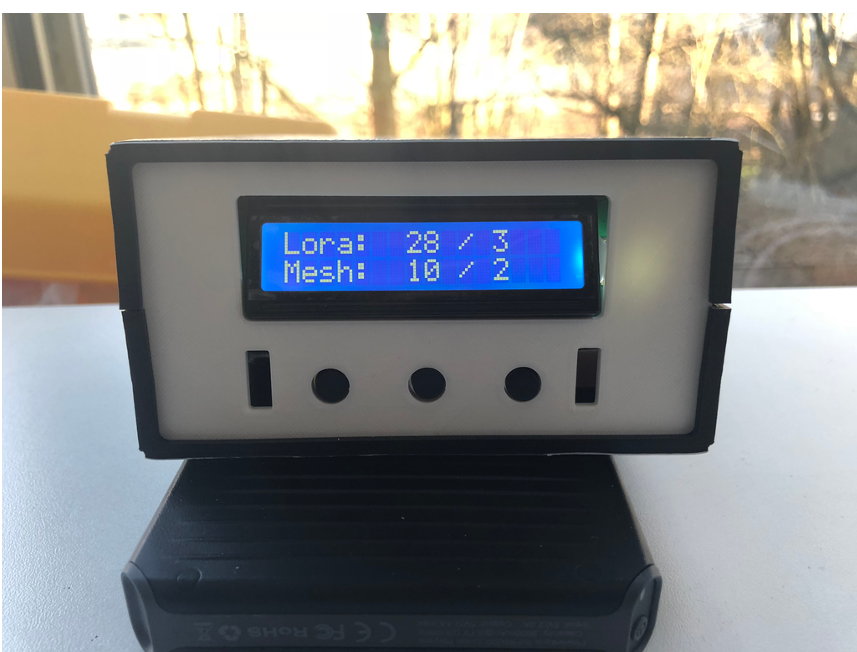 Fig 1: The architecture of a base station showing the integration of sensors, SBC, and radio modems.
Solving the Idle Power Drain
One of the paper's cleverest insights is the management of the Neural Compute Stick (NCS). The NCS consumes nearly 2W just sitting idle—more than the Raspberry Pi itself. The authors used hub-ctrl to programmatically cut power to the specific USB port when no processing is required, effectively reducing the AI accelerator's "tax" to zero during sleep cycles.
Experimental Results: Range and Speed
The team conducted field tests in Marburg, Germany, a city with challenging topography (hills and forests).
1. LoRa Connectivity
Using a 3.5 dBi antenna, they achieved a range of 6.5 km in a non-line-of-sight urban/forest environment. This significantly outperforms standard WiFi or Bluetooth which fail after a few hundred meters.
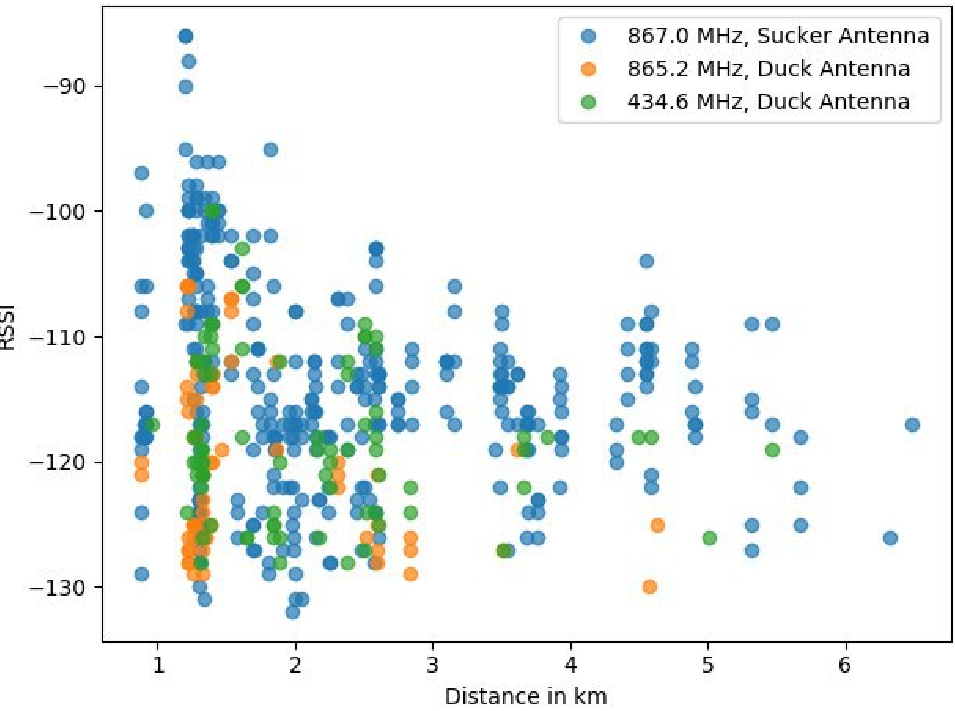 Fig 2: RSSI values show that while signal drops, the 3.5 dBi antenna maintains a functional link far beyond standard stock antennas.
2. AI Acceleration
The performance gains using the Intel Movidius NCS were dramatic. For image analysis, the NCS was 21x faster than the Pi 3 CPU, completing tasks in 0.6 seconds that took the CPU over 13 seconds. This speed translates directly to energy savings, as the system can return to a low-power "deep sleep" state much faster.
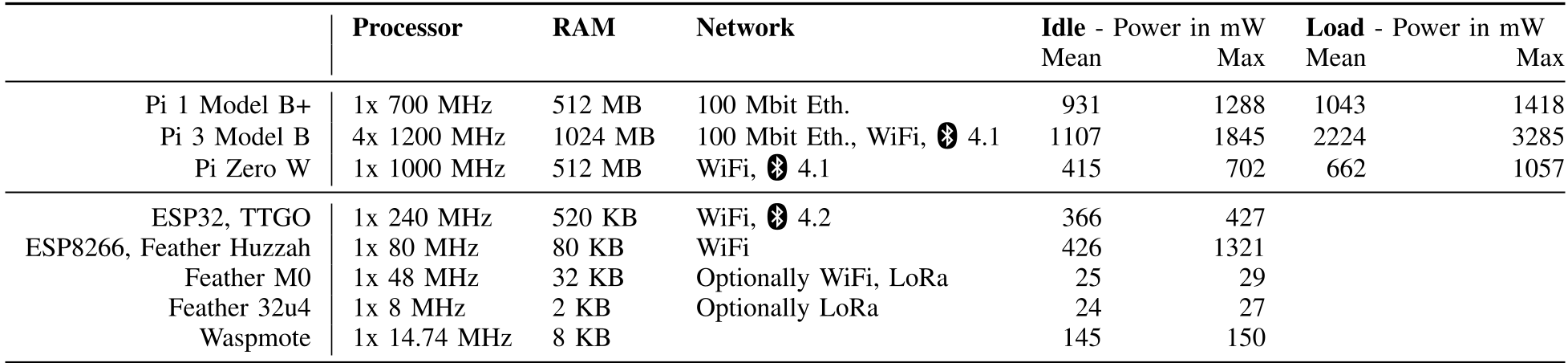 Table 1: Comparison of power consumption across different SBC and MCU platforms.
Critical Analysis & Conclusion
Takeaway
The paper proves that 14€ to 200€ of off-the-shelf hardware can replicate functionality previously reserved for high-end industrial equipment. The integration of DTN (Delay-Tolerant Networking) is a subtle but vital choice; it allows the system to remain robust even when nodes are moving or signals are intermittent.
Limitations
- Climate Resilience: While they mention 3D-printed cases, long-term deployment in "harsh weather" (e.g., tropical humidity or arctic cold) usually requires professional ingress protection (IP67) which adds significant cost.
- Model Training: The paper uses pre-trained InceptionNet models. In real-world biological sensing, "out-of-the-box" models often struggle with specific local species markers.
Future Outlook
The authors suggest that the future lies in Energy Harvesting. Integrating solar or kinetic energy with this low-power AI framework could create truly "eternal" sensor nodes that monitor the Earth's most unreachable places indefinitely.