
ESSE: Bridging Human Language and Climate Big Data via Fuzzy Logic
Environmental scenario search and visualization
The paper introduces the Environmental Scenario Search Engine (ESSE), a framework for parallel data mining across distributed, large-scale environmental archives (e.g., NCEP/NCAR reanalysis). It employs fuzzy logic to translate human-linguistic queries like "atmospheric front" into complex spatio-temporal database searches, integrated with 3D visualization tools using NASA World Wind and Microsoft Virtual Earth.
TL;DR
The Environmental Scenario Search Engine (ESSE) allows researchers to query 50 years of global weather data using natural linguistic terms like "hot extremes" or "atmospheric fronts." By combining fuzzy logic, grid-service virtualization, and aggressive database optimization (BLOB compression and function quantization), ESSE transforms massive binary climate archives into an interactive, visual search experience.
Context: The Semantic Gap in Geosciences
For decades, climate researchers have been drowning in data but starving for insights. While we have "authoritative" representations of terrestrial weather (like the NCEP/NCAR reanalysis), querying them has been a mechanical nightmare. If a scientist wants to find every instance of a "rapid pressure drop" near Moscow, they traditionally have to write complex scripts to parse through hundreds of gigabytes of binary files.
The authors identify a semantic gap: humans think in linguistic scenarios, but databases only understand numeric filters. ESSE was designed to bridge this gap by treating environmental states as fuzzy sets.
Methodology: How Fuzzy Logic Powers Climate Search
1. The Virtualization Layer
Instead of dealing with fragmented binary files, the authors use OGSA-DAI to create a "Virtual Data Resource." This abstracts the underlying database (MySQL or MS SQL) and provides a unified XML/Binary interface for the search engine.
2. Fuzzy Logic Expression
The engine represents a weather condition (a "state") as a fuzzy logic expression. For example, a scenario is often a transition between states over time:
- State 1: (Very Large Pressure) AND (Very Large Temperature)
- Shift Operator: Delaying a state by to find "What happened after X?"
- Scenario:
To aggregate multiple parameters (Wind, Temperature, Humidity), the system uses Yager's T-norms, which offer a smoother "membership surface" than traditional min-max logic.
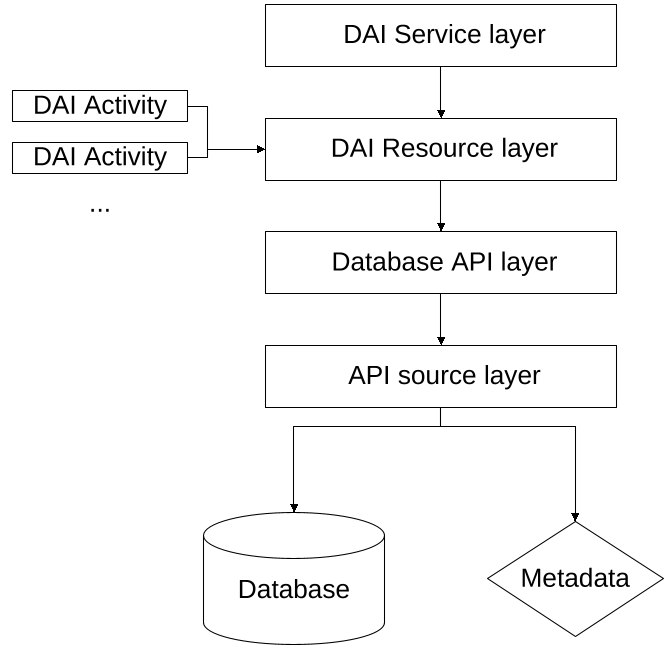 Figure: The multi-layer architecture of the ESSE virtual data resource.
Engineering for Performance: The 3x Speedup
Interactive search on 50 years of data is impossible without optimization. The authors attacked the problem on three fronts:
- Storage: They merged yearly databases into a single database of GZIP-compressed BLOBs, reducing the footprint from 327GB to 116GB.
- Data Transfer: Replaced heavy XML parsing with OPeNDAP-style binary streams, cutting delivery time from 72 seconds to 2 seconds.
- Computational Quantization: Calculating powers () in Yager functions is expensive. The authors implemented a 1024-step lookup table (quantization) for membership values, achieving a 3-fold increase in evaluation speed with nearly zero impact on result ranking.
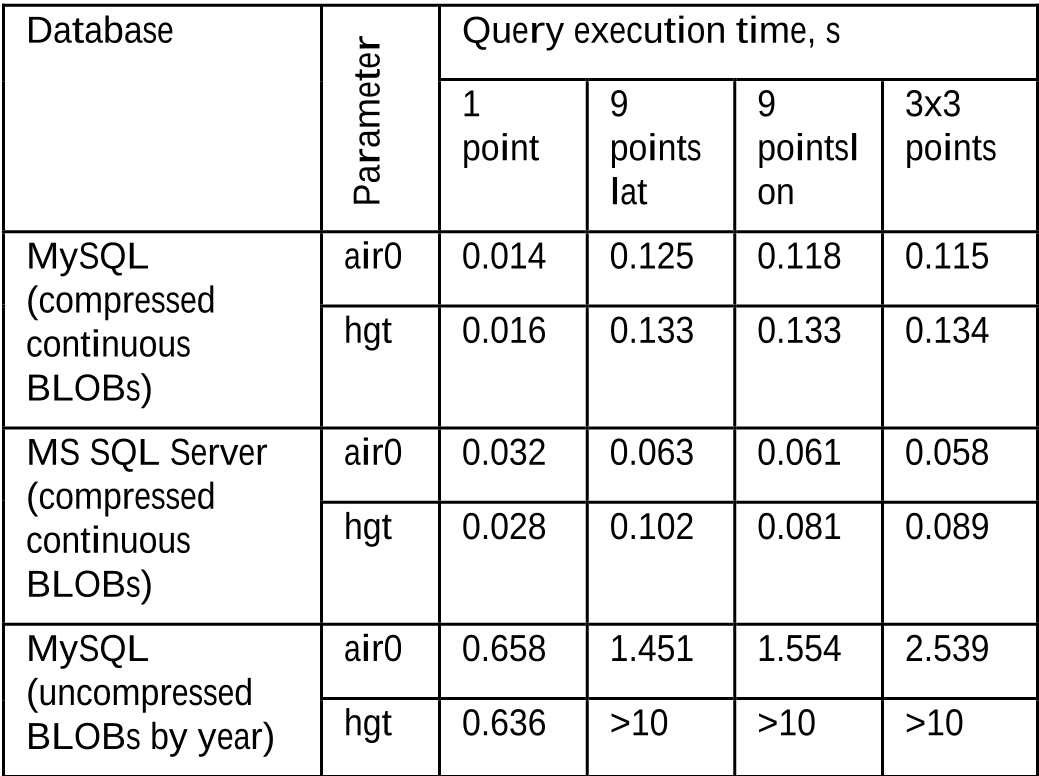 Table: Comparison of MySQL vs. MS SQL and the impact of compressed continuous BLOBs on query time.
Experiments: Validating IPCC Statements
The authors put ESSE to the test by formalizing statements from the IPCC Fourth Assessment Report (FAR). They queried "hot extremes" across a 5-degree global grid from 1976 to 2005.
- Discovery: By sorting results into decadal bins, they could visually confirm the "getting hot" trend (marked in red on the map).
- Efficiency: The entire global search across 30 years of data was completed in just 1.5 hours.
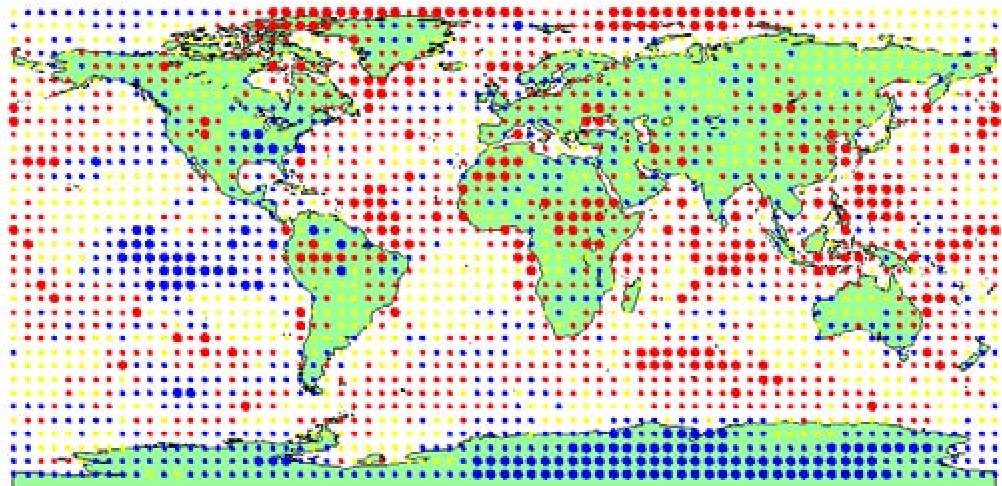 Figure: Global distribution of the 10 hottest days per grid point by decade, visualized via the ESSE engine.
Critical Insight & Conclusion
While this work dates back to 2007, its core philosophy is more relevant than ever. In the age of LLMs, the ESSE approach of "Linguistic-to-Logic" translation is the precursor to contemporary semantic search.
The main limitation noted is the manual distribution of queries; however, the framework provides a robust foundation for "fuzzy" environmental monitoring. As climate change increases the frequency of extreme events, tools that allow us to search history for patterns—rather than just numbers—become indispensable.