
ESR Mastery: Optimizing Classical Machine Learning for Acoustic Intelligence
Environmental Sound Recognition with Classical Machine Learning Algorithms
This paper evaluates classical Machine Learning (ML) algorithms for Environmental Sound Recognition (ESR) using the BDLib dataset. The study proposes a multi-stage feature extraction framework combining temporal and spectral descriptors, achieving a peak accuracy of 88.9% using the k-Nearest Neighbors (k-NN) classifier.
TL;DR
Environmental Sound Recognition (ESR) is a challenging frontier in signal processing. This research investigates the effectiveness of classical ML algorithms—k-NN, SVM, Random Forest, and Logistic Regression—on the BDLib dataset. By shifting from simple Fast Fourier Transforms (FFT) to a complex fusion of 36 temporal and spectral features, the study achieves a robust 88.9% accuracy in classifying diverse sounds like airplanes, rain, and footsteps.
Background & Motivation
While we have mastered Automatic Speech Recognition (ASR) and Music Information Retrieval (MIR), Environmental Sound Recognition remains a "wild west." Environmental sounds are unstructured, overlapping, and lack the rhythmic or linguistic patterns found in music or speech. The authors' core intuition is that the "representation" of the sound determines the ceiling of the model's performance. The objective isn't just to pick a classifier, but to find the right feature-algorithm synergy.
Methodology: The Power of Feature Fusion
The researchers followed a rigorous two-step pipeline: Feature Extraction and Classification.
1. The Feature Evolution
The study moved through three testing phases to find the optimal sound "fingerprint":
- Test 1 (Basic): Raw FFT and MFCCs.
- Test 2 (Temporal + Spectral): Added Zero Crossing Rate (ZCR) and MFCCs (28 features total).
- Test 3 (Comprehensive Fusion): Added Spectral Centroid, Contrast, Bandwidth, and Roll-off (36 features total).
2. Architecture Overview
The workflow follows a standard but highly tuned ML pipeline:
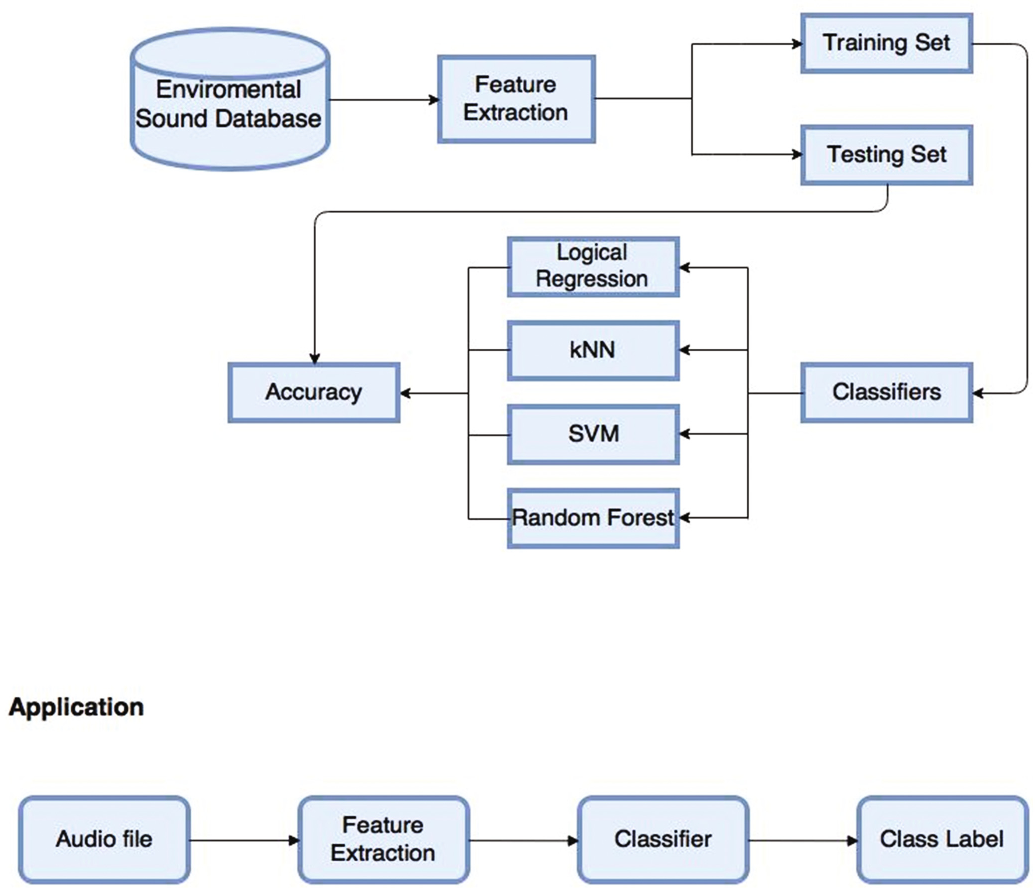 Figure 1: The dual-stage process of feature extraction followed by classification.
Experimental Analysis & Results
The study utilized BDLib, a library containing 12 classes of environmental sounds. To maintain high resolution, the authors focused on 6-class multi-classification tasks to avoid the "accuracy drop-off" typically seen in classical models when classes exceed five.
Key Findings
- The k-NN Dominance: While simple, the k-Nearest Neighbors algorithm (optimized with values from 1-11) outperformed more complex models like SVM.
- Feature Significance: Moving from 28 to 36 features provided a 5.6% boost for k-NN and SVM, proving that spectral characteristics (like Roll-off and Bandwidth) are vital for distinguishing "confusing" classes like rain vs. rivers.
Classification Performance
The confusion matrix below highlights the precision of the k-NN model:
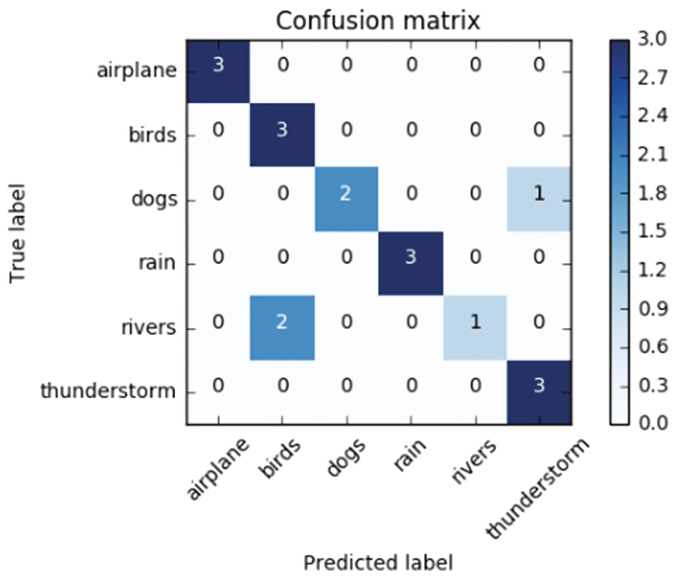 Figure 2: Confusion matrix showing near-perfect recognition for most classes using optimized features.
| Algorithm | Accuracy (28 features) | Accuracy (36 features) |
|---|---|---|
| k-Nearest Neighbors | 83.3% | 88.9% |
| SVM | 77.8% | 83.3% |
| Random Forest | 83.3% | 83.3% |
| Logistic Regression | 83.3% | 83.3% |
Critical Insight & Future Outlook
The paper confirms that in the domain of ESR, Data Engineering > Model Complexity. Even "simple" algorithms like k-NN can achieve SOTA-level results if the input features adequately capture the variance in frequency and time.
Limitations: The study relies on a relatively small dataset (10 samples per class). While effective for a proof-of-concept, scaling this to real-world environments with high noise floors would likely require the Deep Learning (CNN/RNN) approaches the authors suggest for future work.
Final Takeaway: For engineers building lightweight, edge-based acoustic sensors (e.g., smart home monitors), a k-NN model powered by a fused feature set offers the best balance between computational efficiency and accuracy.