
Ergotracer: Moving Beyond the Server-Side Blind Spot in User Behavior Tracking
Ergotracer: An Internet User Behaviour Tracer
This paper introduces Ergotracer, a distributed, cross-platform, and lightweight tool designed to capture fine-grained Internet user behavior at the client-side. Unlike traditional server-side logging, Ergotracer utilizes a combination of JavaScript and Java within the browser to track detailed interactions such as mouse movements, scroll events, and window management.
TL;DR
Ergotracer is a lightweight, cross-platform tool designed to capture the "how" of web navigation, not just the "what." By shifting tracking from the server to the client using JavaScript and Java, it records everything from mouse movements to multi-window management—data essential for building the next generation of intelligent, adaptive web agents.
Background & Motivation: The Server-Side Limitation
In the early 2000s, understanding how users navigated the burgeoning "sea of information" on the Internet was a critical challenge. However, researchers faced a significant roadblock: Server-Side Blindness.
Most data collection happened via server logs or proxies. While these logs showed which pages were requested, they were oblivious to:
- Micro-interactions: How a user moves the mouse toward a link.
- Multitasking: How many windows are open and how the user switches focus.
- Universal History: The user's journey across different, unrelated servers.
The authors argue that to create truly "Intelligent Agents" (like those proposed by Lieberman or Brusilovsky), we need to see the web through the user's eyes, not the server's response code.
Methodology: The "Infection" Strategy
Ergotracer operates within the natural workplace of the user: the browser. Its architecture relies on a unique two-tier system:
- JavaScript Core: Handles event detection. It uses a "window infection" technique where any new window spawned from an instrumented page is automatically tracked.
- Java Bridge: Since JavaScript (at the time) lacked robust network and storage capabilities, Ergotracer utilizes Java to transmit logs securely via Sockets to a central receiver.
Comprehensive Event Tracking
The tool doesn't just record clicks; it captures a broad spectrum of ergonomic data. The following table highlights the granularity of the tracked events:
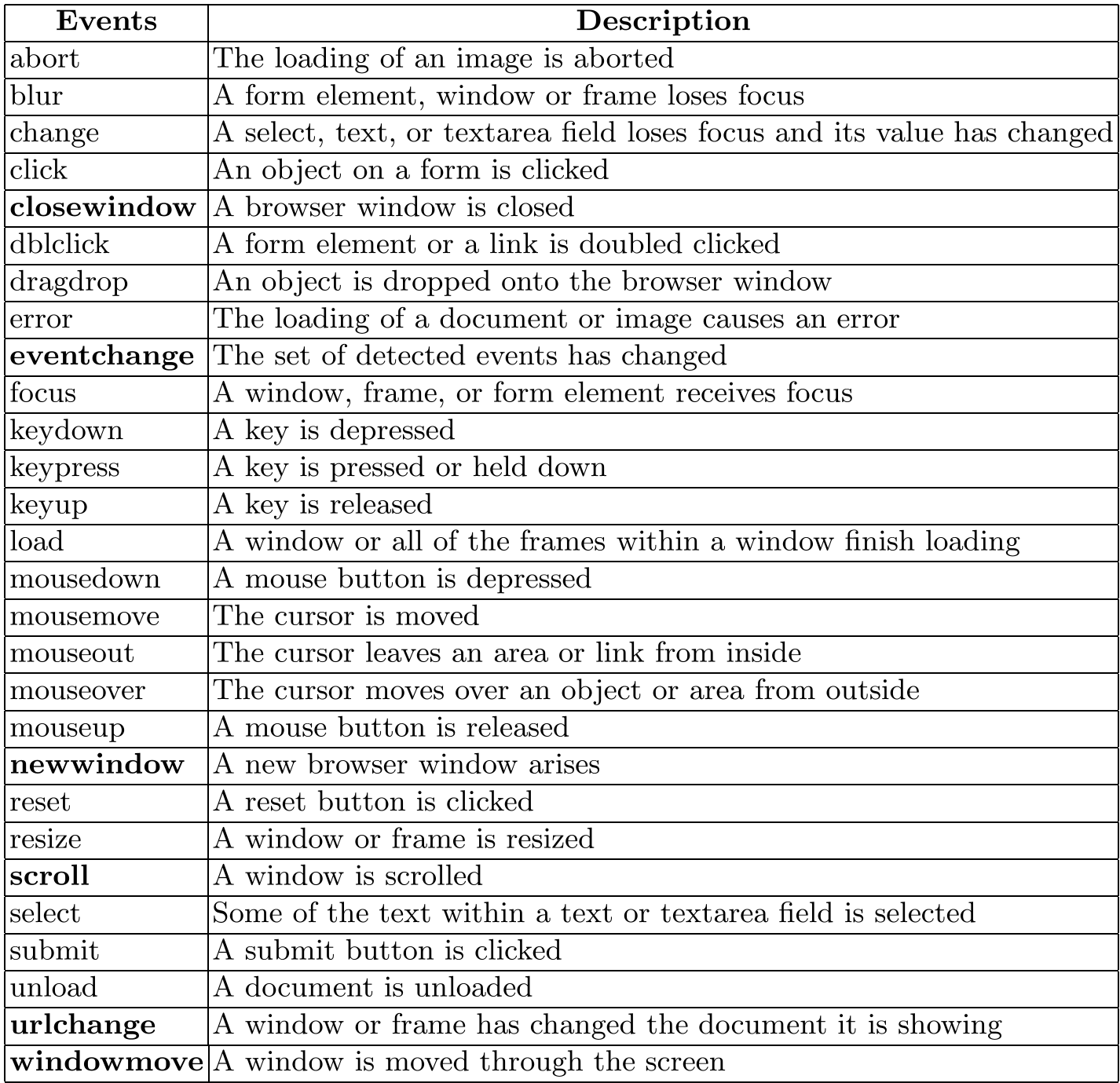
Key Innovation: The authors defined custom events (in bold in the paper) such as urlchange, newwindow, and windowmove that go beyond standard DOM level 2 events, allowing for a complete reconstruction of the user's session.
Architecture and Implementation
Ergotracer is designed to be unobtrusive. The execution model ensures that the overhead of tracking human interaction (which happens in milliseconds) is negligible compared to the time it takes to load a webpage over the network.
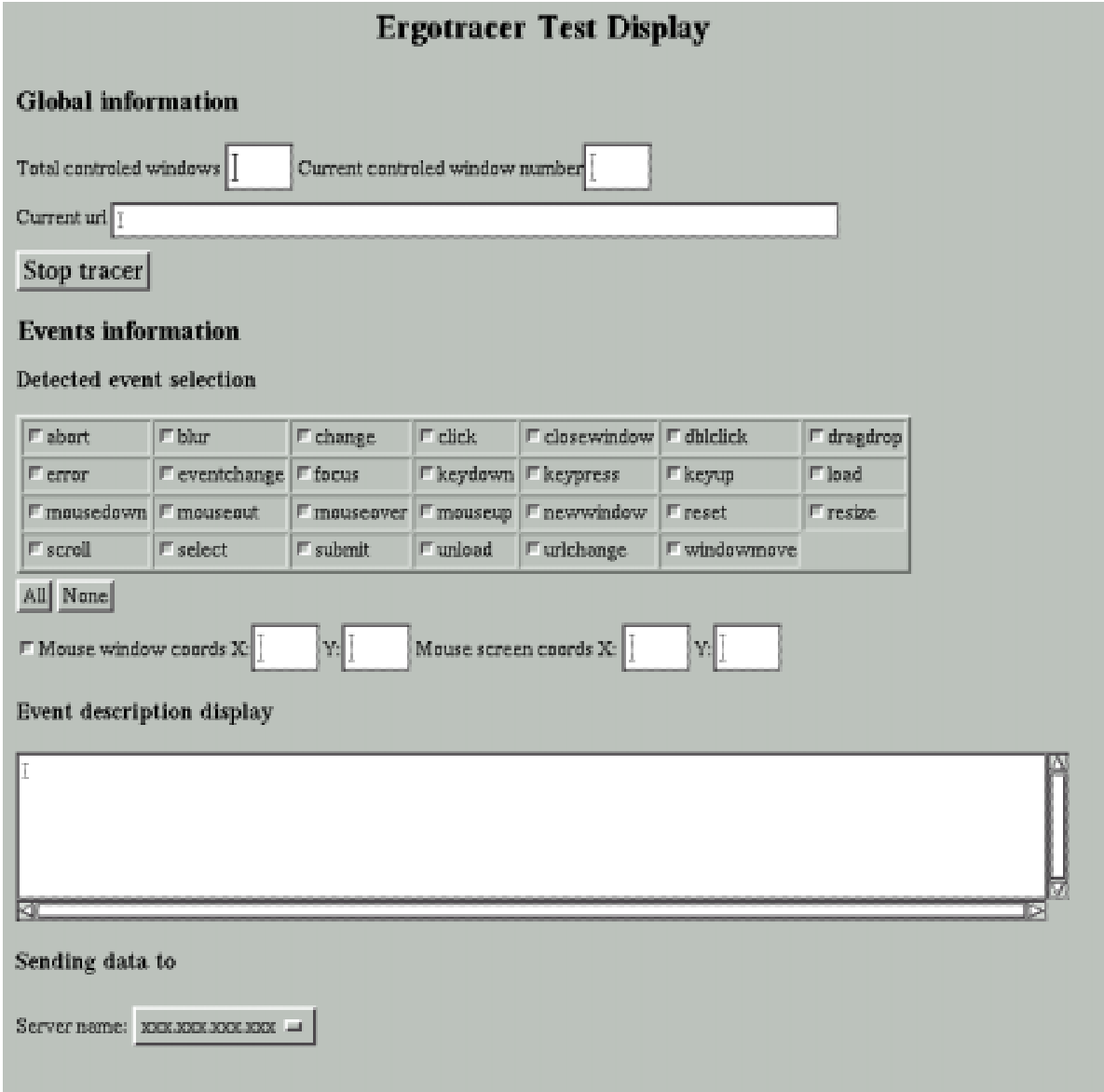 Figure 1: The testing interface allows for dynamic selection of events and visualization of captured data in real-time.
The Structure of a Trace
The generated logs use a hierarchical "Target" structure to preserve context:
text (timestamp: 1012210977837 event: click target: (type: window index: 0 target: (type: link href: "http://java.sun.com/" ...)))
This allows researchers to see not just that a click happened, but exactly where in the nested structure of frames and windows it originated.
Experimental Validation & Use Cases
The authors highlight several "Earth-shattering" (as jokingly noted in acknowledgments) applications:
- Sociological Research: Combining eye-trackers with Ergotracer to study web ergonomics.
- ANote: An annotated documental database that uses Ergotracer principles to allow users to "write in the margins" of the web.
- Intelligent Browsing: Using real-time logs to feed adaptive interfaces that suggest content based on current behavior.
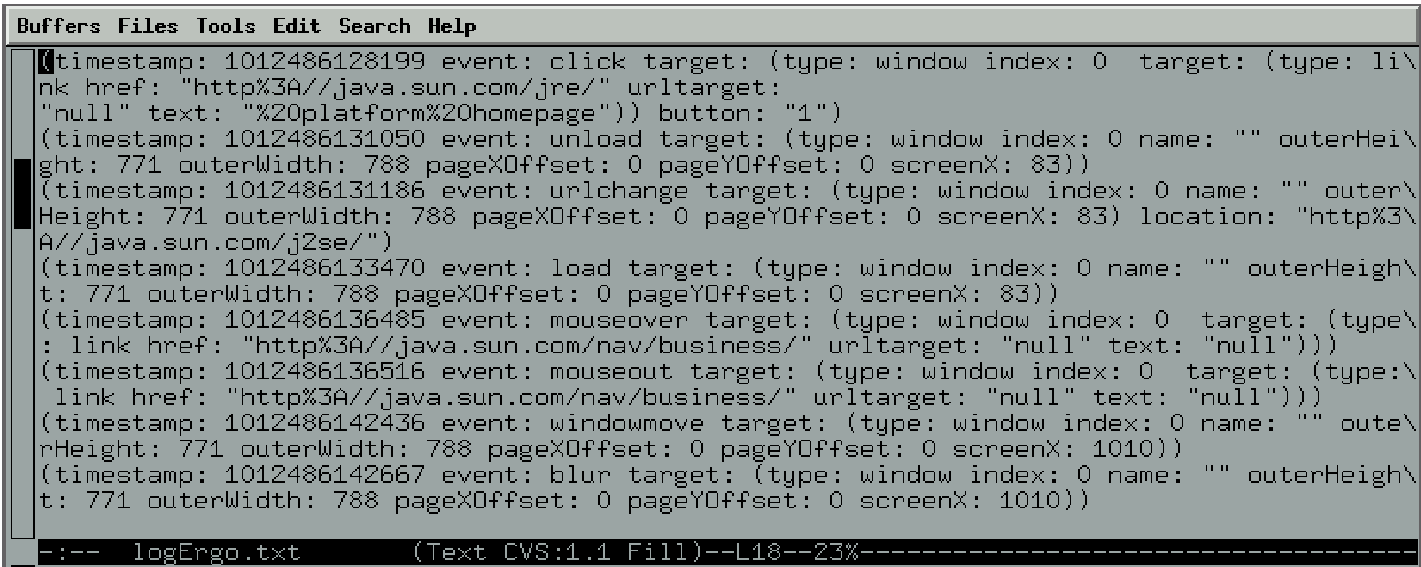 Figure 2: A sample log file showing the sequential flow of browser events during a session.
Critical Analysis & Conclusion
Impact
Ergotracer was an early pioneer in Client-Side Telemetry. Its philosophy of "know the user to customize the service" is now the bedrock of modern UX research and AdTech, though often implemented today through more opaque means.
Limitations
- Privacy: While the authors liken a website taking data to a doctor healing a patient, modern privacy standards (GDPR/CCPA) would view "window infection" as highly controversial without explicit, granular consent.
- Technology Shift: The reliance on Java Applets is now obsolete due to security vulnerabilities and the evolution of modern web standards (WebSockets, Service Workers).
Final Takeaway
Ergotracer successfully shifted the paradigm of web usage mining from a server-centric request log to a user-centric behavioral trace. It reminds us that the best insights come from being as close to the user's actual environment as possible.