
Enterprise Social Networking: Reshaping the Future of Workplace Productivity
The Role of Enterprise Social Networking (ESN) on Business: Five Effective Recommendations for ESN
The paper "The Role of Enterprise Social Networking (ESN) on Business" investigates the impact of social networking tools within corporate environments and proposes a framework for successful implementation. Through a mixed-methods approach involving surveys of 2,500 participants and case studies, the authors identify key drivers for ESN adoption and provide five strategic recommendations to enhance workplace productivity and collaboration.
TL;DR
Social networking isn't just for personal leisure anymore. This research explores how Enterprise Social Networking (ESN) can dismantle traditional corporate silos and transform organizational communication. By leveraging familiar features from platforms like Facebook and aligning them with business goals, companies can foster a culture of innovation, though they must proactively manage security and "professionalism" risks.
The "Water Cooler" Goes Digital: Why ESN Matters
For decades, corporate communication followed a strict, one-way hierarchy: top-down. However, the rise of "technologically savvy" workforces has created a gap between how people communicate in their private lives versus their professional ones.
The Motivation: Current business environments are unpredictable. To maintain a competitive advantage, firms need innovation and agility. The authors argue that ESN serves as the "wonder drug" for organizational ailments like fragmented relationships and reduced job satisfaction.
Methodology: Listening to the Workforce
The researchers didn't just speculate; they conducted a massive study involving 2,500 participants, including 750 employees and 250 top managers. They used a combination of:
- Quantitative Surveys: Measuring login frequency and perceived importance.
- Focus Groups: Deep-diving into the psychological triggers of social sharing.
- Case Studies: Analyzing real-world ESN implementations.
Key Findings: The Power of Familiarity
The data reveals a striking consensus: people want their work tools to look and feel like their personal apps.
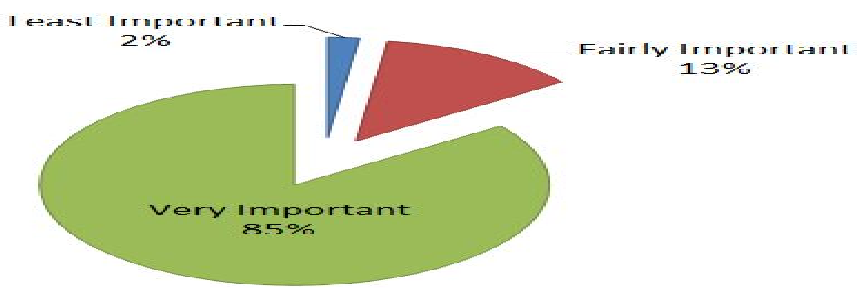 Fig 1: Survey results showing 85% of users find social networking very important.
Why do they use it?
- 41% credit technology advancement.
- 39% cite the efficiency of sharing and connecting.
- 74% of respondents explicitly stated that ESN systems should mirror the functionality of Facebook or Twitter to be successful.
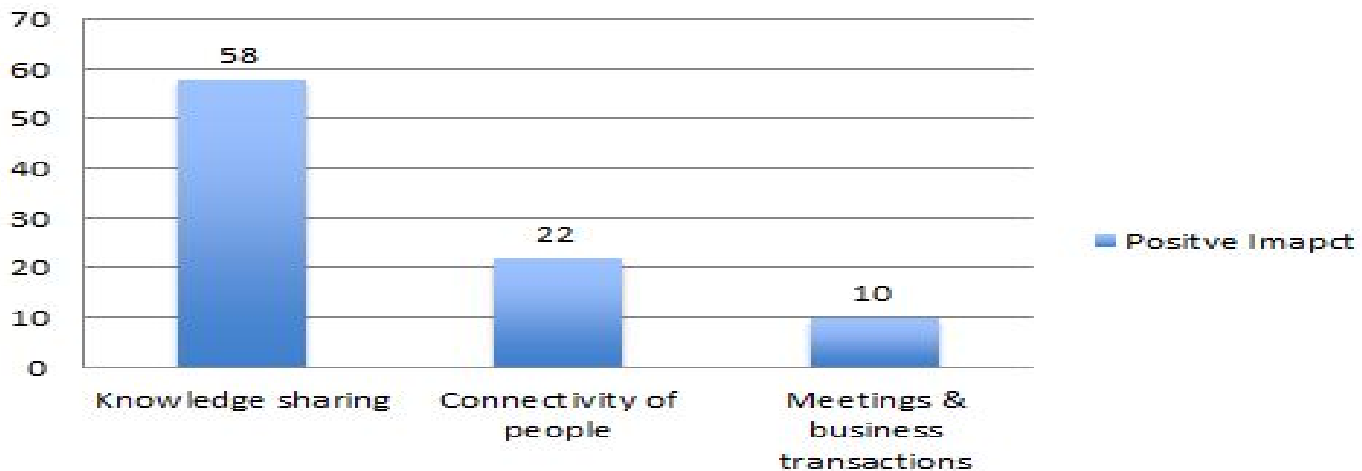 Fig 2: 58% of participants identified "Knowledge Sharing" as the top positive outcome.
Five Pillars for Successful ESN Implementation
Based on the results, the authors propose five "Effective Recommendations":
- Aligned Goals: ESN shouldn't be a standalone "extra." Its objectives must match the company’s mission and the employee's personal growth path.
- Familiar Features: Don't reinvent the wheel. Use personalized profiles, "following" mechanisms, and real-time feeds to reduce training costs.
- Robust Security: Technical safeguards and clear data-handling policies are non-negotiable, especially for sensitive sectors like healthcare or defense.
- Enforced Professionalism: Companies need to set clear "Road Rules" for ESN behavior—ensuring the tone remains corporate even if the medium is social.
- Unwavering Commitment: Success requires buy-in from the CEO down to the line staff. If leadership doesn't use the tool, the workforce won't either.
Critical Insight: The "Social-Professional" Paradox
The most profound takeaway is that ESN violates the traditional boundary between the "corporate" and the "personal." While this creates risks like time-wasting or security leaks, the study suggests the positive impact on collaboration and collective intelligence far outweighs the downsides.
However, the paper acknowledges a major limitation: while it identifies what to do, the specific technical architecture for governing these "borderless" communications remains a fertile ground for future research.
Conclusion
Enterprise Social Networking is no longer optional; it is the infrastructure for the modern, agile firm. By embracing the "social" nature of humans and channeling it through professional frameworks, businesses can unlock levels of creativity that traditional email and meetings simply cannot reach.