
Reconstructing the Whole from Parts: The Evolution of Network Sampling
Estimating network structure via random sampling: Cognitive social structures and the adaptive threshold method
The paper introduces the Adaptive Threshold Method, a novel network measurement technique that estimates complete social structures by sampling a small portion of individuals and aggregating their perceptions (Cognitive Social Structures). Across five diverse datasets, the method achieved accurate estimates of global indices like density and clustering, outperforming traditional roster and ego-network data collection methods.
TL;DR
Social network analysis (SNA) has long been a "sociological meat grinder," often requiring nearly 100% participation to be valid—a feat rarely achieved in the real world. This paper presents the Adaptive Threshold Method, a breakthrough approach that reconstructs entire networks using a small random sample of individuals' perceptions of others' relationships. By treating social actors as "sensors" of the broader structure, researchers can now estimate global network metrics with high accuracy using only 30% of the population.
The "Meat Grinder" Problem: Why Traditional SNA Fails
For decades, network researchers have faced a binary choice, both sides of which are flawed:
- The Full Roster Method: Asking everyone who they talk to. This requires near-perfect participation. A 75% response rate might seem high, but in a 60-person group, it leaves 45% of relationships as "missing data."
- The Ego Network Method: Sampling individuals and asking only about their immediate friends. While easy to scale, it's like looking at a puzzle through a keyhole; you see the pieces but never the global picture (like average path length or density).
The authors argue that we are ignoring a valuable data source: Cognitive Social Structures (CSS). People don't just know their own friends; they have perceptions of who else is friends with whom.
Methodology: The Power of Cognitive Slices
The core innovation is the Adaptive Threshold Method. Instead of just asking Person A who their friends are, we ask Person A to map the entire network. This creates a 3D data array: (does perceiver think and have a tie?).
The Adaptive Logic
How many people need to agree for a tie to be "real"? If you set a static threshold (e.g., "if 3 people say it exists, it's a tie"), you risk high error.
- Knowledge vs. Perception: The method prioritizes "Knowledge" (when Person i or j are actually sampled).
- Error Estimation: The algorithm calculates a Type 1 Error (Errors of Commission) by checking how often sampled people hallucinate ties between other sampled people (where we know the truth).
- Dynamic Adjustment: It then adjusts the threshold (the number of votes needed) to keep the error rate below a tolerable alpha (e.g., 0.10).
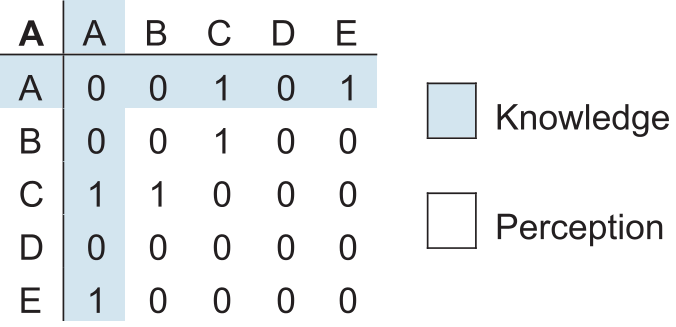 Figure 1: A cognitive slice showing the distinction between "Knowledge" (shaded) and "Perception".
Experimental Results: Beating the Roster Method
The authors tested this against five real-world datasets (from tech managers to government offices).
Key Findings:
- Convergence: Unlike the roster method, which carries inherent self-reporting bias that doesn't disappear with more data, the Adaptive Threshold Method converges toward the "True" network (defined by Mutual Agreement/LAS Intersection).
- Efficiency: In terms of Mean Square Error (MSE), the method at a 30% sample size outperformed the traditional roster method at a 70% response rate for measuring Density and Average Path Length.
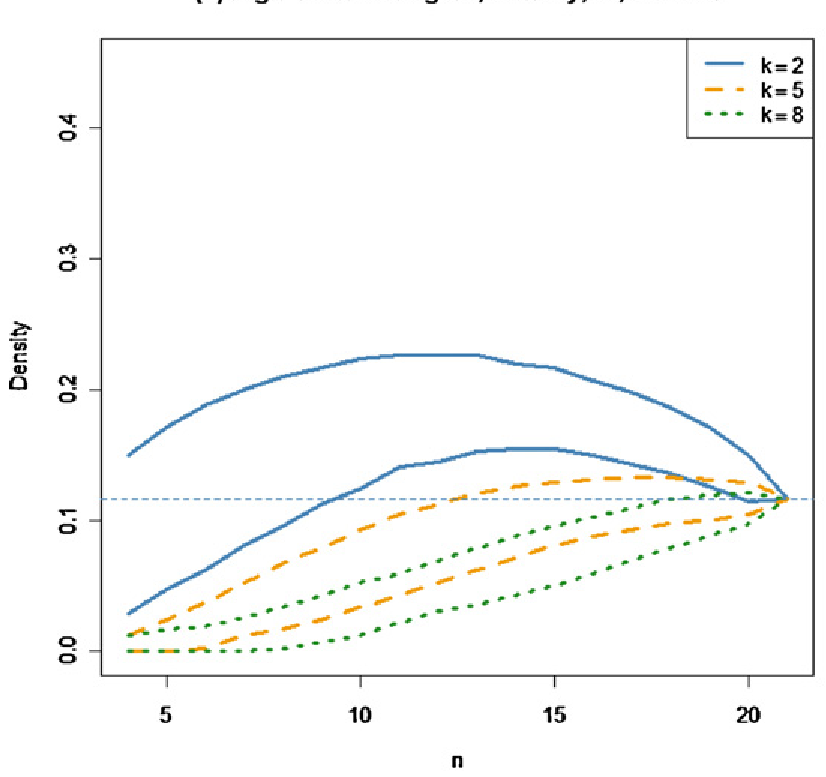 Figure 2: Comparison of static and adaptive thresholds. Note how the adaptive method (right) stabilizes regardless of sample size.
Deep Insight: Why Does Perception Scale?
The method works because of "redundant observation." In a network of 100 people, if you sample 30, those 30 people provide thousands of perceptions about the relationships of the 70 unsampled people. While an individual’s perception is flawed (omission/commission errors), the collective "wisdom of the crowd" filtered through an adaptive threshold effectively washes away the noise.
Critical Analysis & Future Outlook
Limitations
- Cognitive Load: Asking a respondent to map 100 people results in questions—an impossible task. The method currently shines in small-to-mid-sized organizations (N < 50).
- The "Government Office" Outlier: Results were less stable in one dataset, suggesting that in highly fragmented or low-transparency environments, cognitive accuracy might be too low for small samples to correct.
Conclusion
The Adaptive Threshold Method moves SNA from a "census" science to a "sampling" science. It is particularly promising for Cross-Network Research (comparing 50 different schools or businesses), where full participation is an administrative nightmare. Future iterations involving Link Sampling (asking only about subsets of links) could potentially scale this logic to massive social networks.
Takeaway: Your employees know more about your company's culture than they say; you just need the right mathematical filter to aggregate their collective "hunch."