
Digital Legacy: Navigating the Ethical and Legal Labyrinth of Our Online Afterlife
Ethical, Legal and Security Implications of Digital Legacies on Social Media
This paper explores the emerging concept of "Digital Legacy," examining the ethical, legal, and security complexities of managing online assets (social media, cloud storage, digital wallets) after death. It identifies the critical roles of digital executors and examines how Terms of Service (ToS) across platforms like Apple, Facebook, and Twitter dictate the survivability of digital narratives.
TL;DR
Our lives are increasingly archived in "digital narratives"—collections of photos, posts, and financial data. However, when we die, these assets often enter a legal gray area. This paper explores the "Digital Legacy" framework, arguing that the lack of infrastructure for transferring digital assets creates a friction-point between corporate policies (Terms of Service) and the rights of heirs.
Context: Your Second Life Online
In the physical world, a will determines who gets your photo albums. In the digital world, your "photo albums" exist on iCloud or Google Photos—platforms where you don't own the space, but rather license it. The authors argue that this fundamental shift has created a vacuum where digital artifacts are frequently lost because the laws of inheritance haven't caught up to the "Information Age."
The Pain Point: The Death of Transferability
The authors identify a core conflict: Sentimental Value vs. Corporate Liability.
- The Problem: Many platforms (e.g., Apple) treat accounts as non-transferable. If you die without sharing your password, your data may be effectively "dead," as the company prioritizes the privacy of the deceased (and their own liability) over the grief of the survivors.
- The Insight: Digital assets are not just binary files; they possess a "Triple Value" (Monetary, Sentimental, and Cultural). Treating a digital asset solely as a legal "license" ignores its human and emotional weight.
Methodology: Ethics and Data
The researchers didn't just look at law; they looked at how we talk about digital death. By analyzing thousands of Twitter posts, they found that while we recognize "Legal" and "Ethical" as twins in general conversation, we rarely connect them to "Bereavement." There is a disconnect between our emotional reality of death and our preparation for its digital consequences.
The Framework of Digital Assets
The paper categorizes digital assets into several key buckets that require different types of planning:
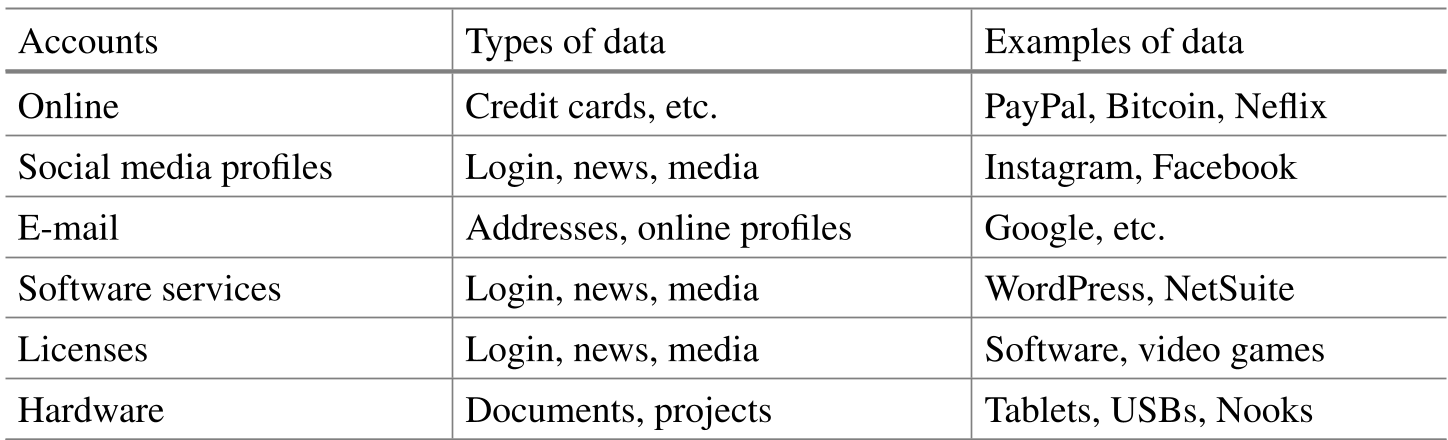 Figure 1: Common categories of digital data and examples from the estate planning process.
Ethical Deep Dive
The authors apply three distinct ethical lenses to the problem of account transfer:
- Utilitarianism: Suggests companies should allow transfers because it provides the "greatest good" for the survivors and legal systems.
- Deontology (Duty-based): Argues companies have a duty to protect the privacy contract signed by the deceased, meaning they should not allow unauthorized heir access.
- Kantian Imperative: Focuses on the respect for the creator. If a creator didn't explicitly authorize a recipient, granting access treats the creator as a "means to an end" rather than an autonomous individual.
Analysis of the Discourse
The study’s analysis of Twitter data highlights the scarcity of public awareness regarding the intersection of ethics, law, and death.
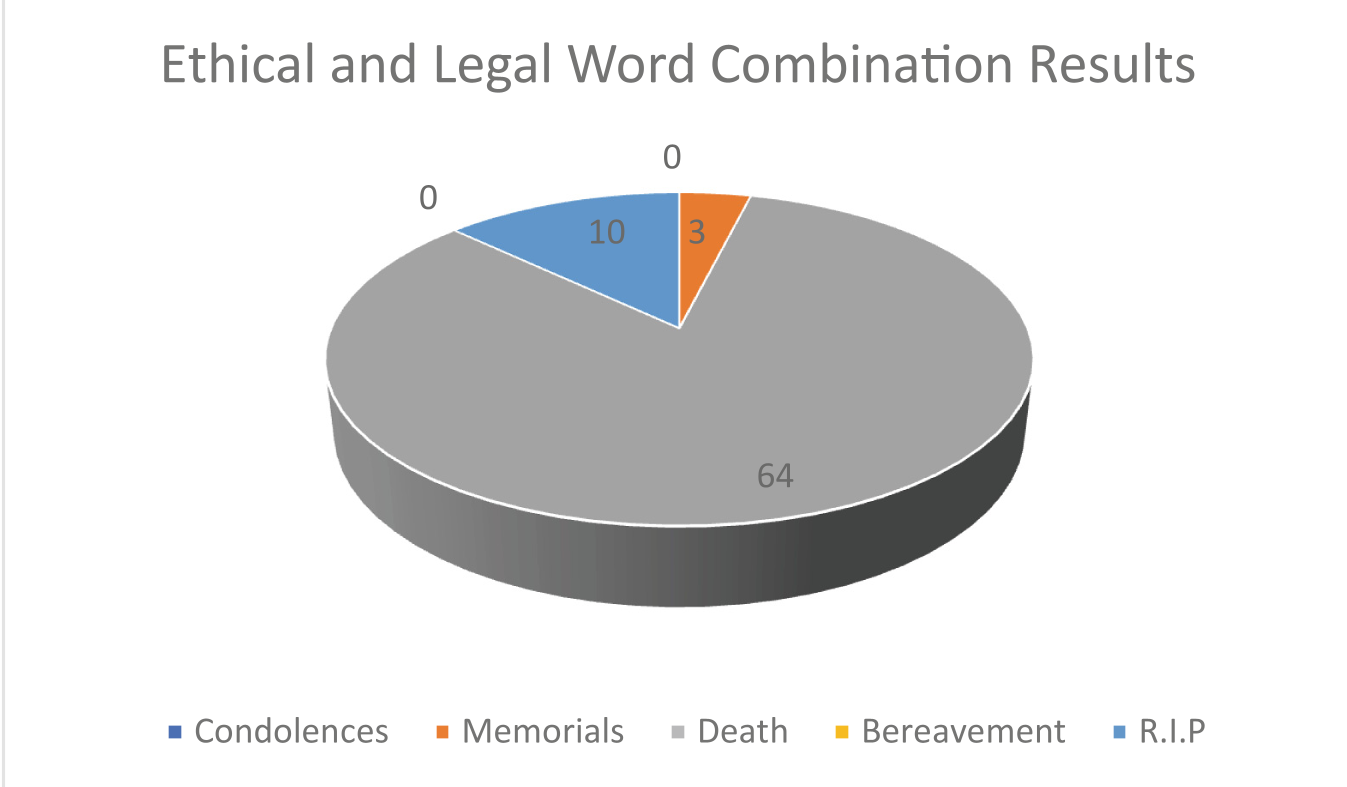 Figure 2: Visualization of the frequency of terms like "Legal" and "Ethical" in the context of bereavement discussions.
Strategic Recommendation: The Digital Executor
The most practical takeaway from the research is the need for a Digital Executor. Unlike a traditional executor, this person must have:
- Technical Literacy: To handle password managers, 2FA, and data archiving.
- Legal Standing: Ideally recognized as a co-executor in a physical will.
- Access Credentials: An inventory of usernames and passwords (stored securely pre-mortem).
Critical Insight & Conclusion
The paper concludes that we are in a transitional phase. While platforms like Facebook are starting to offer "Legacy Contacts," the industry lacks a unified standard. The true limitation of our current state is the Privacy-Legacy Paradox: Giving an heir access to a parent's email might provide cherished photos (Legacy), but it also exposes private communications the parent may have wished to keep confidential (Privacy).
Future Outlook: The authors call for more resources to help users understand how Terms of Service (ToS) impact their "Right to Posthumous Presence." We expect future research to focus on legal mandates that force social media giants to provide standardized "Data Inheritance" APIs.