
The Ethics of Oversharing: Applying Potter’s Box to Social Networking
Ethics in Social Networking: A Framework for Evaluating Online Information Disclosure
The paper proposes an ethical framework for evaluating online information disclosure in social networking sites (SNSs), specifically adapting Potter’s Box to the digital age. By integrating marketing, theology, and privacy literature, it provides a systematic method to analyze why users freely reveal personal data despite inherent privacy risks.
TL;DR
As social networking sites (SNSs) like Facebook and LinkedIn evolved from niche communities to massive digital societies, the volume of personal information disclosed has reached unprecedented levels. This paper introduces a structured ethical framework—Potter’s Box—to analyze the "why" and "how" behind online disclosure, moving past the simplistic "privacy is dead" narrative to explore the complex interplay of values, loyalties, and moral reasoning.
Problem & Motivation: The Death of Privacy or an Ethical Void?
Facebook’s Mark Zuckerberg famously suggested that "privacy was an outdated social norm." In the digital realm, we see users voluntarily sharing intimate details—hobbies, school history, and even drug use—within networks characterized by "weak ties."
The core problem is that while we understand what people share, we lack a rigorous lens to understand the ethical justification behind these actions. Why does the perceived benefit of "signaling" to a stranger often outweigh the risk of a privacy invasion? The authors argue that existing Information Systems (IS) research hasn't sufficiently addressed the moral deliberation inherent in active SNS participation.
Methodology: The Anatomy of Potter’s Box
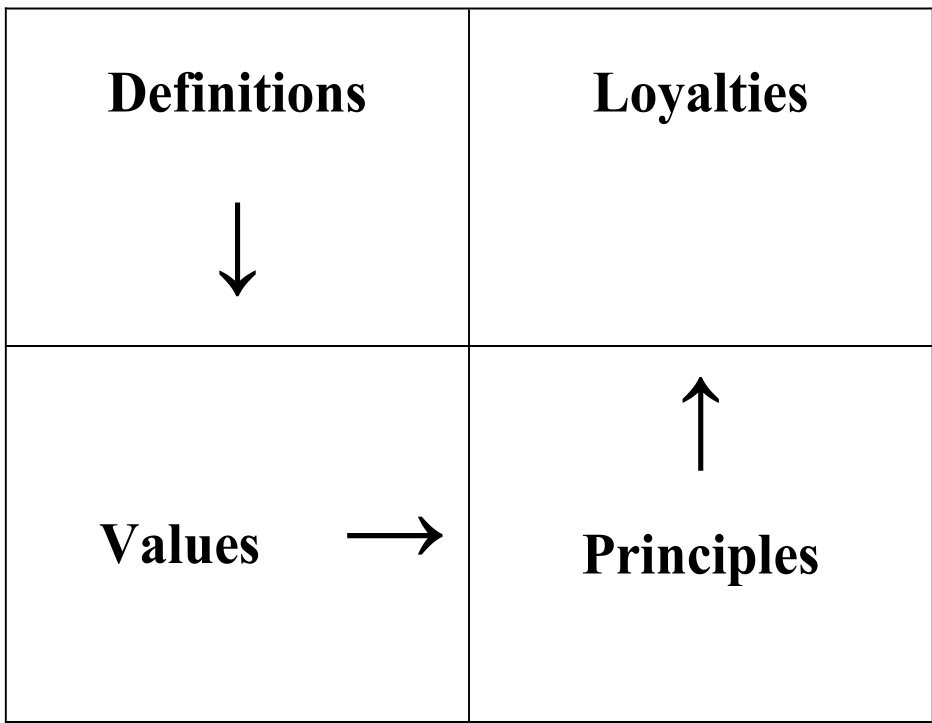
To solve this, the paper adapts a model from Dr. Ralph Potter of the Harvard Divinity School. The Potter’s Box is a four-stage iterative cycle designed to reach a morally justified conclusion.
The Four Quadrants of Decision-Making:
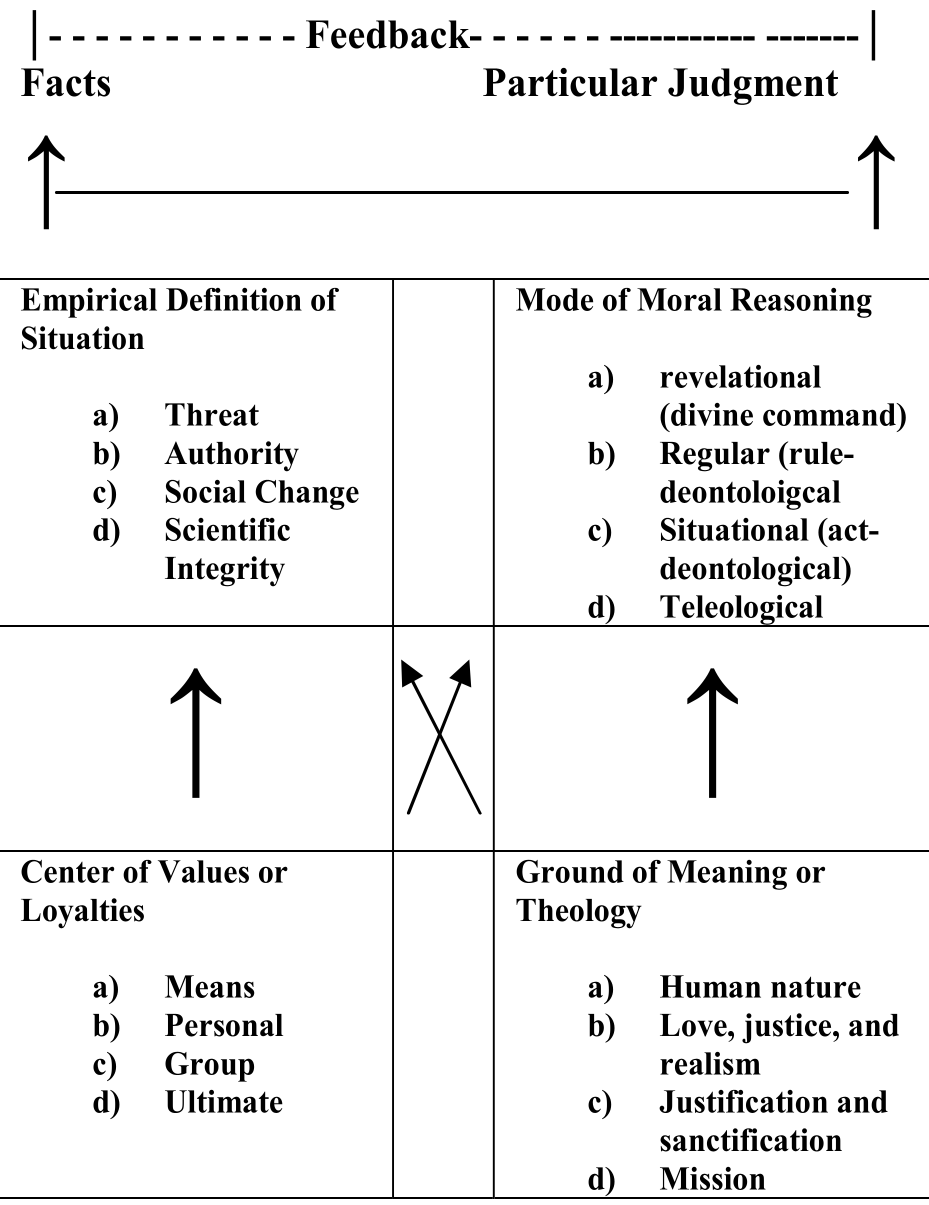
- Empirical Definition: Defining the situation. What are the threats? What is the perceived risk?
- Values: Examining the sociological values of the culture (e.g., the value of "connectedness" vs. "discretion").
- Ethical Principles: Applying philosophical lenses like Deontology (is the act inherently right or wrong?) or Teleology/Utilitarianism (does this share maximize happiness for my network?).
- Loyalties: Identifying the recipient of one’s loyalty. Are you loyal to your close inner circle, or to the broader "generalized other" on the platform?
The authors specifically extend this model to include theological dimensions (ground of meaning), asking the existential question: "Why ought I be moral in a virtual space?"
Deep Dive: Why SNS Decisions are "Wicked" Problems
The paper highlights a critical friction point: Online vs. Offline Inductive Bias.
- Offline: Social ties are nuanced and diverse.
- Online: Platforms force a binary "friend or not" relationship.
This oversimplification creates an ethical "befuddlement." When a user posts a photo, they may be using Act-Deontological reasoning (it feels right in the moment) or Teleological reasoning (it will gain likes/social capital), but the platform's architecture often obscures the "Loyalties" quadrant, making it unclear who the ultimate recipient of that information will be (e.g., friends of friends of friends).
Experiments & Insights
While this paper is theoretical/conceptual, its "results" lie in the validation of the framework's utility:
- Conflict Resolution: It explains why two people can look at the same "incriminating" photo and reach different conclusions about its "rightness" based on whether they prioritize Divine Command, Kant’s Categorical Imperative, or Utilitarian outcomes.
- The Signaling Effect: The framework identifies that users often perceive the benefits of selective revelation to be higher than the hazy, long-term risks of privacy loss, largely due to "herding behavior" and peer pressure.
Critical Analysis & Conclusion
Takeaway
The disclosure of information on SNSs is a defensible ethical choice, not just a lapse in judgment. By using Potter’s Box, researchers can categorize user behavior based on their underlying moral reasoning rather than just labeling them as "privacy-unaware."
Limitations
The paper, written in a specific era (ca. 2010), focuses heavily on Facebook and Myspace. It does not account for the algorithmic agency of modern platforms, where AI—not just the user—determines the visibility and ethical impact of a post.
Future Outlook
The next frontier is applying this framework to AI Ethics. If a user’s loyalty is to their community, but the platform's loyalty is to engagement metrics, how does Potter’s Box resolve the conflict? Future research should quantitative assess these quadrants across different demographics like age and ethnicity to see how moral reasoning shifts across the digital divide.