
The Potemkin Audit: Why Good Security Policies Fail in the Checkout Line
An ethnographic study to assess the enactment of information security culture in a retail store
This paper presents a qualitative ethnographic study investigating the "Information Security Culture" (ISC) of a UK retail store. Utilizing a combination of direct observation, semi-structured interviews, and questionnaires, the authors reveal a significant disconnect between official security policies (injunctive norms) and actual workplace behaviors (descriptive norms).
TL;DR
Even with high-end security training and documented policies, most organizations are living in a "Potemkin Village" of security. This ethnographic study of a major UK retailer reveals that surface-level compliance masks a reality of shared passwords, logged-in terminals, and systemic workarounds. The culprit? A fundamental tension between security protocols and operational efficiency.
The Illusion of Compliance
In 1787, Grigory Potemkin allegedly built fake settlements to impress Empress Catherine II. The authors of this paper argue that modern IT audits are the digital equivalent. Companies pass audits by showing signed policy agreements, yet the "descriptive norms"—what employees actually do when the manager isn't looking—tell a different story.
The researchers identified a critical gap:
- Injunctive Norms: What the company says employees should do (The Policy).
- Descriptive Norms: What employees actually do to get the job done (The Culture).
Methodology: Going Undercover
To see past the facade, the lead researcher embedded themselves in a retail store for an ethnographic investigation. By being "one of the team," they witnessed behaviors that a formal auditor would never see.
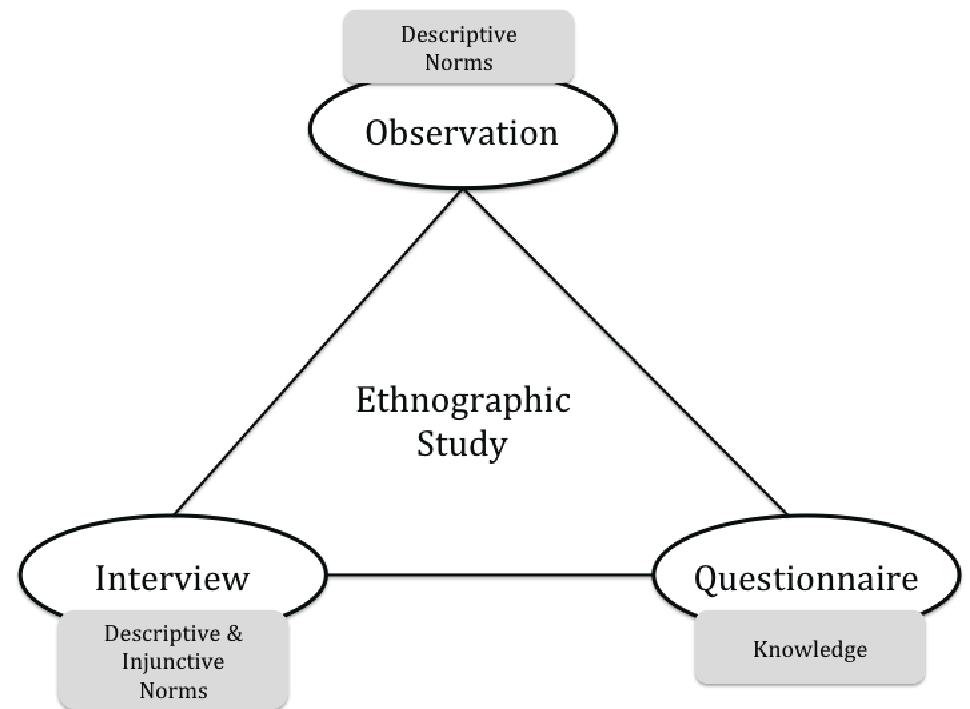
The study followed a three-pronged approach:
- Passive Observation: Recording real-world password habits and system usage.
- Interviews: Probing the "Why" behind employee actions.
- Questionnaires: Quantifying the baseline knowledge of the 33-person staff.
The Reality Check: When Security Meets Friction
The findings were startling. Despite the company being a successful national brand with a 25-year history, the "under the surface" security culture was broken:
- Systemic Failure: All cash office staff shared a single login because the process for obtaining new credentials was too difficult.
- Coping Mechanisms: Passwords for the inventory system were written on the wall or stored in a public book marked "information" because the system was essential for serving customers but frequently locked users out.
- Email Laziness: Terminals were routinely left logged in to avoid the friction of constant re-authentication.
The "Age-Knowledge" Paradox
The data showed a significant negative correlation (r = -0.409) between age and security knowledge. Older, more experienced staff—those often trusted with more responsibility—actually scored lower on security literacy tests than their younger counterparts.
Critical Analysis: Why Education Isn't Working
The authors provide a scathing critique of the "more training" solution. The employees wanted to be secure—most interviewees felt personally responsible for data—but they were forced to choose between security and production.
"If people have to choose between compliance and getting their jobs done, they will always reasonably choose the latter."
Key Methodological Insights:
- Support Structures: Security policies were "buried" in a confusing intranet, with some not updated since 2005.
- Usability Failures: Enforcing complex 6-digit passwords that change every 2 months led staff to use simple, guessable keypad patterns.
- The Social Factor: Security behavior was driven more by news headlines (WikiLeaks, bank failures) than by internal company memos.
Conclusion: Beyond the Checkbox
The study concludes that a "Potemkin Audit" is worse than no audit at all, as it provides a false sense of security. To foster a genuine security culture, organizations must:
- Audit the Culture, Not the Paper: Use ethnographic methods to see how systems are used in the wild.
- Align Norms: Redesign obstructed processes so that the "secure way" is also the "easy way."
- Modernize Delivery: Move away from once-a-year PDF policies toward dynamic, usable support systems.
Final Takeaway: Information security is a "human-in-the-loop" system. When the loop is broken by poor design, no amount of policy can fix the resulting cultural decay.