
Trust as a Process: Architecting Reliable Social Networks for European Citizens
European Citizens and Their Trust in Social Networks
The paper investigates the intersection of trust, knowledge co-production, and reputation within social networks, specifically targeting the European context. It proposes a technology-agnostic policy management framework designed to improve the reliability of digital interactions in sensitive domains like e-health.
TL;DR
In an era where health advice is as likely to come from a Facebook group as it is from a doctor, how do we verify digital trust? This paper argues that trust is not a binary badge but a continuous "co-production" between users and systems. The authors propose a Policy Management Framework that uses identity verification and dynamic rule-sets (ECA rules) to protect European citizens from misinformation and reputation manipulation in social networks.
The Erosion of Digital Ethos
The "ethos" of science was once built on universalism and organized skepticism. Today, that ethos has moved to the web. However, the move to "commons-based peer production" (think Wikipedia or e-health forums) has created a vacuum of accountability.
The authors identify three critical pain points in modern social interactions:
- Information Persistence: Digital footprints outlive their context, creating privacy risks.
- Real-time Pervasiveness: The constant stream of data makes manual verification impossible.
- Masquerading: The ease of creating fake identities (Sybil attacks) allows malicious actors to distort public reputation for profit.
Methodology: The Policy Engine
The core of the paper is the proposal of a generic policy management framework that bridges the gap between technology and European regulatory standards (like the Digital Agenda for Europe).
The ECA Mechanism
The framework operates on the Event-Condition-Action (ECA) logic. When a user attempts to post content (Event), the system checks specific environmental and identity-based requirements (Condition) before allowing the post to go live (Action).
System Architecture
The architecture separates the "brain" of the operation from the "enforcer":
- Policy Decision Point (PDP): The engine that reasons whether an action aligns with established policies (e.g., "Has this user posted 100 identical reviews in the last hour?").
- Policy Enforcement Point (PEP): The component integrated into the social network server that physically allows or denies the request.
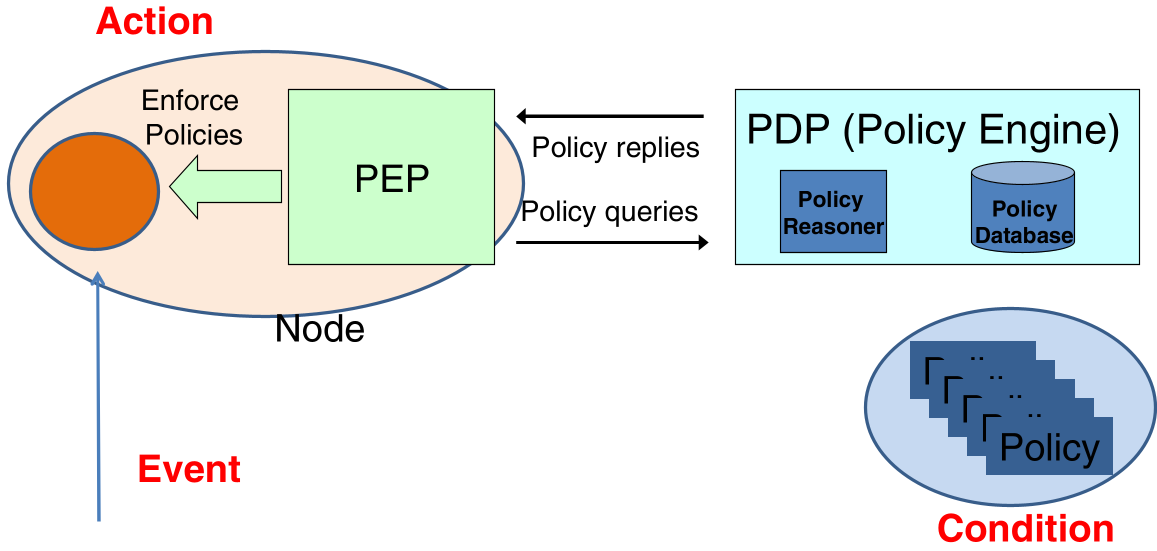 Figure 1: The interaction between the Policy Enforcement Point (node-side) and the Policy Decision Point.
Use Case: E-Health and Reputation
The most compelling application of this framework is in e-health. In these forums, the stakes are literally life and death. A standard "rating" system can be gamed by companies hiring fake reviewers to praise a dangerous supplement.
Under the proposed framework:
- Role-Based Trust: A comment from a "Verified Medical Doctor" is weighted differently than a "Generic Citizen."
- Impartiality Checks: If a user is identified as a "Manufacturer Representative," policies can automatically prevent them from posting in the "impartial reviews" section.
- Scientific Validation: Policies can require metadata links to peer-reviewed studies before a medical claim is given a "trusted" status.
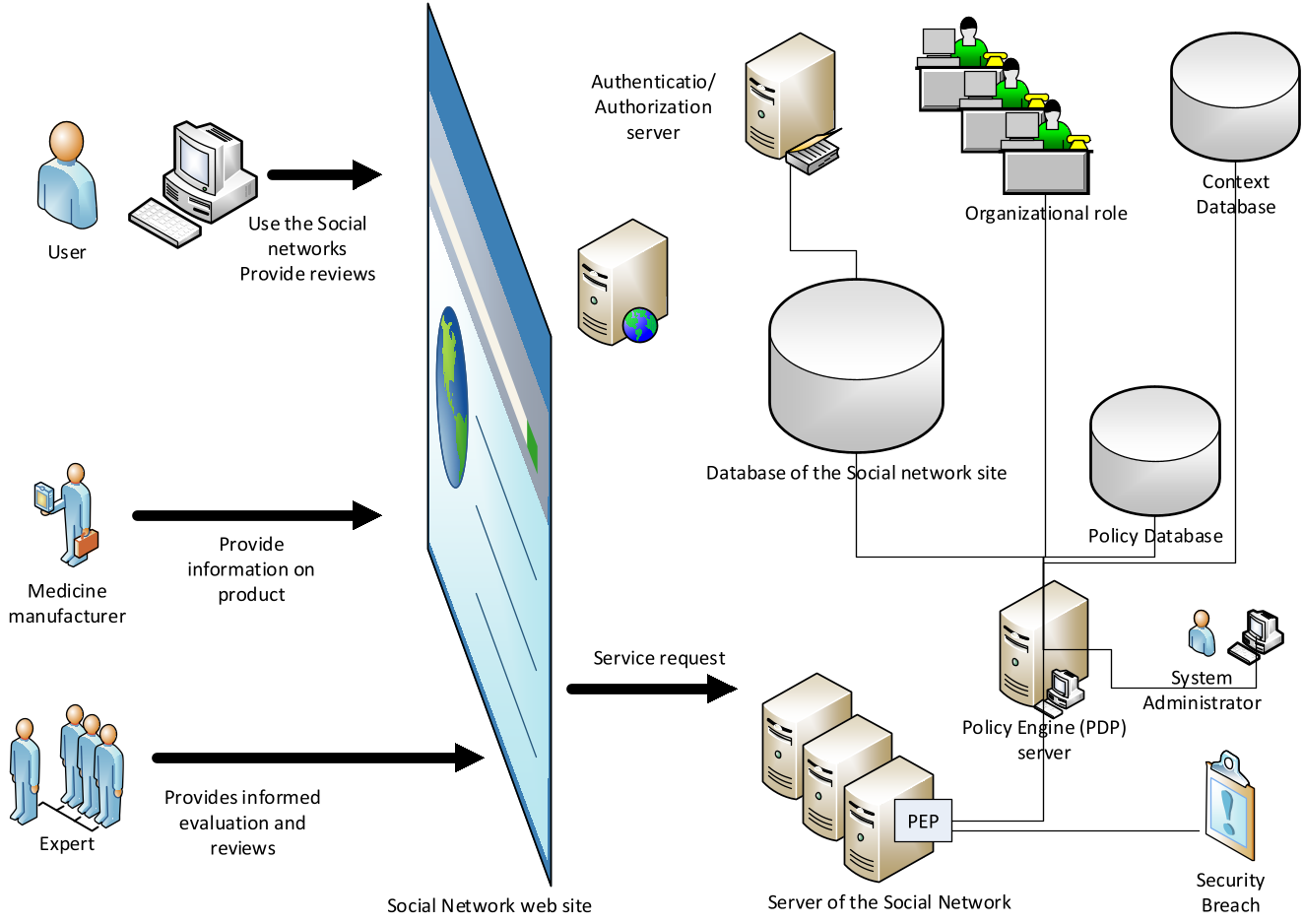 Figure 2: The integrated framework combining authentication, policy databases, and external context for trust verification.
Critical Insight: Trust as a Continuous Process
The paper’s most profound contribution is the shift from Trust-as-a-Product (a shield or a certificate) to Trust-as-a-Workflow. By using a policy-based approach, platforms can remain "technology agnostic." As new threats emerge or EU regulations update, developers don't need to rebuild the social network; they simply update the policy database in the PDP.
Limitations
- Centralization Risk: The PDP represents a single point of failure or potential censorship.
- Identity Friction: Requiring strong authentication (to prove roles like "Doctor") may reduce user participation due to privacy concerns or effort.
Conclusion
This work serves as a blueprint for the "Third Pillar of Trust and Security" in the European Digital Agenda. By moving toward policy-driven social architectures, we can move closer to a digital society where peer-produced knowledge is not just abundant, but actually reliable.