
Deciphering the Online Review Life Cycle: A Dynamic Agent-Based Perspective
European journal of operational research
This paper introduces a multi-agent system (MAS) to model the life cycle dynamics of online review systems (ORS). By integrating Social Exchange Theory (SET) and social network concepts, the authors propose an agent-based model (ABM) that simulates the evolution of user reviews and social bonds, validated against a massive dataset spanning 153 months from a real-world platform.
TL;DR
Why do most online review systems (ORS) fail to maintain momentum? This research suggests the answer lies in a fundamental misunderstanding of time. Using a sophisticated Multi-Agent System (MAS), the authors demonstrate that the effectiveness of incentives is not static. Economic rewards (coupons) are the engines of the early stage, while social status (ranks) sustains the late stage.
Background: The Static Fallacy
In the world of E-commerce, online reviews are the lifeblood of sales. However, managers often treat communities as static entities. They throw monetary rewards at users indiscriminately, wondering why engagement still plateaus. The reality is that ORSs are complex, adaptive systems where member motivations evolve alongside the community’s size and bond density.
Methodology: Simulating the "Digital Society"
The researchers developed an Agent-Based Model (ABM) where each "agent" (user) makes decisions based on a cost-benefit analysis.
1. The Decision Flow
Agents don't just "post"; they navigate a logical flow of Bonding → Reading → Posting. The benefits are calculated through a mix of:
- Intrinsic Value: Altruism, content absorption, and self-efficacy.
- Extrinsic Value: Social reputation (Rank) and Economic rewards (Coupon).
2. Modeling Social Bonds
The model incorporates nine triadic structures (Similarity, Reciprocity, Attachment, Transitivity, etc.) to simulate how users follow one another.
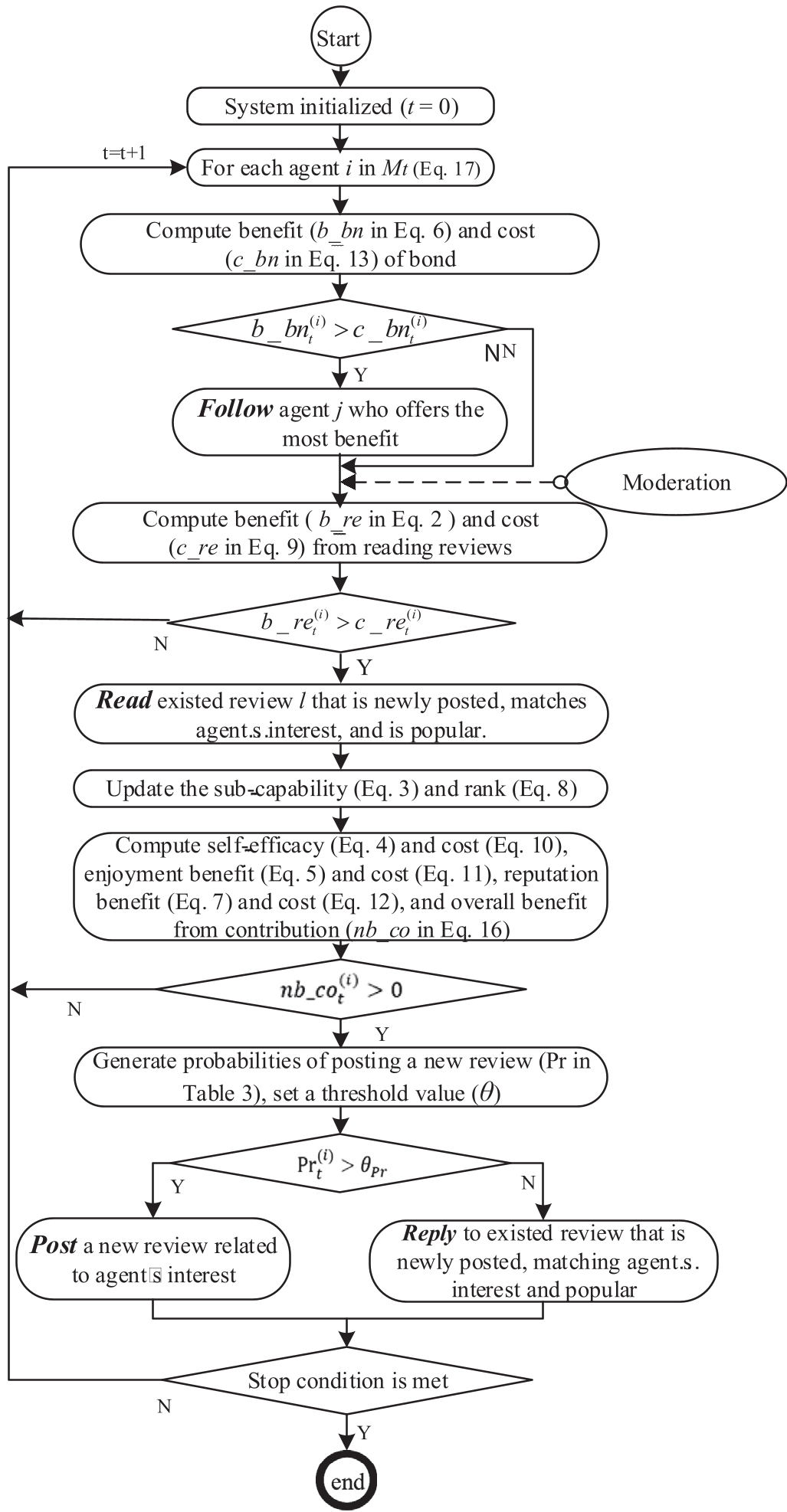 Figure 1: The cognitive and operational workflow of an agent in the simulated ORS.
Experiments: Stage-Dependent Success
The model was validated using 153 months of data from pconline.com.cn, comprising 5.9 million reviews. The simulation successfully replicated the non-linear "rise and fall" of review volumes.
Economic vs. Social Moderation
The most striking discovery was the Temporal Moderation Effect:
- Early Stage (Introduction/Growth): Financial incentives (coupons) have a significant impact on review volume. Users are more motivated by immediate extrinsic gains when social ties are weak.
- Late Stage (Maturity/Decline): Social moderation (reputation ranks) becomes the dominant force. As the "noise" of information increases, users value their status and influence within the network more than small monetary rewards.
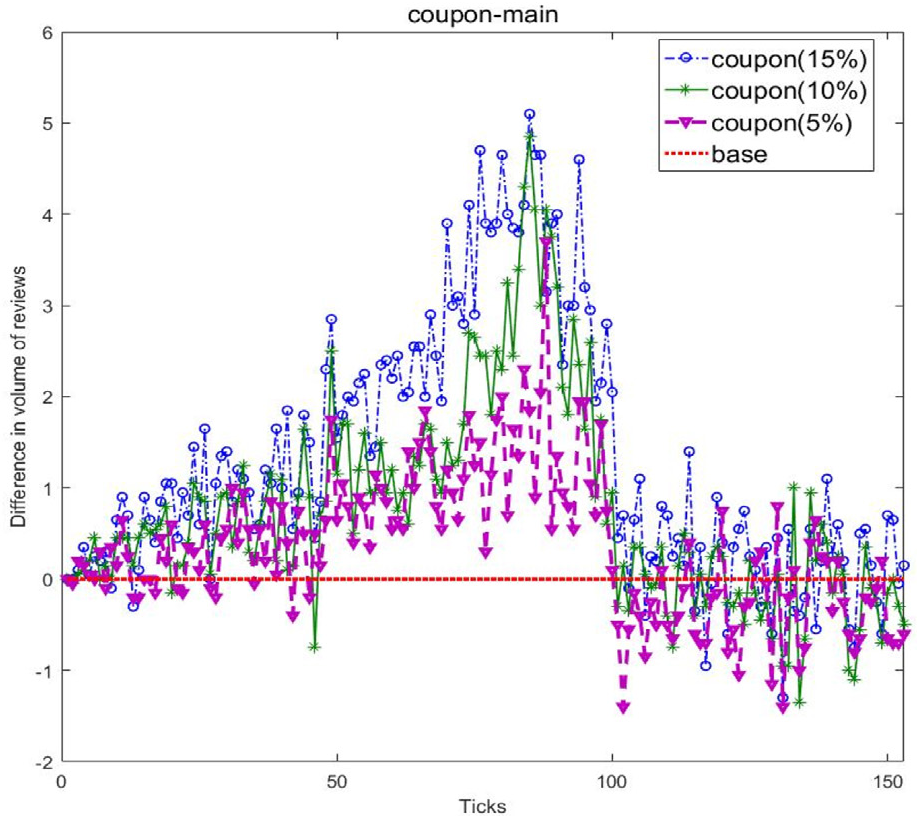 Figure 2: Impact of economic coupons on review volume over a 153-month cycle.
The Power of Combination
The researchers found that a Combined Mechanism (Rank + Coupon) is significantly more effective than either alone, but only at medium-to-high levels. At low levels, the cost of implementing complex combined systems outweighs the marginal gains in user participation.
Critical Insight: The "Bonding" Paradox
Despite the boost in review volume, the study found that none of the moderation mechanisms significantly improved the formation of social bonds. Bonds are formed through long-term, organic interactions. While you can "buy" a review with a coupon, you cannot "buy" a friendship or a trust-based "Follow" relationship.
Conclusion & Strategic Takeaways
- Switch the Incentive: Managers should transition from "pay-per-review" models to "prestige-based" systems as their community grows.
- Timing is Everything: If your platform is new, focus on economic ROI. If it's established, focus on social network dynamics.
- Acknowledge the Life Cycle: Every community has a decline phase. Static strategies won't stop it, but dynamic moderation can extend the "Maturity" phase significantly.
Limitations
The study focused on a non-profit IT community. Future research is needed to see if these dynamics hold in "high-stakes" environments like health-related review systems or purely profit-driven retail platforms.