
Beyond Optimization: Negotiating Poverty and Gender in Nairobi's Slums
European journal of operational research
This paper presents a longitudinal ethnographic study and a Community-Based Operational Research (CBOR) intervention focused on 'Chamas'—informal women’s community organizations in Nairobi slums. By integrating Value-Focused Thinking (VFT), the authors facilitate collective decision-making to help marginalized women secure sustainable livelihoods, moving beyond traditional SOTA mathematical modeling to nuanced, situated social dynamics.
TL;DR
This study bridges the gap between high-level development theory and ground-level reality by using Community-Based Operational Research (CBOR) and ethnography. By working with "Chamas" (women's credit groups) in Nairobi, the researchers demonstrate how subjective values and "negotiated" decisions lead to sustainable livelihood improvements that rigid mathematical models often miss.
The "Double Entry" Barrier: Why Standard Interventions Fail
Women in Kenyan slums face a unique socio-historical legacy. Stemming from colonial structures that privileged male land ownership and "customary law," women today encounter a "double entry" problem: they are marginalized by both extreme poverty and hegemonic masculinity.
The authors argue that traditional Operational Research often fails here because it views poverty as a lack of resources, ignoring the intersectionality of gender, class, and race. Before any "optimal" solution can be found, one must understand the values that shape how these women define their own problems.
Methodology: High-Touch Ethnography meets Value-Focused Thinking (VFT)
The research doesn't just observe; it intervenes. Using an interpretive paradigm, the authors used Value-Focused Thinking to help the "Stony Edge" Chama identify their true objectives.
1. Goal Hierarchies
Instead of just "saving money," the process identified:
- Fundamental Objective: Financial stability and independence to support families.
- Means Objective: Efficient use of savings and starting micro-businesses.
2. The Collaborative Model
The intervention was guided by a generic CBOR framework, but was heavily adapted through visual diagrams to overcome language and literacy barriers.
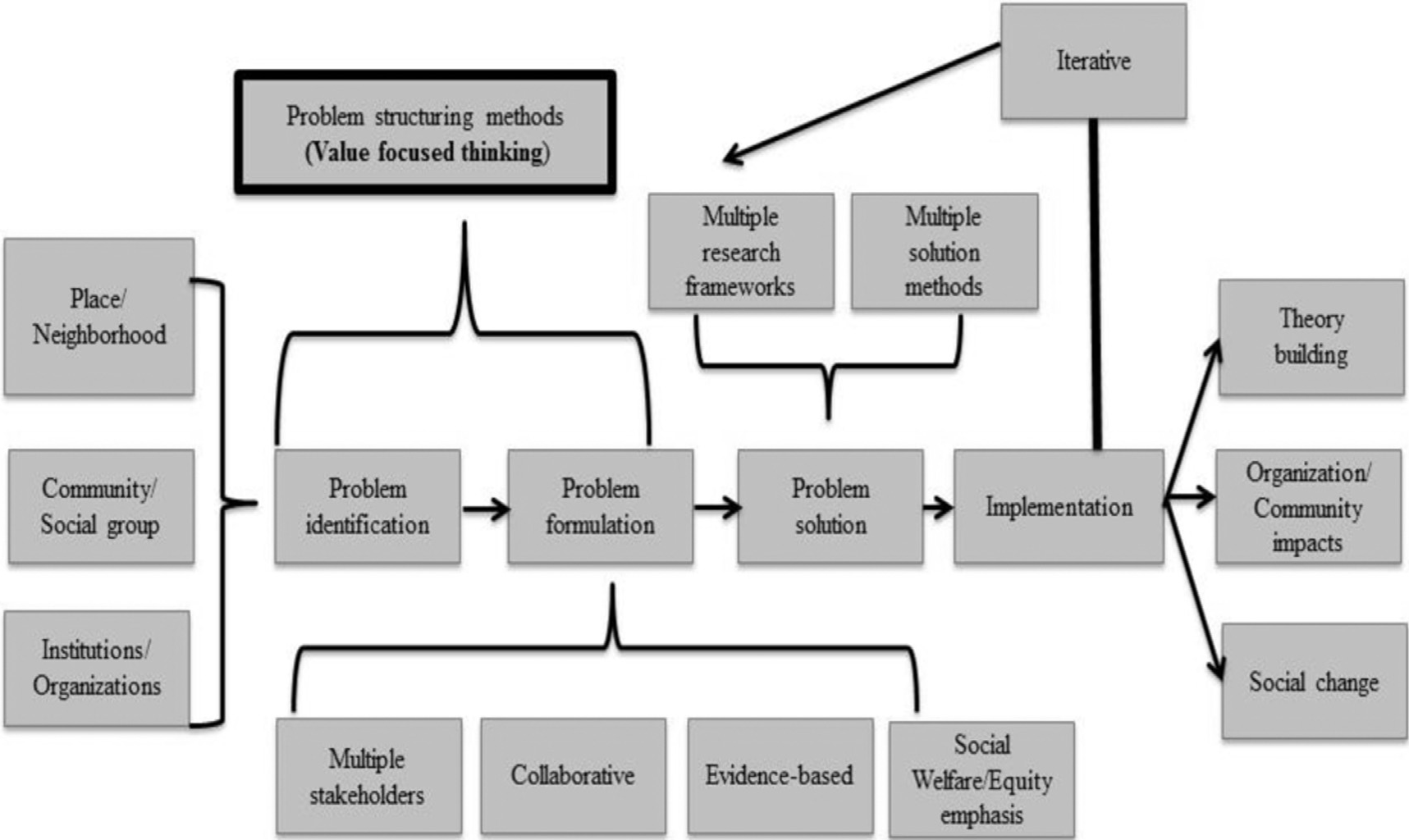 Figure 1: The objective-setting process transitioning from sustainable livelihoods to specific financial stability targets.
Negotiated Decisions vs. Optimal Solutions
A key insight of this paper is that the "best" business idea isn't always the one with the highest ROI on paper. The women evaluated several options through a gendered lens:
- Land/Rental Houses: High risk due to male-dominated traditions and potential safety issues when collecting rent.
- Water Distribution: Lucrative, but high "reproductive labor" costs—meaning it would interfere with childcare and household duties.
- Equipment Rental (The Winner): Renting out tents and chairs for weddings/funerals. It required secure storage but less constant manual labor, allowing women to balance their dual roles.
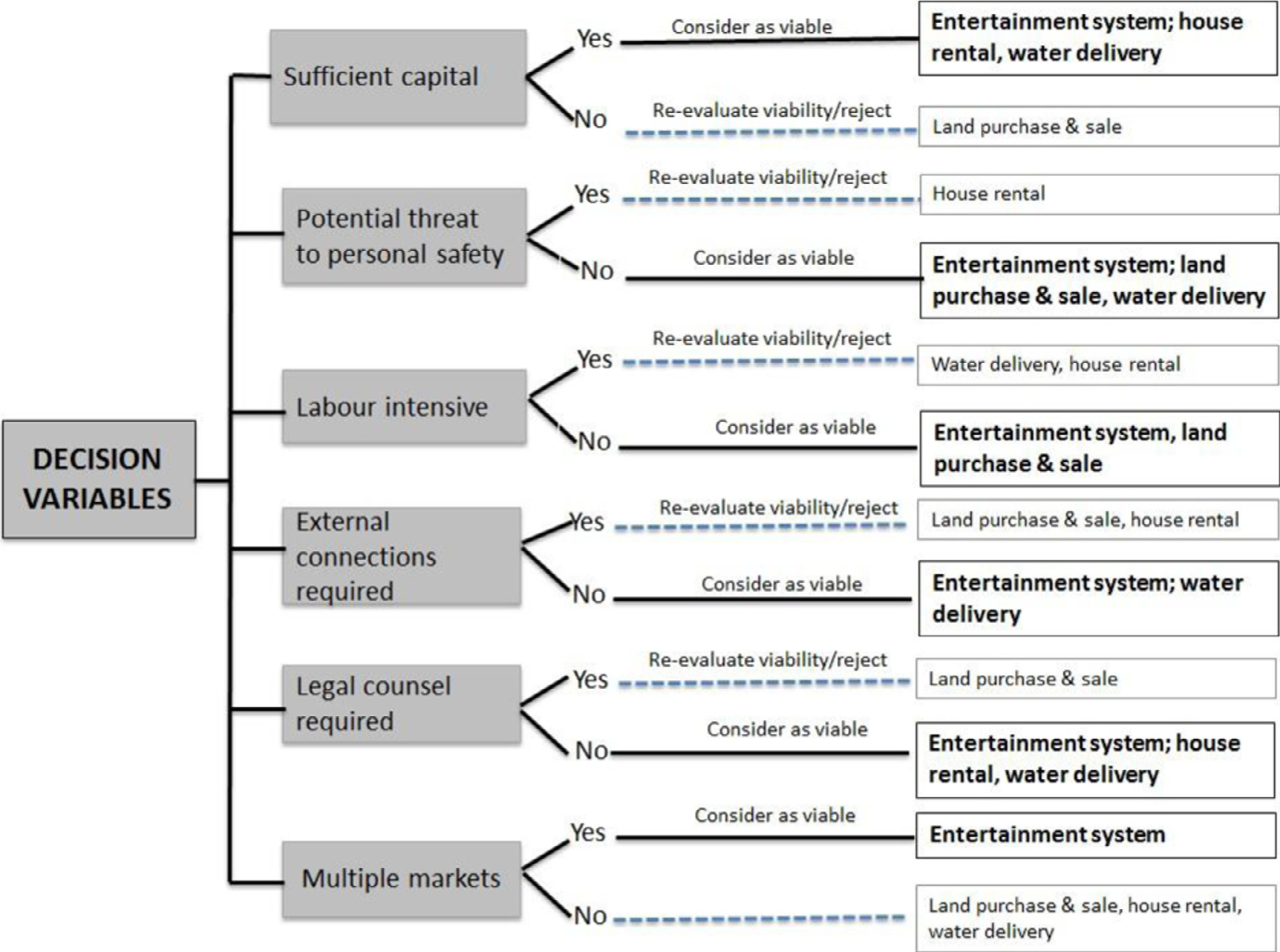 Figure 2: Variables considered in evaluating business viability, showing the trade-offs between effort, security, and cultural norms.
Impact: Agency as a Marketplace Force
Fast forward five years (2016): The Stony Edge Chama had acquired 500 plastic seats and tents. While this might seem "micro" on a global scale, its implications are "macro":
- Direct Agency: Women are no longer just survivors; they are micro-entrepreneurs.
- Institutional Shift: Their success has forced Kenyan banks and government funds (like the Uwezo Fund) to redesign financial products to fit the informal "Chama" structure.
Critical Insight: The Researcher as 'Border-Crosser'
The paper concludes with a powerful reflection on positionality. Even though the first author is a Black African woman, the differences in education and class created "borders." True ethnographic success required moving from being an "expert" to a "collaborator."
This work stands as a testament that in marginalized communities, the most effective "algorithms" are those rooted in the community's own values and negotiated realities.