
Deciphering the "Vaccine Hesitancy" Algorithm: A Multi-Criteria Belief Model
European journal of operational research
This paper proposes an integrated mathematical model combining Multiple Criteria Decision Analysis (MCDA) and Social Network Analysis (SNA) to quantify vaccination decision-making. By utilizing Evidential Reasoning (ER), the model captures how individual beliefs on vaccine safety and disease severity evolve through social influence, ultimately determining population-level vaccination coverage.
TL;DR
Why do people refuse vaccines even when they are freely available? This paper moves beyond simple "rationality" models to a sophisticated framework that treats vaccination as a Multiple Criteria Decision Analysis (MCDA) problem. By integrating Evidential Reasoning with Social Network Analysis, the authors provide a quantitative tool to simulate how a single rumor or a piece of clinical evidence ripples through a community to change vaccination rates.
The Problem with "Rational" Models
Most epidemiological models treat humans as "payoff maximizers." If the cost of the vaccine is lower than the risk of the disease, you get the shot. However, real-world data shows that human behavior is far more nuanced, driven by altruism, misinformation, and subjective trust.
Previous psychological frameworks like the Health Belief Model (HBM) identified what factors matter (safety, severity, etc.), but they couldn't explain how those factors change over time when you talk to your neighbor or read a post on social media.
Methodology: The Belief Distribution Engine
The core innovation of this paper is representing an individual's mindset not as a single "yes/no" value, but as a Belief Distribution.
1. The Decision Hierarchy
Decisions are broken down into a multi-level tree. An individual weighs:
- Perceived Risk of Disease: (Sub-criteria: Susceptibility and Severity)
- Vaccine-Specific Issues: (Sub-criteria: Safety, Effectiveness, and Convenience)
2. Evidential Reasoning (ER)
When you hear from a friend that a vaccine had "side effects," you don't instantly switch from "Accept" to "Reject." Instead, you update your internal probability mass. The authors use the Dempster-Shafer theory of evidence to aggregate these conflicting pieces of information.
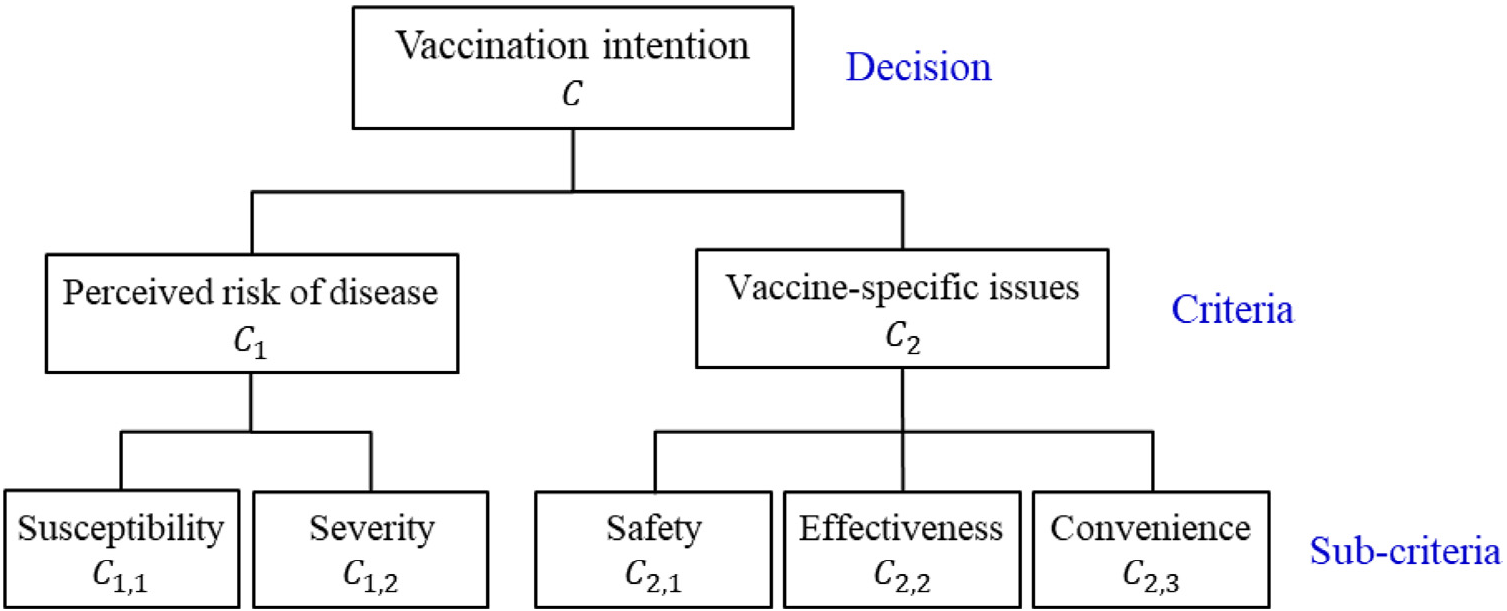 Figure 1: The hierarchical structure used to model how different concerns weigh into the final decision.
3. Social Network Integration
The model places individuals in a directed graph where edges represent the "strength" of influence. Information spreads like a virus, but it's the belief that is contagious. An individual only makes a final decision when their accumulated belief in "Accept" or "Reject" crosses a specific psychological boundary (φ).
Simulation Results: The Power of Information
The authors tested their model on a real-world network of 217 residents. The findings were stark:
- The "Wait and See" Effect: Many individuals remain in an undecided state for long periods.
- Sensitivity to Content: Positive information (e.g., news of high vaccine effectiveness) can significantly boost coverage, but a late-arriving piece of negative information (e.g., a safety scandal) can rapidly erase those gains.
- Weight Matters: The sensitivity analysis (shown below) indicates that if a population is highly concerned about safety (high weight on C2,1), even overwhelming evidence of disease severity (C1,2) will fail to move the needle on vaccination rates.
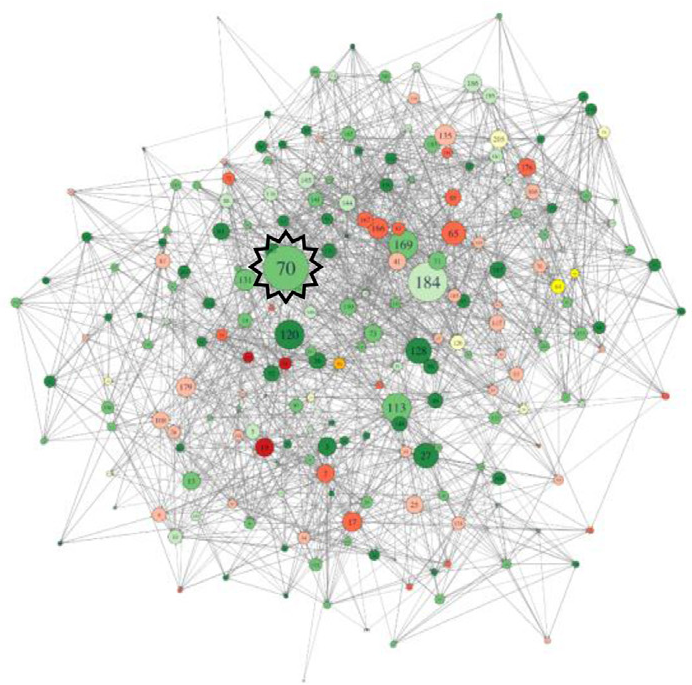 Figure 2: Simulation of belief updates across the network over time steps t0 to t5.
Critical Insight & Future Outlook
The value of this research lies in its granularity. It provides healthcare professionals with a "social laboratory" to test different communication strategies. Instead of a one-size-fits-all "Get Vaccinated" message, the model suggests that if a specific community weights Convenience (C2,3) highly, logistical improvements will be more effective than safety advertisements.
Limitations: The study used a relatively small network (217 nodes). In the era of the COVID-19 pandemic and global social media, the scale and speed of "influence spreading" are likely much more volatile. Future work needs to incorporate "homophily"—the tendency of people to only listen to those who already agree with them—which could lead to the formation of "anti-vax" echo chambers in the model.
Conclusion
Vaccination is a social act. By quantifying the invisible threads of influence and the internal weights of belief, this integrated model offers a path toward more empathetic and effective public health interventions.