
Predictive Analytics in Social Media: Anticipating the Next Wave of User Engagement
European journal of operational research
This study pioneer's the application of analytical Customer Relationship Management (aCRM) to the social media industry by predicting increases in Facebook usage frequency. Using data from 921 users, the researchers benchmarked six machine learning algorithms, identifying Stochastic AdaBoost as the superior approach with a cross-validated AUC of 0.66 and 0.74 accuracy.
TL;DR
Can we predict if a user will spend more time on Facebook next month just by looking at their current behavior? This study proves it's not only possible but highly actionable. By leveraging Stochastic AdaBoost, researchers achieved an AUC of 0.66 in predicting usage increases, revealing that "how" you use the platform (behavioral stability) matters far more than "who" you are (demographics).
The "Up-Sell" Problem in the Social Age
In traditional CRM, companies focus on preventing "Churn" (users leaving). However, for a platform like Facebook, where revenue is tied to ad impressions, the real prize is Usage Increase. If you can predict who is about to become more active, you can maximize ad delivery without "burning out" the user. Conversely, if a user is predicted to stall, the platform can proactively pivot to show more "social" content (friends' posts) and fewer ads to re-engage them.
The challenge? Social media data is messy. It involves "likes," check-ins, privacy settings, and irregular posting schedules that don't fit neatly into the linear models used by banks or insurance companies.
Methodology: Beyond Simple Demographics
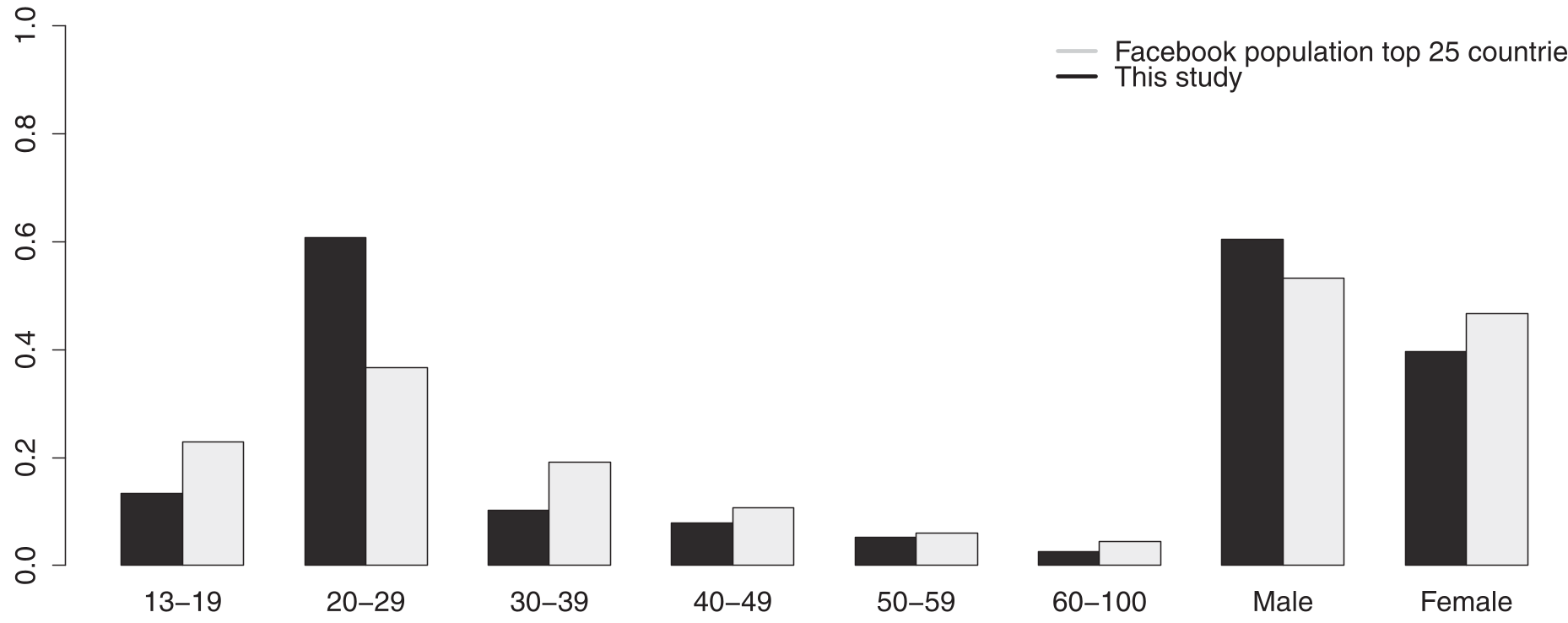
The researchers moved beyond the "Age and Gender" trap. They mined 418 distinct variables across categories like:
- Behavioral Pacing: Time between posts and deviation from "normal" routines.
- Social Capital: Group memberships and interest categories (Retail, Food, Public Figures).
- Privacy Stewardship: How much effort a user puts into custom album settings.
They benchmarked six heavy hitters: Logistic Regression, Random Forest, AdaBoost, Kernel Factory, Neural Networks, and SVM.
 In the framework above, the distinct transition from the Independent Period (observation) to the Dependent Period (prediction) illustrates how the 25% usage increase threshold was established.
Why AdaBoost Won
The results revealed a clear hierarchy in algorithm performance. Stochastic AdaBoost reigned supreme. The reason is rooted in the nature of decision trees: they don't assume a "normal distribution." Because social media data is often skewed (e.g., a few users post 100 times, most post twice), trees naturally handle these "long-tail" distributions better than Neural Networks or Logistic Regression.
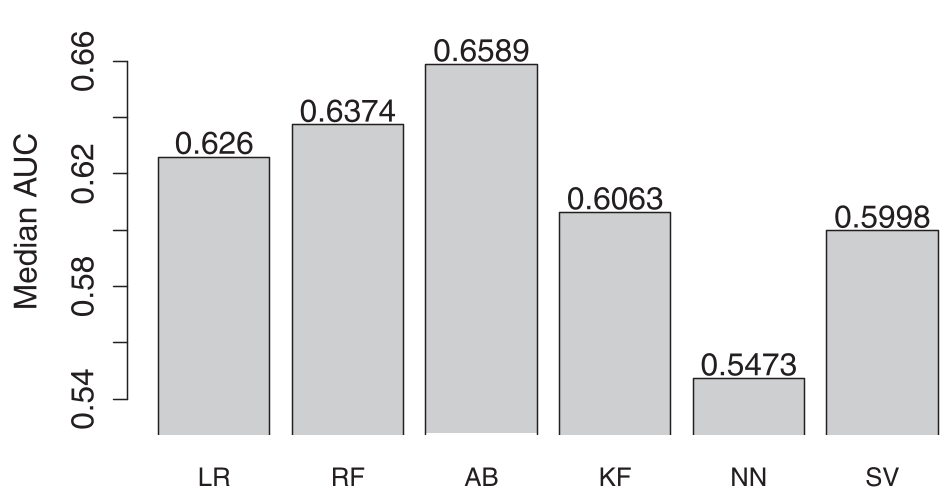 The AUC results (above) show AdaBoost maintaining a lead, particularly in its ability to separate 'increasers' from 'stable' users across different folds of cross-validation.
The "Time Ratio" Insight
The most fascinating discovery was the Time Ratio—the standard deviation of time between events divided by the mean.
- Physical Intuition: If you use Facebook at the same time every day (low Time Ratio), you are "behaviorally loyal" and more likely to increase usage.
- The Trend: Chaotic usage patterns (high Time Ratio) are a precursor to stagnation or churn.
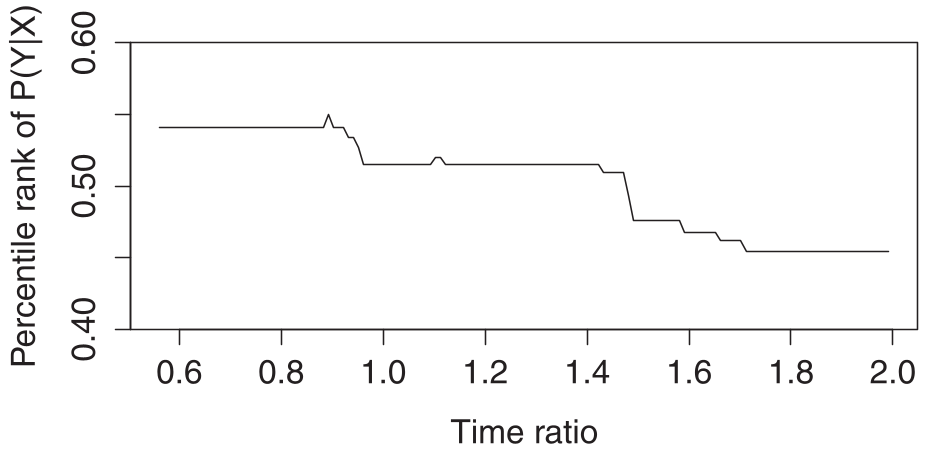 As seen in Fig 8, the probability of usage increase drops sharply as the 'Time Ratio' increases, while it rises with age and 'Retail' category likes.
Critical Analysis & Future Outlook
While this study sets a benchmark, it has a notable "Dark Spot": Network Effects. The authors admit they couldn't see the "Friends" of the users. In a social network, your behavior is often a reflection of your peer group.
Future Implications:
- Ad Pacing: Platforms can use these models as a "Dimmer Switch" for ads—upping the intensity when a user is in an "increasing" phase.
- Contextual Re-engagement: For those predicted to stay flat, the algorithm should prioritize "High-Engagement" social content (like photos of family) over generic news links.
In conclusion, the study proves that behavioral consistency is the "North Star" for social media growth. If you want to know if a user is coming back, don't look at their profile—look at their rhythm.