
Beyond Demographics: Predicting Social Event RSVPs with Competing Risk Models
European journal of operational research
This paper proposes a privacy-friendly predictive framework based on a Competing Risk Model and Bayesian Networks to forecast if and when individuals will respond to social event invitations. By leveraging historical participation data from the Meetup platform, the "bcure" method achieves state-of-the-art performance (AUC of 0.981) without requiring sensitive personal demographics.
TL;DR
Organizing a successful event is a logistical nightmare when you don't know who is coming. This paper introduces "bcure", a privacy-friendly model that predicts invitation responses (Yes, No, or Ghosting) using only past attendance history. By treating non-response as a "cure" (a group that will never respond) and using Bayesian Networks to map social ties, the model achieves a staggering 0.981 AUC, proving that who you've met matters more than who you are.
The "Invitation" Problem: Why Traditional Models Fail
Predicting attendance isn't just about a binary "Yes" or "No." It’s about timing and intent.
- The Privacy Wall: Many models need age, gender, and job titles to work. In the modern GDPR era, this data is often inaccessible.
- The "Ghosting" Phenomenon: In survival analysis, if someone hasn't responded yet, standard models just "censor" them. But in social events, a non-response often means the person has no intention of ever coming—a "Competing Risk" that standard models ignore.
Methodology: The "bcure" Architecture
The authors propose a two-stage approach that avoids the pitfalls of linear assumptions in traditional Cox regression.
1. Inferring the Invisible Network
Instead of asking for a friend list, the authors build two adjacency matrices:
- Homophily Matrix (): Links people who both accept or both reject the same events.
- Heterophily Matrix (): Links people with opposing response patterns. From these, they extract features like Betweenness Centrality and Clustering Coefficients to quantify an individual's social "influence" and "vulnerability" to peer pressure.
2. The Mixture Cure Component
The core innovation is the Mixture Cure Model. It splits the population into two:
- The Non-susceptible: Those who will never respond to the invitation.
- The Susceptible: Those who will eventually respond (Accept or Decline).
3. Bayesian Network Integration
While standard models assume variables are independent, the Tree Augmented Naïve Bayes (TAN) used here captures the complex interdependencies between past attendance rates and social network positions.
 Eq 20: The Joint Probability Function combining the Logistic Hurdle and Bayesian Adjusted Survival.
Experimental Results: High-Fidelity Predictions
The model was tested against nearly 9,000 events in London, New York, and LA.
- Performance: The
bcuremodel reached an AUC of 0.981, consistently outperforming Logistic Regression (0.852) and the standard Cox model (0.837). - Feature Importance: Interestingly, Past Attendance Rate and Number of Invitations Received were the strongest predictors. Network features contributed roughly 40.6% to the total predictive power.
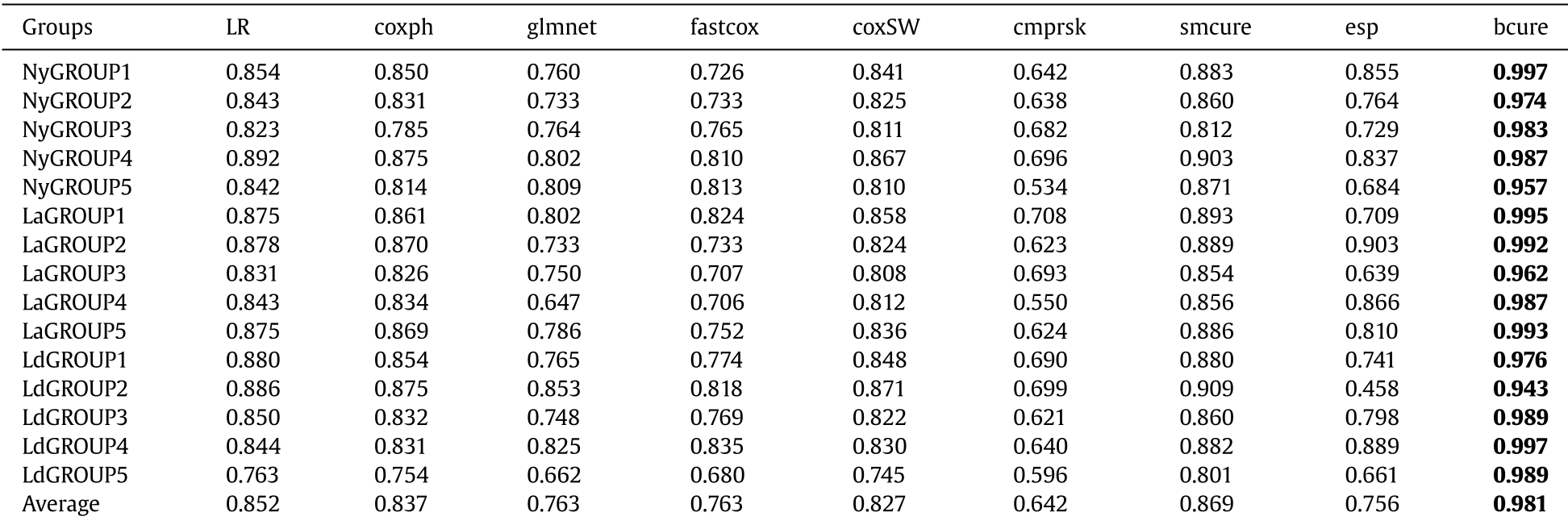 Table 5: Quantitative performance across different urban datasets and modeling techniques.
Critical Insight: The Value of Privacy-Friendly Data
The beauty of this research is its minimalist data requirement. By focusing on the "structural signature" of a user (how they interact with the group) rather than their personal identity, the authors have created a model that is both highly accurate and ethically compliant.
Limitations & Future Work
The model does not yet account for "confounding factors" like sudden weather changes or public transport strikes, which can skew attendance at the last minute. Furthermore, it assumes that the network structure captured via Meetup represents the user's entire social context—a simplification that might not hold for users active on multiple platforms.
Conclusion
For event organizers and community managers, the "bcure" model offers a way to optimize resource planning (catering, venue size) by identifying high-probability attendees days in advance. It shifts the paradigm from "Who are our members?" to "How do our members interact?", marking a significant step forward in predictive social analytics.