
A Roadmap for Responsible Big Data: Maximizing Societal Impact on the Environment
A European research roadmap for optimizing societal impact of big data on environment and energy efficiency
This paper presents a strategic research roadmap for the European big data economy, specifically targeting environmental sustainability and energy efficiency. It synthesizes findings from the BYTE project to identify technical and non-technical priorities—such as data quality measurement and privacy-preserving mining—to maximize societal benefits over a five-year horizon.
TL;DR
As the Internet of Things (IoT) and Earth Observation (EO) generate unprecedented volumes of environmental data, the challenge is no longer just how to process it, but how to do so responsibly. This paper outlines a European research roadmap that bridges the gap between technical innovation and societal externalities, providing a 5-year strategic plan for data management, protection, and visualization to drive energy efficiency and sustainability.
Background: Beyond the 5 Vs of Big Data
While the industry often fixates on the "5 Vs" (Volume, Velocity, Varitey, Variability, Veracity), this research argues that the Societal Impact is the missing dimension. In the environmental sector, Big Data isn't just a technical asset—it’s a double-edged sword that can either improve disaster risk management or lead to political surveillance and market monopolies.
Problem & Motivation: The Hidden Cost of Data
Existing Big Data practices suffer from several critical "externalities"—costs or benefits that affect third parties who didn't choose to incur them. The authors highlight:
- Economic Inequality: Open data policies often favor large corporations with the infrastructure to exploit them, potentially crushing smaller local players.
- Trust Deficit: Fears of "ransomware" in smart grids and privacy violations in building data hinder citizen participation.
- Lack of Standards: Industrial competitors often use "standard violations" as a strategy to lock users into proprietary ecosystems.
Methodology: The T-Plan Approach
To solve this, the researchers adopted a multi-layered roadmapping framework (the T-Plan). This connects the "Know-Why" (Economic, Social, Ethical, and Legal goals) with the "Know-How" (Technical resources like Data Protection and Processing).
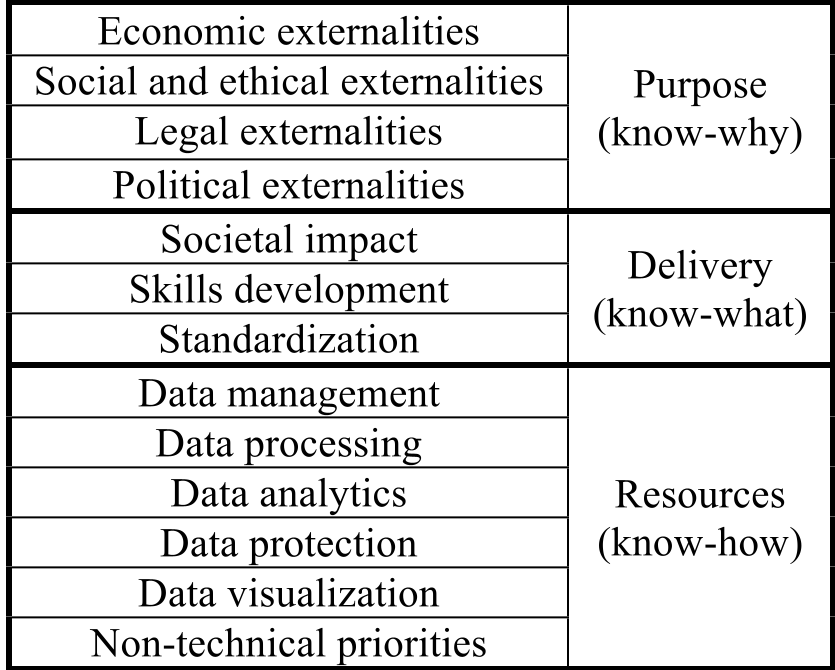 Table 1: The Multi-layered roadmapping approach used to align technical resources with societal purpose.
Methodology Detail: The EO Case Study
The roadmap is grounded in the Group on Earth Observation (GEO) case study. Key insights revealed:
- Heterogeneity: Data is pulled from satellites, buoys, social media (e.g., Twitter for earthquake tracking), and citizen-contributed "Internet of People" data.
- Shift to Actionable Data: The technical hurdle is no longer discovery, but the transformation of raw streams into actionable insights for disaster resilience.
Research Priorities & 5-Year Roadmap
The roadmap categorizes priorities based on their urgency and potential impact:
1. Data Management & Processing
- Priority: Measuring data quality and establishing "Data-as-a-Service" models.
- Physical Intuition: As we move toward decentralized architectures, we decrease dependency on "Big Players" and reduce the high energy costs associated with massive centralized storage.
2. Data Protection & Ethics
- Mechanism: Development of privacy-by-design and anti-discrimination-by-design frameworks.
- Goal: Using pattern-hiding algorithms to ensure that while a city's energy trends are public, an individual's lifestyle isn't exposed.
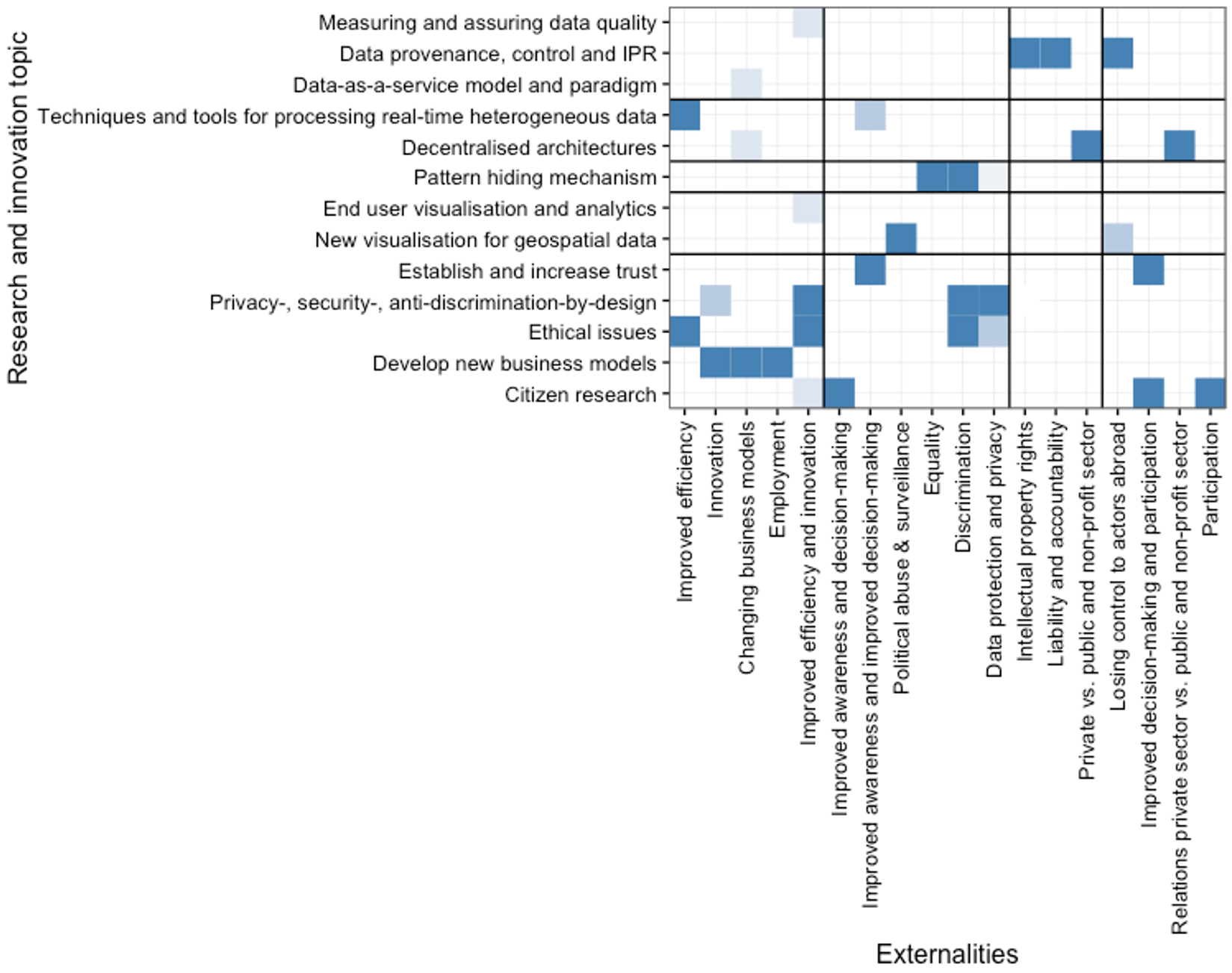 Fig 1: Timeline of research topics grouped by technical priority. Data management and non-technical frameworks (Trust/Ethics) dominate the immediate 5-year horizon.
Experimental Analysis: Impact Mapping
The authors validated their roadmap through workshops with 26-plus stakeholders from SMEs, academia, and public organizations. They mapped technical efforts against specific externalities:
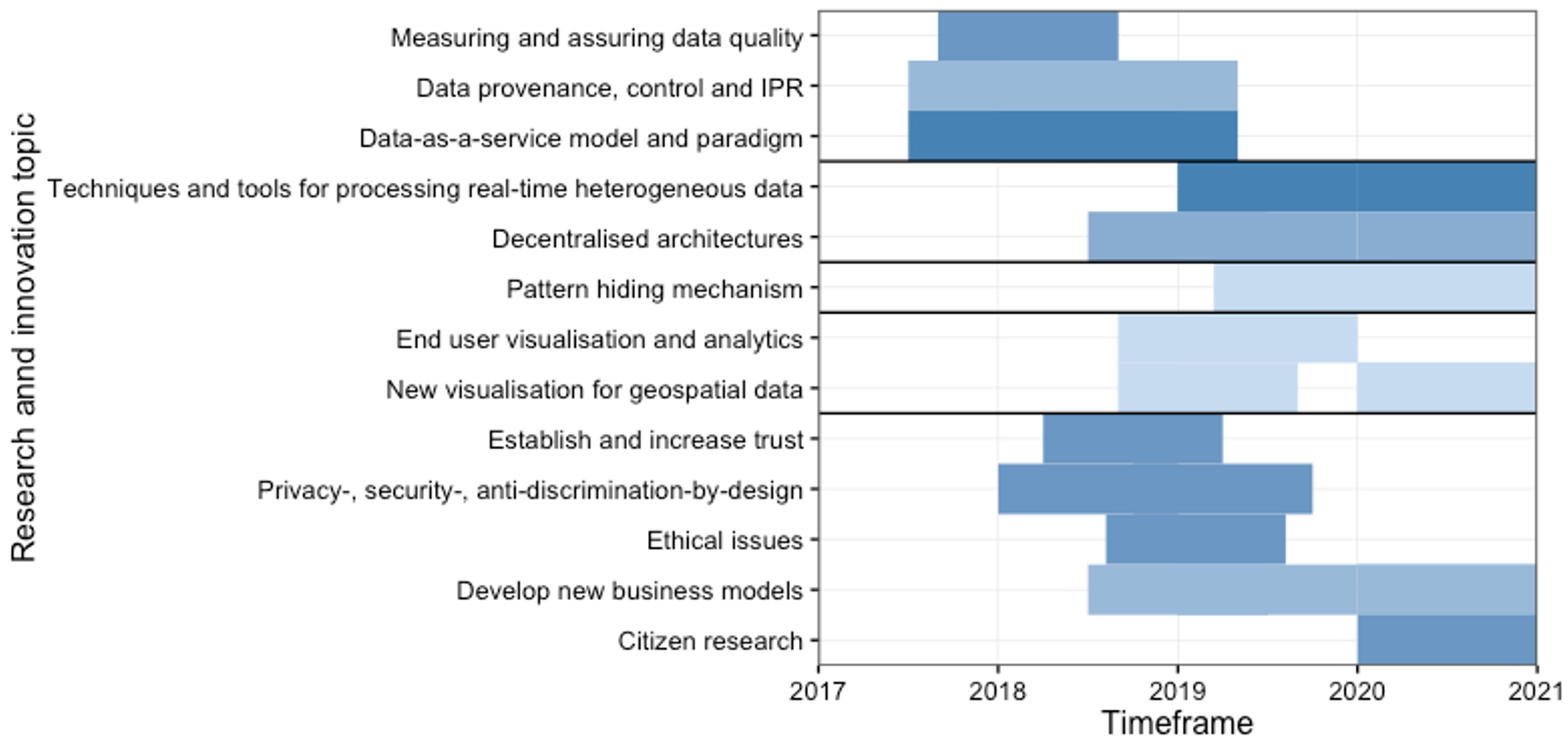 Fig 2: Heatmap showing the expected impact of technical topics on Economic, Social, Legal, and Political externalities.
Key Findings from Impact Analysis:
- Visualization has the strongest impact on Social awareness and decision-making.
- Data Management is the primary driver for Economic growth and transparency.
- Non-Technical Priorities (skills, policy) are the only way to effectively tackle Legal and Political risks.
Critical Insight & Conclusion
The Takeaway
The environmental sector is the "killer app" for crowdsourced data and citizen science. By improving semantic interoperability—the ability for different systems to actually understand each other's data—Europe can foster an ecosystem where energy efficiency is a public good, not a private monopoly.
Limitations & Future Work
While the roadmap is comprehensive, it notes that reduced innovation can occur if legislation becomes too restrictive. The next frontier is finding the "Golden Mean" where privacy-preserving mining is efficient enough to compete with traditional, less-private data mining speeds.
Final Thought: Environmental data is the foundation of energy efficiency. This roadmap isn't just a technical guide; it's a social contract for the Big Data age.