
ScotDigiCH: Beyond the Click—Decoding the Real Value of Digital Cultural Heritage
Evaluating digital resources in cultural heritage: Lessons from the ScotDigiCH network
The paper introduces ScotDigiCH, a multidisciplinary research network designed to evaluate the use and impact of digital cultural heritage resources. Using the Kelvin Hall Project as a primary case study, it integrates frameworks from digital humanities, computing science, and museology to transition from basic usage metrics to understanding the deeper value of digital collections.
TL;DR
While museums rush to digitize everything, they often fly blind regarding their actual audience. The ScotDigiCH network addresses this by moving evaluation away from mere "impact" (numbers) toward "value" (meaning). Through the Kelvin Hall case study, the research proves that understanding the felt experience of a user is more critical for long-term digital strategy than tracking simple engagement metrics.
The Evaluation Gap: Why Big Numbers Aren't Enough
For decades, the success of a digital collection was measured by "hits" or "downloads." However, as Maria Economou argues, these metrics are hollow. They don't tell us if a researcher found a breakthrough or if a student felt a connection to their local history.
The core motivation for ScotDigiCH was the realization that digitization is not a "build it and they will come" field. Without robust evaluation frameworks that combine computing science (eye-tracking) with social sciences (ethnography), institutions risk wasting vast resources on tools that provide no legitimate cultural or educational value.
Methodology: A Multi-Dimensional Framework
The ScotDigiCH network didn't just write a paper; they built an ecosystem. By centering the research on the Kelvin Hall Redevelopment Project, they bridged the gap between academic theory and museum practice.
The Core Mechanism: The Workshop Strategy
The methodology was structured around four critical pillars:
- Access Models: Analyzing past successes like SCRAN to see what lasted.
- User Motivations: Shifting toward Crowdsourcing and Co-curation. As the British Library's Mia Ridge noted, "Don't lock yourself in the kitchen"—user engagement requires transparency and invitation.
- Experimental Evaluation: Moving beyond the "Search Box" to look at navigation and discovery.
- The Value Shift: Using Simon Tanner’s Balanced Value Impact (BVI) model to justify digital spend in a competitive socio-economic climate.
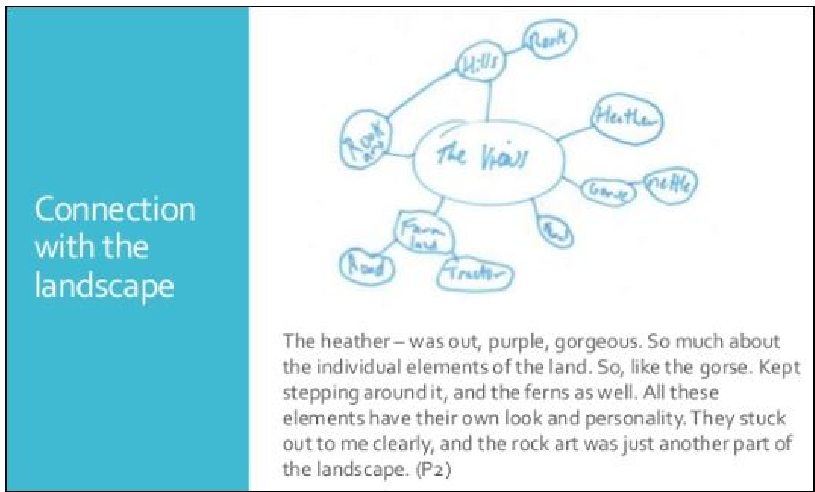 Fig 1: Using Mind Maps to evaluate the user's "felt experience" during the Rock Art Mobile app study.
Deep Dive: Eye-Tracking and Qualitative Insights
One of the most intriguing aspects of the methodology was the use of Eye-Tracking. Jan Hendrik Hammer demonstrated that while we can track where a visitor looks (the "what"), we still need qualitative follow-ups to understand the "why."
For instance, in the "Second Moon" art app study, researchers found that meaningful experiences require good usability, but good usability alone does not guarantee a meaningful experience. Users kept online diaries that revealed "sense-making" processes—how they connected digital art to their physical environment—which no automated script could ever capture.
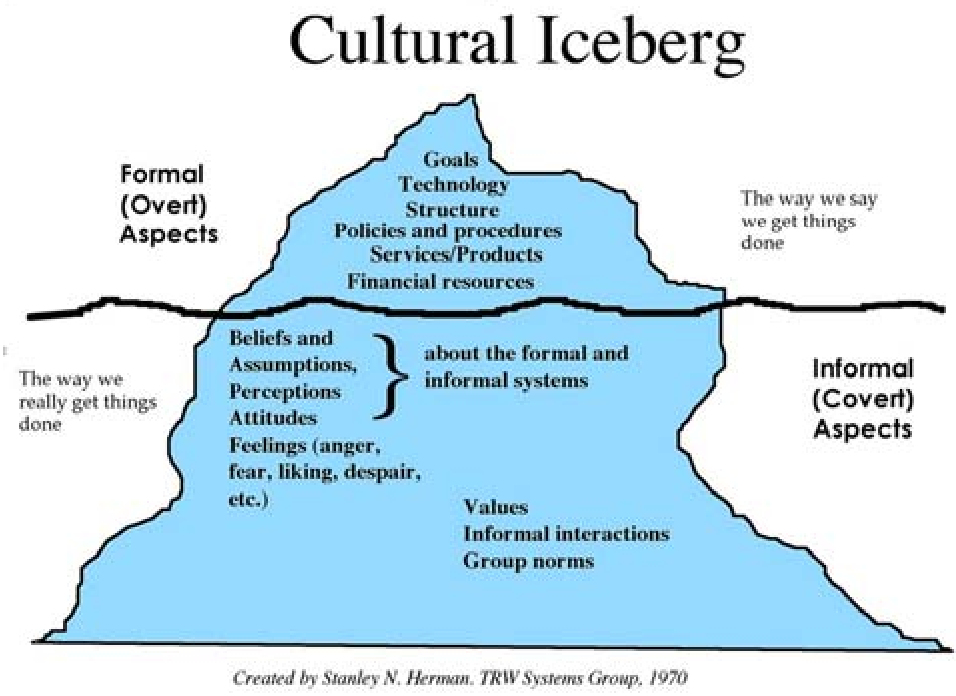 Fig 2: The Cultural Iceberg model used to explain how invisible organizational culture impacts visible digital output.
Key Results & Critical Analysis
The ScotDigiCH findings suggest a major shift in Inductive Bias for digital heritage:
- Collaboration is Mandatory: The most successful projects (like Art UK) involve a small number of super-users who contribute the majority of content.
- Organizational Culture is the Bottleneck: As shown in the "Cultural Iceberg" model, big data potential is often stifled by rigid hierarchies.
- The "Golden Method" Myth: There is no single way to evaluate. The best results come from "triangulation"—combining quantitative logs with qualitative "mobilities" approaches.
Critical Insight & Future Outlook
The most profound takeaway from this work is the realization that Digital Cultural Heritage is a social process, not a technical one. The research highlights that the "power relationships" within an organization change when data skills are democratized.
Limitations: The paper acknowledges that some high-tech methods (like hardware-based eye-tracking) remain too expensive for smaller heritage organizations, suggesting a need for lower-cost, webcam-based alternatives.
Future Work: The transition from "Impact" to "Value" will likely lead to more "Citizen Science" initiatives in museums, where the public isn't just a consumer but a co-creator of history.