
Enhancing E-Learning via Text Mining: A Deep Dive into the Hybrid Educational Platform (HEP)
Evaluation of an Educational Training Platform Using Text Mining
The paper presents an Educational Data Mining (EDM) framework integrated into the Greek Hybrid Educational Platform (HEP), designed to automatically classify feedback from e-learning courses. Using a custom corpus of 11,156 Greek reviews, the authors utilize a combination of text-based and Part-of-Speech (POS) features to perform sentiment analysis, achieving a peak accuracy of 63.15% with a Random Forest classifier.
TL;DR
This paper introduces an automated sentiment analysis module for the Greek Hybrid Educational Platform (HEP). By leveraging Educational Data Mining (EDM), the researchers developed a system that classifies free-text feedback from educators into polarity levels (1-5). Among various machine learning models tested, Random Forest emerged as the state-of-the-art (SOTA) for this specific Greek dataset, achieving 63.15% accuracy, providing a scalable way to refine online curricula.
The Motivation: From Data to Insight
In the era of web-based learning, platforms like the Greek School Network generate massive amounts of "hidden" knowledge. However, manual evaluation of questionnaires is a bottleneck. The researchers recognized a critical gap: teachers need immediate, categorized feedback to adjust their teaching methods, but they lack the tools to process thousands of open-ended Greek comments efficiently. The challenge lies in the linguistic complexity of the Greek language and the nuanced nature of educational feedback.
Methodology: Mining the "Hidden" Knowledge
The system architecture follows a robust data mining pipeline:
1. Feature Extraction: Beyond Simple Bag-of-Words
Rather than relying solely on word frequency, the authors extracted two distinct feature sets:
- Text-based Features: Structural metrics like capital letters, special characters, and average word length.
- POS-based Features: Leveraging the Xerox POS tagger to identify nouns, verbs, and adjectives—critical components of sentiment in the Greek language.
2. The Model Zoo
The authors didn't just pick one algorithm; they conducted a comprehensive benchmark using the WEKA toolkit. They compared:
- Trees: REPTree, CART, J48, and Random Forest.
- Kernels: Support Vector Machines (SVM) with Poly and RBF kernels.
- Ensembles: Bagging and AdaBoost.
- Connectionist: Neural Networks with varying hidden layers.
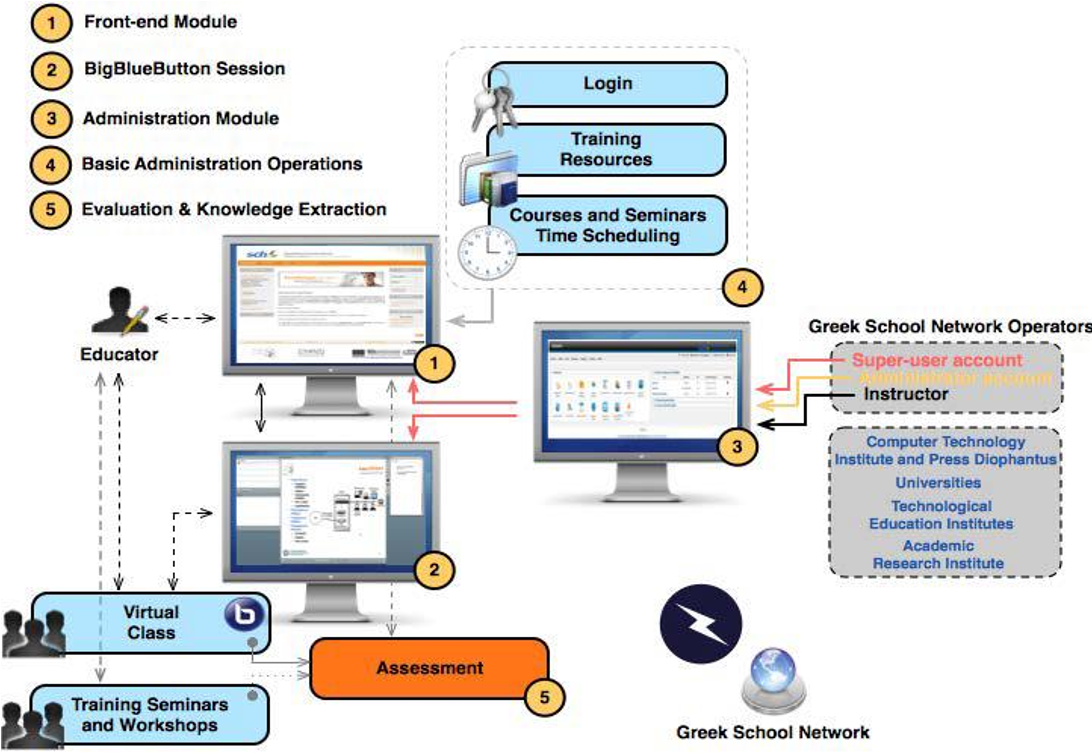 Figure 1: The conceptual architecture of the Hybrid Education Platform (HEP), showing the integration of the Electronic Questionnaire Survey (EQS).
Experimental Results: The Power of Ensembles
The experimental phase utilized a corpus of 11,156 annotated reviews. The 10-fold cross-validation revealed that Random Forest is the most effective at handling the correlated features of this dataset.
| Algorithm | Accuracy (%) |
|---|---|
| Random Forest | 63.15 |
| Bagging (Random Forest) | 63.14 |
| SVM (RBF Kernel) | 59.26 |
| J48 | 56.90 |
| AdaBoostM1 | 45.63 |
The superiority of Random Forest (63.15%) over individual trees like J48 (56.90%) suggests that reducing variance through tree decorrelation is vital when analyzing the varied vocabulary of Greek educators.
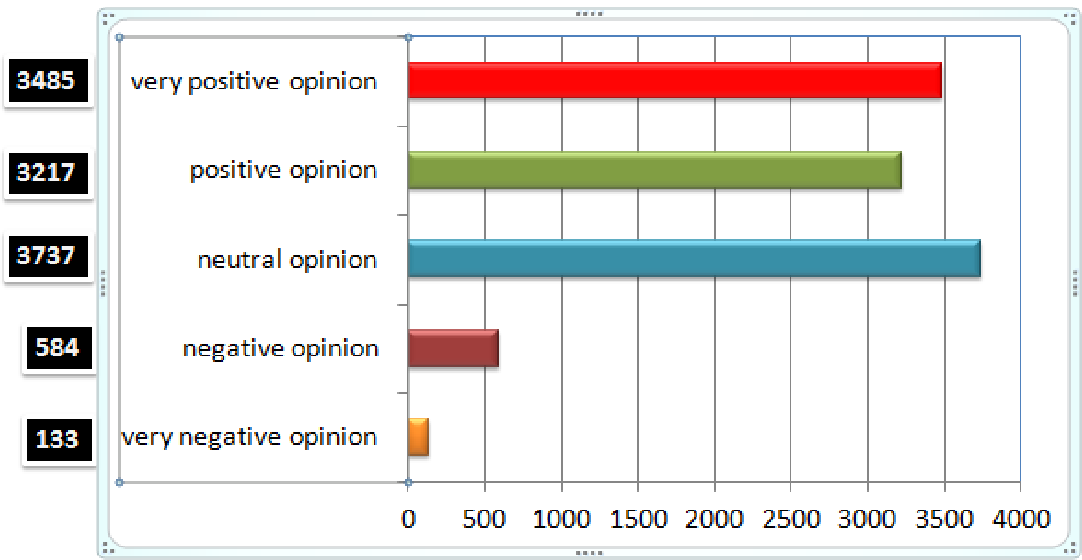 Figure 2: The granular feature extraction process utilized to transform raw Greek text into machine-readable vectors.
Critical Insights & Future Outlook
The study proves that automated opinion mining can replace manual labeling with "acceptable" accuracy, but 63% leaves room for improvement.
Why the Gap?
- Class Imbalance: The dataset was heavily skewed toward neutral (3737) and positive (3485) reviews, while very negative reviews (133) were scarce. This often leads models to be biased toward the majority classes.
- Ambiguity: Human feedback is often mixed (e.g., "The teacher was great, but the platform lagged"). A single polarity score (1-5) for a whole paragraph loses this nuance.
The Path Forward
The authors propose moving toward Aspect-Based Sentiment Analysis (ABSA). Instead of one score for the entire review, future systems should identify sentiments toward specific "entities" (e.g., Instructor Quality vs. Server Stability). Incorporating Deep Learning (e.g., GRUs or Transformers) will likely be the next step to push performance beyond the 70% threshold.
Conclusion
This work is a cornerstone for the Greek School Network, demonstrating that EDM can transform subjective feedback into a strategic roadmap for educational improvement. It bridges the gap between traditional pedagogy and modern AI.