
Facebook as a Classroom: Enhancing Language Learning through ML-Driven Social Groups
Evaluation of a language learning application in Facebook
This paper presents a Facebook-integrated language learning application designed to teach grammatical conditionals. It leverages the K-means clustering algorithm to categorize users into stereotypes (novice, intermediate, and expert) based on multi-variable profiles, aiming to enhance collaborative learning within a social network context.
TL;DR
This research explores the synergy between Social Networking Sites (SNS) and Adaptive Learning. By embedding a language learning tool directly into Facebook, the authors utilized student profile data and K-means clustering to move beyond generic instruction toward a personalized, collaborative learning experience for mastering complex grammar.
Problem & Motivation: The Engagement Gap
Modern learners invest substantial time in social media, yet educational tools often remain isolated "digital islands." The researchers identified three major pain points in contemporary Computer-Assisted Language Learning (CALL):
- Heterogeneity: Learners have vastly different backgrounds (age, prior languages, work experience) but are often given the same static material.
- Lack of Social Context: Traditional software lacks the "communal feel" that drives motivation.
- Static User Models: Many systems fail to update their understanding of a student as they progress.
The authors' insight was to use the Facebook Graph as a rich data source for initial user modeling, reducing the friction of onboarding while providing a familiar interface for peer interaction.
Methodology: High-Level Architecture and ML Logic
The system follows a multi-tier client-server structure. The core innovation lies in the User Modeling Module, which acts as a bridge between raw social data and pedagogical strategy.
The Clustering Engine
The application doesn't just store data; it actively groups students using the K-means clustering algorithm. The system creates feature vectors based on:
- Social Data: Age, Sex, Work History (indicator of maturity), and Educational Attainment.
- Performance Data: Scores from the initial preliminary test.
- Experience Data: Duration of computer use and number of languages already spoken.
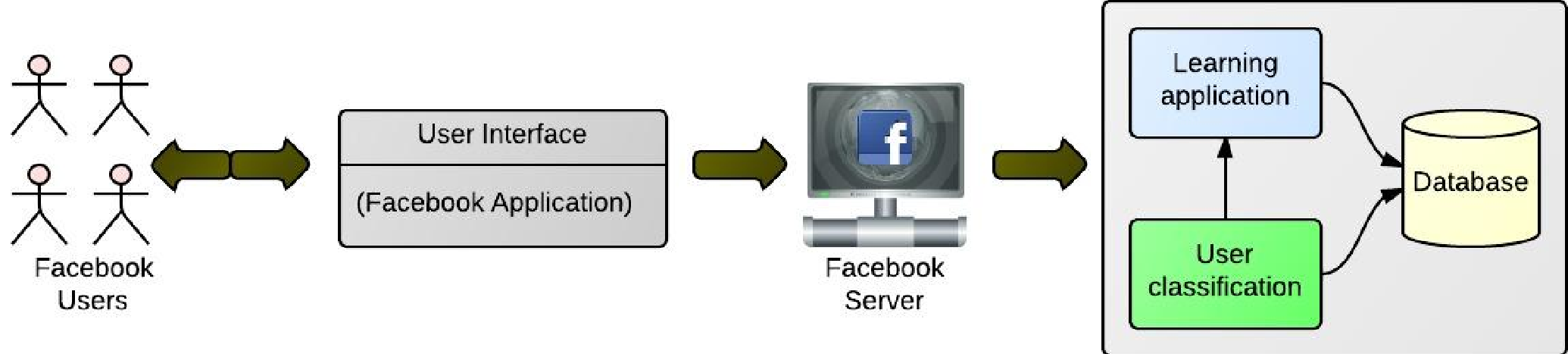 Figure 1: The system architecture showing the interaction between the Facebook Server, Application Server, and the ML-driven Database.
The algorithm minimizes the Mean Squared Error (MSE) between user vectors and cluster centers, effectively creating "stereotypes" (Novice, Intermediate, Expert) that allow the system to tailor content and peer-matching.
Experiments & Results: Is Social Learning Effective?
The study involved 50 participants (Greeks and Filipinos) specializing in the grammatical phenomenon of "Conditionals."
Key Findings:
- Usability: 79% of students supported the integration of learning into their social feed, finding it more flexible than traditional platforms.
- Clustering Accuracy: An impressive 87% of users felt their assigned "knowledge cluster" accurately reflected their actual skill level.
- Peer Synergy: Students reported high satisfaction with the ability to collaborate with others in their specific cluster via Facebook’s messaging infrastructure.
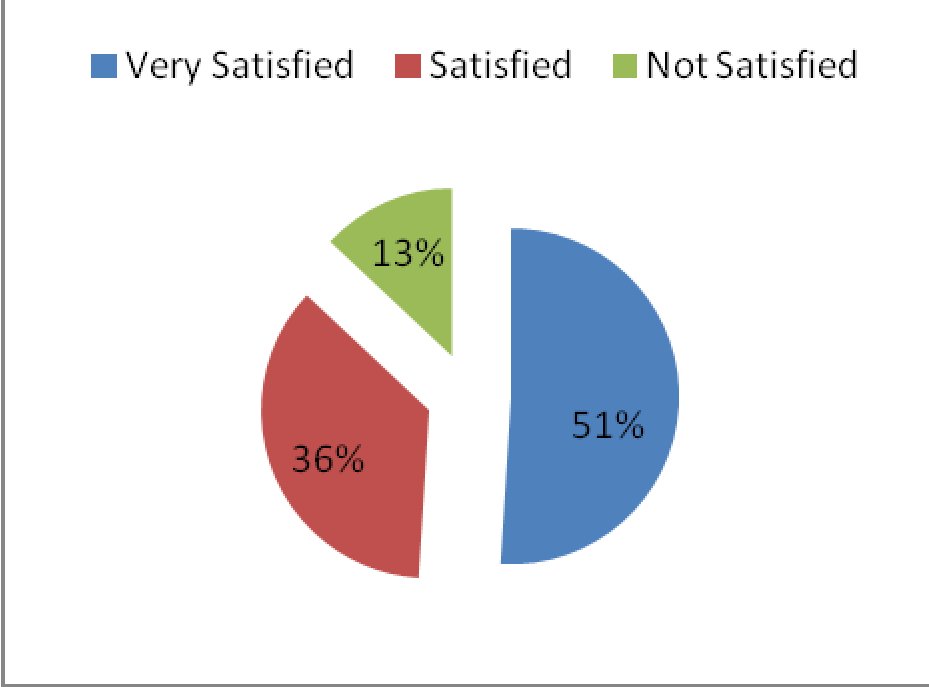 Figure 2: User satisfaction metrics regarding the usefulness of the Facebook application and the accuracy of ML clustering.
Critical Analysis & Conclusion
The paper successfully demonstrates that student modeling is significantly more robust when it leverages existing social data. By using K-means, the authors move the needle from "one-size-fits-all" to "group-aware" education.
Limitations: While the results are promising, the reliance on a single clustering algorithm (K-means) may struggle with high-dimensional non-linear data. Furthermore, privacy concerns regarding the extraction of Facebook profile data (work history, age) for third-party apps have grown significantly since this study's inception.
Future Outlook: The next step for this technology lies in Dynamic Clustering, where groups are reshuffled in real-time as the system observes the student’s learning curve ("Overlay Model"). Integrating LLMs (Large Language Models) within this Facebook framework could further provide "cluster-specific" AI tutors for each group.