
IR Model: Beyond Follower Counts—Redefining Node Influence in Social Networks
The Evaluation of Online Social Network’s Nodes Influence Based on User’s Attribute and Behavior
This paper introduces the Influence Rank (IR) model, a hybrid framework designed to evaluate node influence in online social networks (OSNs) like Sina Weibo. It combines static user attributes (AR) calculated via the Analytic Hierarchy Process (AHP) with dynamic interaction behaviors (BR) modeled through a specialized PageRank variant.
TL;DR
Determining who is truly "influential" on social media is notoriously difficult. This paper presents the Influence Rank (IR) model, a dual-factor approach that blends objective user attributes with a modified PageRank algorithm to measure behavioral engagement. Tested on Sina Weibo data, the model proves that a user's true power lies not just in their number of fans, but in the weighted intensity of their interactions.
Contextual Positioning
In the landscape of Social Network Analysis (SNA), we are moving away from "Vanity Metrics" (Followers, Likes) toward "Value Metrics" (Engagement, Authority Propagation). This work positions itself as a refinement of the PageRank philosophy, shifting from the "random surfer" model of the web to a "direct interaction" model for social platforms.
The Problem: The "Million Follower Fallacy"
Why do traditional rankings fail?
- Uniformity Error: Basic PageRank assumes a user is equally likely to interact with any of their connections. In reality, users have strong preferences.
- Attribute Blindness: Pure graph models ignore user status (e.g., verified accounts vs. bots).
- Static Bias: Follower counts remain high even if a user becomes inactive, whereas influence should be a living metric.
Methodology: The Core IR Model
The authors solve this by splitting influence into two separate vectors that are later fused.
1. AR (Attribute Rank)
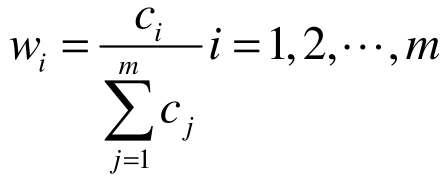
Using the Analytic Hierarchy Process (AHP), the authors quantify static characteristics. They use a judgment matrix to assign weights to factors like:
- User Type (Individual vs. Organization)
- Total Fans
- Total Micro-blogs
2. BR (Behavior Rank)
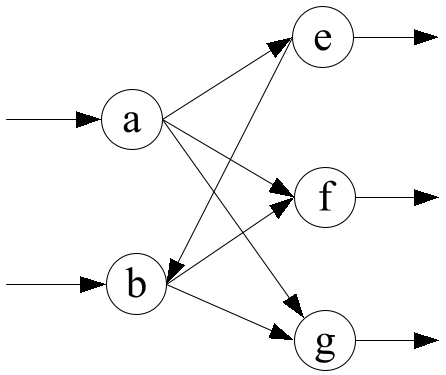
The paper's most significant innovation is the non-uniform distribution of influence "contribution." Unlike standard PageRank where a node gives of its rank to all neighbors, the IR model uses interaction frequency () to determine the "probability" of influence flow:
This ensures that if User A retweets User B ten times and User C only once, User B receives a larger share of User A's influence "vote."
3. Fusion
Finally, the IR formula balances these two: The regulatory factor allows practitioners to pivot between a "prestige-heavy" or "activity-heavy" analysis.
Experimental Insights
The method was validated using a dataset of 60,290 Sina Weibo users.
Key Findings:
- Convergence: The BR value reached stability after ~3,900 iterations, proving the algorithm is mathematically sound for large-scale social graphs.
- The "User 3 vs. User 4" Case: The experiment showed that Node 4 had a higher IR than Node 3, despite having fewer fans. This was due to Node 4's superior behavioral engagement, a nuance missed by traditional metrics.
- Comparison with UserRank/TURank: IR proved more "realistic" because it didn't overvalue "friend count" (which suffers from the link-farming problem) and included verified user statuses.
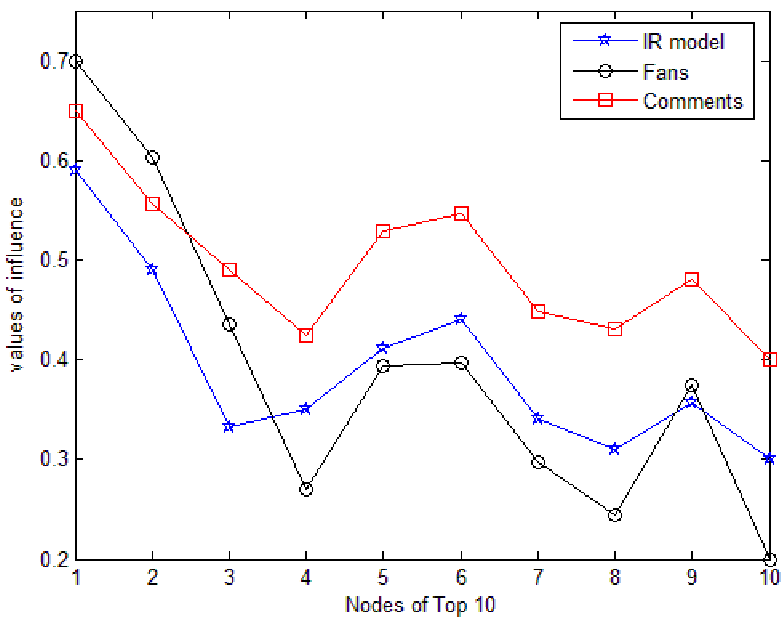 Fig. 1: Demonstrating that IR does not blindly follow fan counts—it rewards interaction.
Critical Analysis & Conclusion
Takeaway
The IR model successfully bridges the gap between Status and Action. By weighting the edges of a social graph based on the frequency of retweets and comments, it creates a "meritocratic" ranking that is harder to game than simple follower-based systems.
Limitations
- Temporal Decay: The model does not explicitly account for the "aging" of interactions (a retweet from 2012 carries the same weight as one from 2024).
- Sentiment Blindness: The current BR calculation treats all comments equally. Integrating Sentiment Analysis (distinguishing between a "hater" comment and a "supporter" retweet) would be the logical next step.
Future Outlook
This approach is highly applicable to influencer marketing and public opinion monitoring. By adjusting , organizations can identify "dormant giants" (high AR, low BR) or "emerging trend-setters" (low AR, high BR).