
Healthcare4Life: Bridging the Digital Divide via Social Telehealth
10453_Evaluation of a social web-based telehealth system.
This paper presents an empirical evaluation of "Healthcare4Life" (HC4L), a social web-based telehealth system designed to support healthy aging. Through a 6-week user study with older adults, it explores the usability, intrinsic motivation, and shifts in health locus of control using instruments like SUS and IMI.
TL;DR
This study evaluates Healthcare4Life (HC4L), a web-based portal that combines social networking with health monitoring for the elderly. While the system demonstrated the potential to foster intrinsic motivation through its "Facebook-like" interface, researchers discovered a stark "Retention Gap" and significant differences in perceived competence between the "younger-old" and "older-old" demographics.
Background & Motivation: Moving Beyond Passive Monitoring
The graying global population presents a massive challenge for healthcare systems. Traditional telehealth has often been clinical and isolating. The authors of this paper argue that for health interventions to be sustainable, they must leverage Social Web principles to decrease isolation and increase engagement. The core insight is that social connectivity acts as an "engagement catalyst," transforming mundane health tracking into a shared community experience.
Methodology: The HC4L Framework
The HC4L system was designed as a comprehensive hub including:
- Vital Trackers: Exercise, Weight, and Calorie calculators.
- Social Portal: Friends lists and activities feeds.
- Cognitive Engagement: Multiplayer memory games.
The researchers tracked 43 participants over six weeks, using a rigorous battery of psychological and usability assessments.
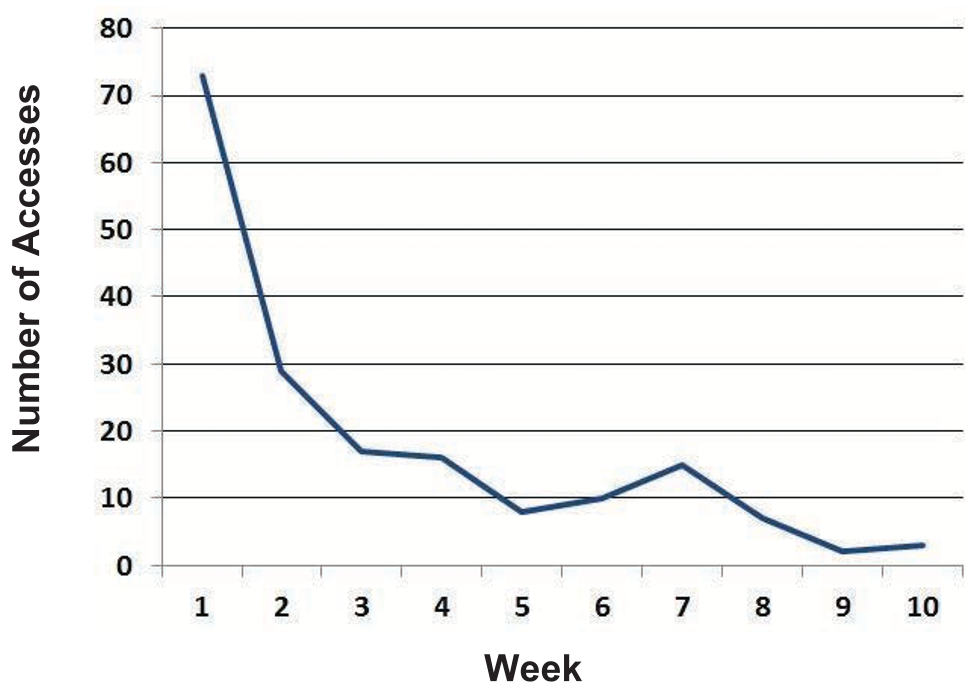 Figure 1: The study observed a significant drop-off in participation, highlighting the challenge of sustaining engagement in telehealth.
Key Findings: The Usability vs. Age Paradox
The evaluation revealed several critical nuances in how older adults interact with social health tech:
1. The Competence Gap
The study divided participants into two cohorts: 60-69 years and 70-85 years. While both groups found the system equally "interesting" (IMI Score ~4.4), the Perceived Competence was notably lower in the 70+ group (3.89 vs 4.89). This suggests that as age increases, the interface friction becomes a primary barrier to self-efficacy.
2. Social Resistance
Intriguingly, while the system was built on "Social Web" principles, 18% of negative feedback specifically mentioned a dislike for the "Facebook-like" aspects. This indicates that a one-size-fits-all social design may not be appropriate for the elderly, who may prioritize privacy or find social feeds distracting.
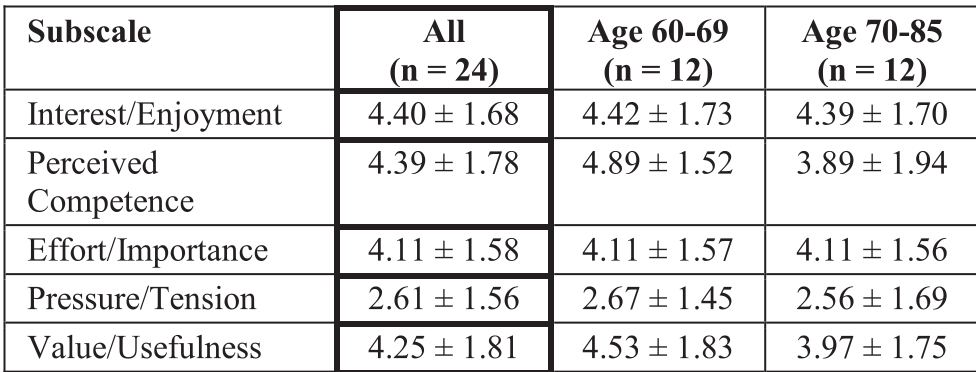 Table 1: Detailed IMI scores showing the disparity in Perceived Competence across age groups.
3. Data Entry Fatigue
The "Calorie Calculator" was cited as a major pain point (21% negative responses) due to the manual effort involved. This underscores a vital lesson for modern HealthTech: Automated sensing is preferred over manual logging.
Critical Analysis & Conclusion
This paper serves as a sobering reminder that "Social" does not automatically mean "Accessible." While HC4L succeeded in providing a valued health resource for some, the high attrition rate (nearly 50% by week 6) suggests that the initial novelty of the social portal was insufficient to overcome the burden of manual data tracking and interface complexity.
Future Outlook: For next-generation telehealth, we must move toward "Passive Socializing"—where health data is collected automatically and social interactions are more organic and less "social-media-centric." The significant difference in competence between the 60s and 70s age groups suggests that UX designers must treat the elderly as a heterogeneous group with rapidly evolving needs.