
EDMP: Mastering the Fission of Information in Online Social Networks
Event Detection and Multi-source Propagation for Online Social Network Management
The paper introduces EDMP (Event Detection and Multi-source Propagation), an intelligent model for online social network management that combines HITS-based event detection with a Topic Popularity-based Event Propagation (TPEP) mechanism. It achieves superior performance in identifying influential spreaders and modeling multi-source event interactions compared to traditional IC and BEE models.
TL;DR
Information in microblogging platforms spreads like a "fission" process, yet most models treat it as a simple biological contagion. This paper presents EDMP, a model that treats event propagation as a learnable task. By analyzing user intimacy and topic popularity, EDMP doesn't just predict that an event will spread, but how it will compete or cooperate with other trending topics to maximize its reach.
Problem & Motivation: Beyond the SIR Model
Traditional social network management relies on models like SIR (Susceptible-Infected-Recovered). While effective for diseases, these models fail in the digital realm because:
- Heterogeneity: A user influential in "FinTech" might be ignored in "Sports."
- Spontaneity: Users don't just "catch" information; they spontaneously create it.
- Competition: In the real world, a major sports event and a political scandal compete for the same limited user attention.
The authors observed that existing SOTA methods (like BEE or EVE) often ignore the diffusion power of specific topics, leading to inefficient "mining" of key users.
Methodology: The Intelligent Propagation Loop
The core of the EDMP model lies in its three-stage "Intelligent Event Propagation Process":
1. The Improved HITS Method
Instead of just ranking web pages, the authors adapted the HITS algorithm (Hubs and Authorities) to link Users and Posts.
- Authorities: High-quality posts that receive significant interaction.
- Hubs: Key users who effectively "discover" and propagate these posts.
2. TPEP (Topic Popularity-based Event Propagation)
The activation probability (the chance user activates user for topic ) is no longer a constant. It is defined by: Where is User Intimacy (interaction frequency) and is Topic Popularity.
3. Experience Sets (The Learning Mechanism)
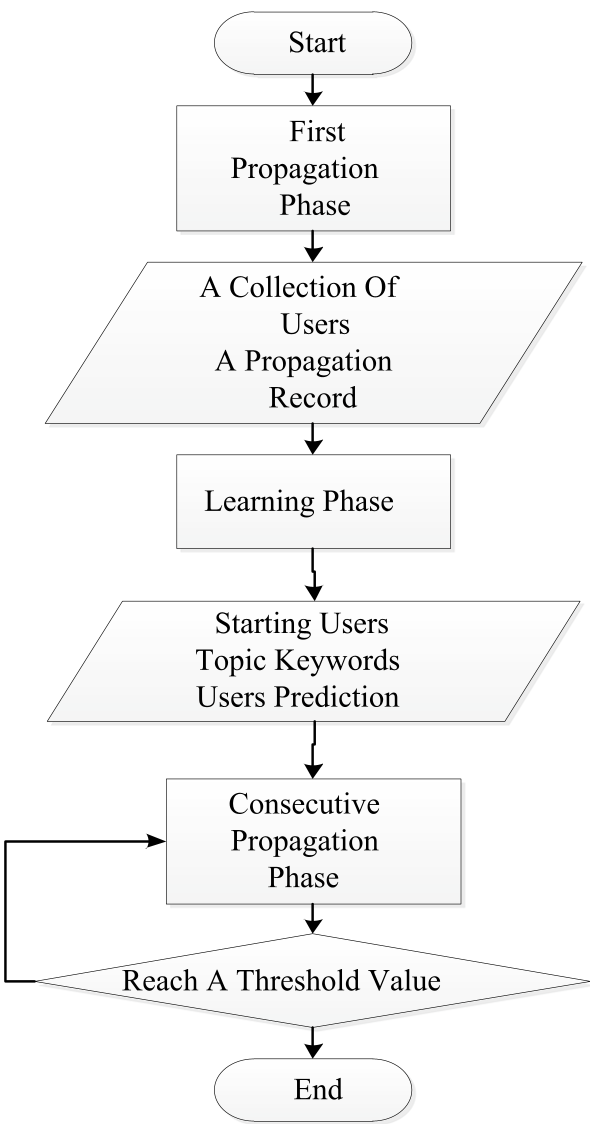 The model performs a "First Propagation" to generate experience. It then refines Topic Keywords and Target User Predictions to optimize the "Consecutive Propagation," making the system smarter with every event it tracks.
Experimental Insights: Real-World Twitter Performance
The authors validated EDMP using 1.5 million Twitter posts. Two parameters proved critical: the Step Number Threshold (S) and Attenuation Factor ().
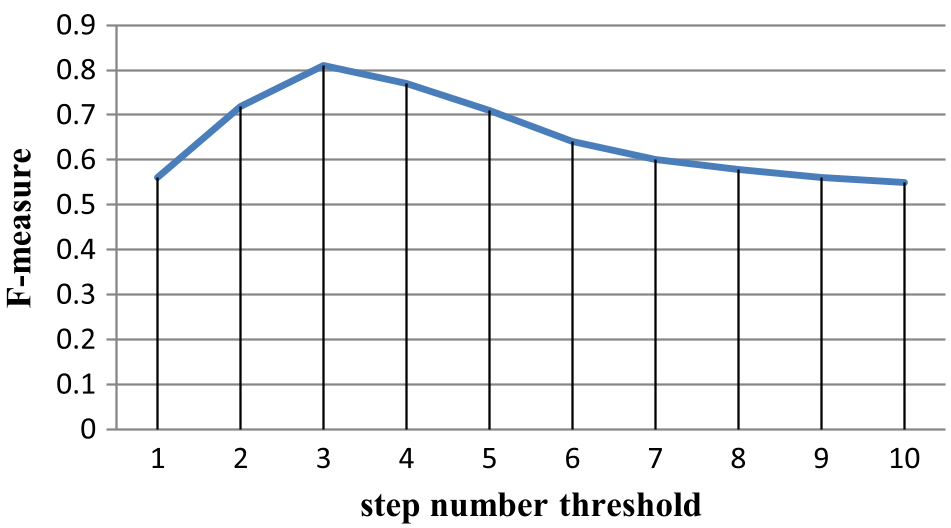
- Finding the Sweet Spot: If the threshold is too high, community boundaries blur; if too low, local topological information is lost. A threshold of was found optimal for standard datasets.
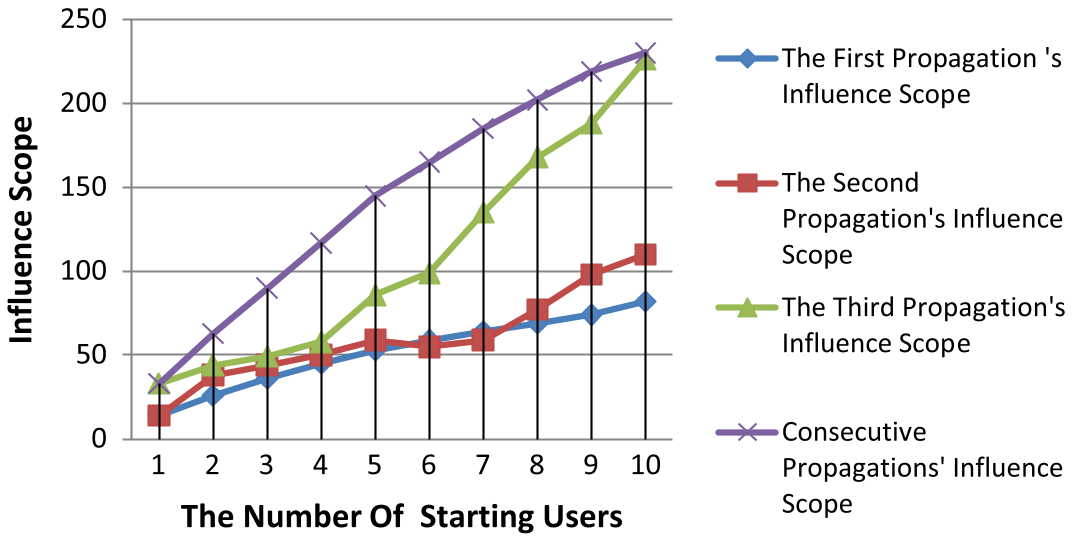
- Influence Expansion: EDMP demonstrated a massive leap in Influence Scope. While standard IC-based models plateaued quickly, EDMP’s consecutive propagation reached nearly 3x the audience by effectively leveraging learned user interests.
Critical Analysis & Conclusion
The EDMP model provides a robust theoretical basis for "guiding strategies" in social network management—essentially a blueprint for how information can be steered or contained.
Takeaways:
- Interdependence: Multi-source events aren't isolated; their competition shortens survival time, but their cooperation (overlapping interests) expands total reach.
- Learning is Key: Moving from static algorithms to models that build "experience sets" is essential for handling the dynamic nature of online discourse.
Limitations: While powerful, the model currently focuses on historical link structures. The authors note that the next frontier is predicting link evolution and behavioral shifts in real-time as a hot topic develops.