
EvergreenLP: Culturally Relevant Data Science via the #BlackGirlMagic Lens
EvergreenLP: Using a social network as a learning platform
This paper introduces EvergreenLP, an interdisciplinary project-based learning (PjBL) framework designed to bridge the data science educational gap for undergraduate students. By leveraging a custom-built platform that extracts and visualizes Twitter data, the study specifically evaluates the impact of culturally relevant pedagogy on African-American female students during a seminar focused on the #BlackGirlMagic (#BGM) movement.
TL;DR
EvergreenLP is an innovative learning platform that uses social media—specifically Twitter/X—as a living laboratory for data science. By focusing on the #BlackGirlMagic movement, researchers at Spelman College created a framework where African-American female students learn data extraction, visualization, and deconstruction through a lens that is culturally meaningful to them.
Academic Positioning: This work bridges the gap between Critical Media Literacy and Computational Social Science, moving beyond simple "coding bootcamps" toward a holistic, constructivist approach to data literacy.
Problem & Motivation: The Gap in Data Science Education
Despite the explosion of Big Data, the techniques to collect, store, and analyze it are often omitted from the undergraduate experience unless a student is a Computer Science major. Furthermore, the "Digital Divide" isn't just about access to hardware; it's about the transition from being a technological consumer to a technological producer.
The authors argue that students are already immersed in social media, yet they lack the tools to critically analyze the data they generate. For African-American students, whose voices have historically been silenced, "Black Twitter" serves as a vital tool for social change. The motivation here is to use these "digital artifacts" (hashtags like #BlackLivesMatter or #BlackGirlMagic) as the primary instructional material for data science.
Methodology: The EvergreenLP Framework
The platform employs a rapid prototyping paradigm. It allows Computer Science students to build the "back-end" (API connections and database management) while non-computing students use the "front-end" to perform interdisciplinary analysis.
1. Critical Media Literacy (CML)
The pedagogy rests on five core components:
- Authorship: Who created the content?
- Format: How does the platform influence the message?
- Audience: Is the content specific to a sub-community?
- Content: What values are embedded?
- Purpose: Does this promote profit, power, or positive narratives?
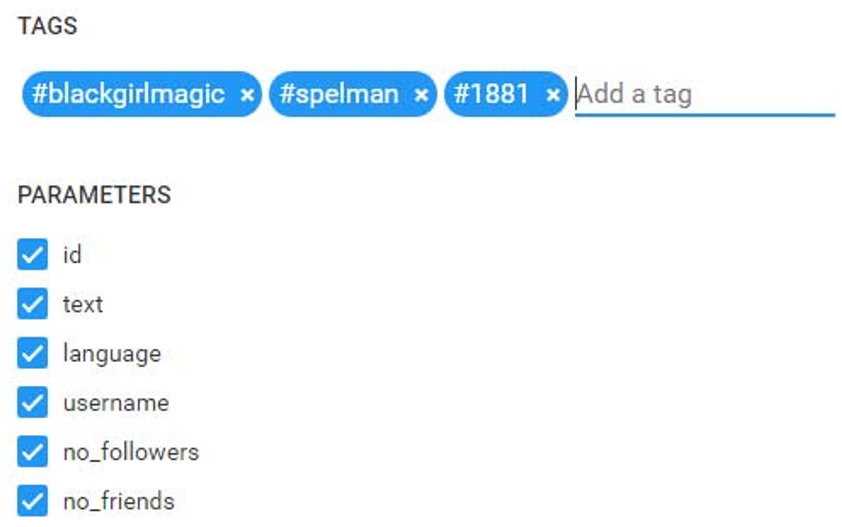 Figure 1: The interface allows students to query hashtags and keywords to filter raw social media data.
2. Systematic Deconstruction and Analysis
Students follow a workflow of Extraction → Deconstruction → Analysis → Construction. They analyze word clouds, language frequencies, and location data to understand the global reach of their community's digital presence.
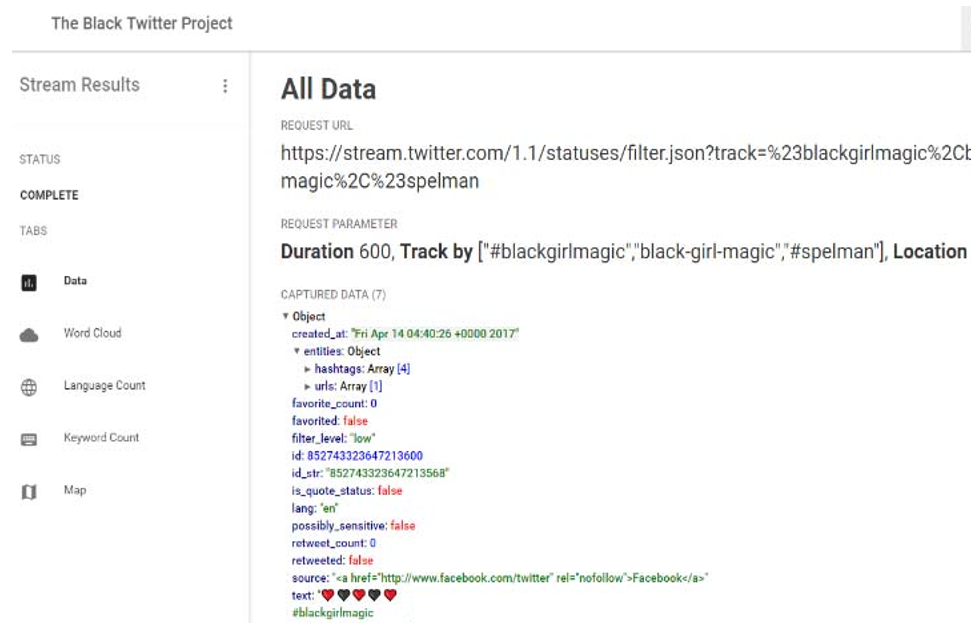 Figure 2: Built-in visualization tools help students derive insights into language and sentiment without needing deep coding knowledge initially.
Experiments & Results: #BlackGirlMagic in Action
The study involved 17 first-year students at Spelman College from various majors (Biology, English, Psychology, etc.).
Key Findings:
- Beyond the Surface: Students initially felt "comfortable" with data but lacked advanced skills. After using EvergreenLP, they were able to perform Co-occurrence Network Analysis.
- Thematic Discovery: By analyzing their own essays on #BlackGirlMagic, students identified three core classifications: Internalization, Expression, and Expansion.
- Unexpected Insights: One student noted an anomaly where 401 tweets in their fetch were in Japanese, leading to a cross-cultural inquiry into how Black culture is perceived in Asian contexts.
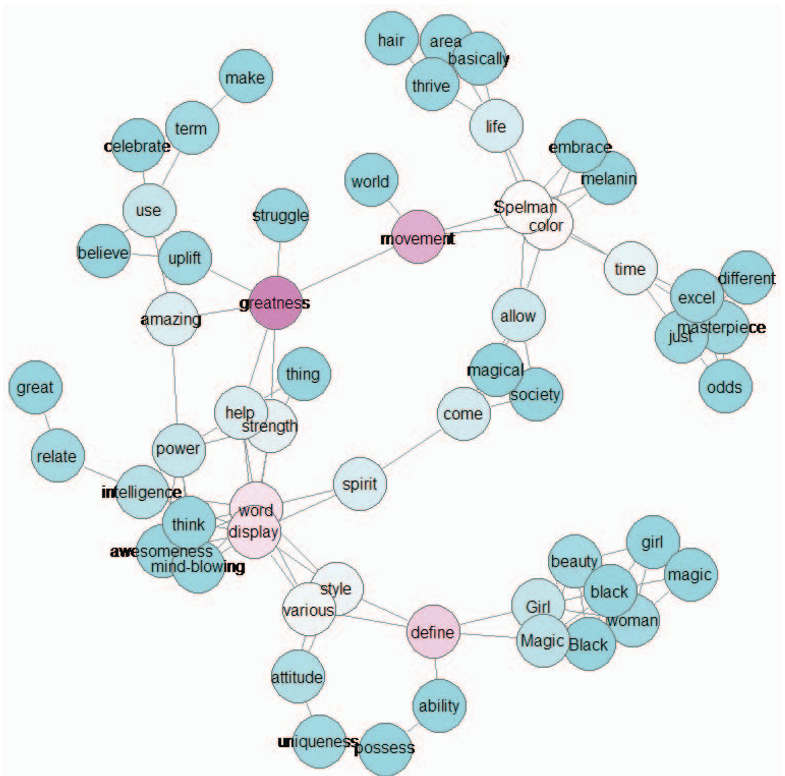 Figure 3: A co-occurrence network representing how students define 'Greatness' and 'Movement' within the #BGM context.
Critical Analysis & Conclusion
EvergreenLP proves that culturally relevant data is a powerful hook for STEM engagement. By treating hashtags as "valuable artifacts of Black culture," the authors successfully taught Regression, Clustering, and Classification (Table II in the paper) to a non-technical audience.
Takeaway & Future Work
The core value of this work lies in its inclusive architecture—making the complex "invisible" while keeping the analysis "visible" and relevant. However, the study is early-stage; future iterations will need to address the "API fatigue" caused by changing social media access policies and integrate more automated sentiment analysis tools.
Final Insight: When students find themselves inside the data, the motivation to learn the science behind it becomes organic rather than forced.