
Social ACM: Beyond BPM – Empowering the Knowledge Worker through Social Collaboration
The Evolution of Adaptive Case Management from a DSS and Social Collaboration Perspective
The paper explores the evolution of Adaptive Case Management (ACM) into Social ACM (SACM), integrating Decision Support Systems (DSS) with Web 2.0 social collaboration tools. It positions SACM as a critical evolution for managing unpredictable "knowledge work," moving beyond traditional control-flow BPM to a data-driven, collaborative ecosystem.
TL;DR
Adaptive Case Management (ACM) is evolving into Social ACM (SACM), a paradigm that merges traditional Decision Support Systems (DSS) with social networking dynamics. Unlike rigid Business Process Management (BPM), SACM treats business cases as social entities, allowing knowledge workers to collaborate in real-time, modify workflows on the fly, and transform tacit expertise into institutional knowledge.
Contextual Positioning: The End of the "Blind Surgeon"
For decades, business processes were treated like assembly lines—predictable and controlled. However, modern "Knowledge Workers" (KWs) face high-complexity, low-structure tasks where the path to a solution isn't known until the work begins.
The authors argue that traditional BPM forces workers into a "blind surgeon" role: they see only their specific step without the context of the whole case. ACM breaks this by providing full visibility, while SACM adds a social layer that enables collective intelligence to solve the "unpredictable."
The Problem: Why Rigid Workflows Fail
The core pain point identified is the unpredictability of knowledge work. In sectors like law or high-tech manufacturing, a predefined flowchart is a liability rather than an asset.
- Lack of Agility: Traditional systems can't adapt to rapid market changes.
- Loss of Tacit Knowledge: When a worker solves a unique problem, that "fix" stays in their head rather than being captured by the system.
- Siloed Decision Making: Without social tools, collaboration is move-step-by-step rather than organic and iterative.
Methodology: The Architecture of Social ACM (SACM)
The paper defines SACM as a platform that brings business cases into a "social space." The methodology relies on three expertise components:
- The "Think" Component: Uncovering patterns in data and customer behavior.
- The "Feel" Component: Engaging through social media and digital content.
- The "Do" Component: The IT infrastructure that empowers instant onboarding and predictive analytics.
The Feedback Loop
At the heart of the proposed DSS architecture is a Double Loop pattern:
- Primary Loop (Adaptive Learning): Detecting and rectifying deviations from operational norms.
- Secondary Loop (Generative Learning): Creative modification of the norms themselves—essentially "re-writing the rulebook" as the case progresses.
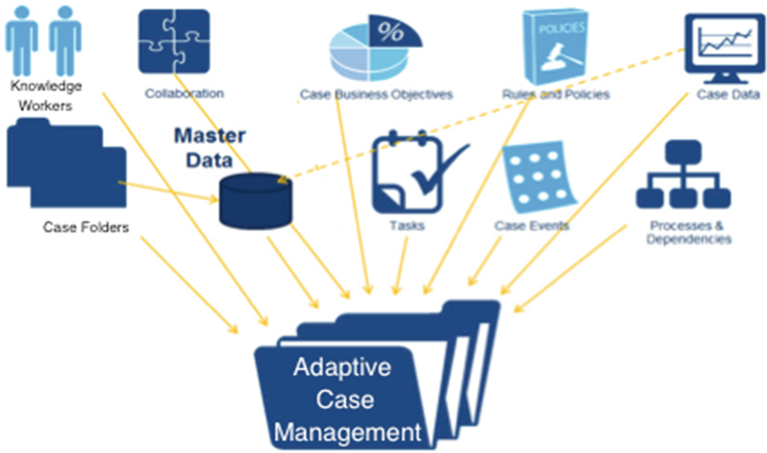 Figure 1: The Knowledge Worker's role in creating organizational knowledge.
Experiments and Real-World Impact: The Texas OAG Case
The paper validates these concepts through a study of the Office of the Attorney General (OAG) of Texas. Tasked with processing hundreds of thousands of legal cases, the OAG moved from localized, manual reporting to a centralized ACM platform.
Key Performance Indicators (KPIs):
- Information Retrieval: Time cut from 15 minutes to 30 seconds (97% improvement).
- Data Locating/Securing: Shortened from 2 days to 15 minutes (99% improvement).
- File Creation: Time reduced by 71%.
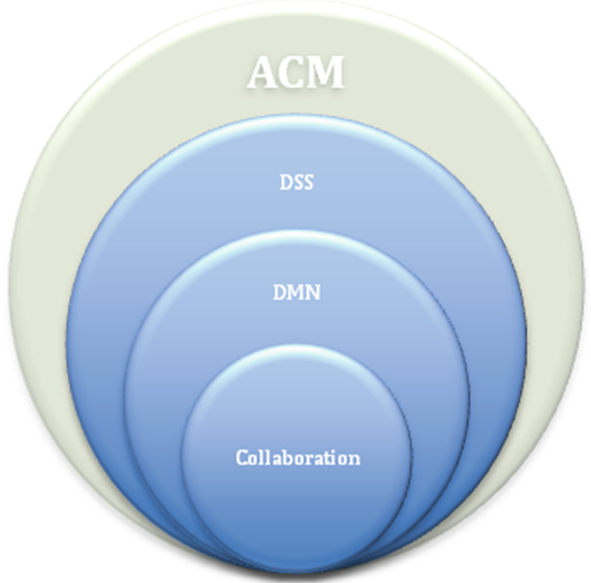 Figure 2: The ontology of DSS architecture within ACM.
Critical Insight & Conclusion
The true value of SACM lies in its ability to foster a Learning Organization. By using wikis, social tagging (folksonomy), and shared templates, the "exception" handled by one worker today becomes the "standard template" for the team tomorrow.
Limitations: The paper acknowledges that the biggest barriers aren't technical but cultural. Moving to SACM requires management to trust frontline workers with the power to modify processes—a shift that many traditional hierarchies find difficult to swallow.
Future Outlook: As AI continues to advance, the next step for SACM will likely be "Social Mining"—using machine learning to automatically extract best practices from the social interactions and chat histories of knowledge workers, further automating the bridge between tacit and explicit knowledge.