
The Green Revolution's Engine: Deep Evolution of DELLA Signaling
Evolution of DELLA function and signaling in land plants
2021-01-11
Summary
Problem
Method
Results
Takeaways
Abstract
This synthetic review traces the evolutionary trajectory of DELLA proteins, the master growth repressors that underpinned the "Green Revolution." It details how the canonical Gibberellin (GA)-GID1-DELLA signaling module emerged through molecular exploitation in vascular plants.
## TL;DR
DELLA proteins are the "brakes" of plant growth. During the Green Revolution, manipulating these proteins led to semi-dwarf, high-yielding crops. This review explores how these proteins evolved from mysterious stress-regulators in ancient mosses into the sophisticated, hormone-driven master switches found in modern agriculture.
**Academic Positioning**: This is a comprehensive synthetic review that moves beyond descriptive biology to propose a logic of "Molecular Exploitation"—where new hormones (Gibberellins) hijacked pre-existing protein modules to gain control over plant architecture.
## The Problem: Proteins Without a Purpose?
In vascular plants (ferns, gymnosperms, and angiosperms), Gibberellins (GAs) trigger growth by causing the degradation of DELLA proteins. However, bryophytes (mosses, liverworts, hornworts) have DELLA proteins but **do not make bioactive GAs** and lack the standard GID1 receptors.
Why would a plant maintain a "repressor" for a signal that doesn't exist? This paradox suggests that DELLAs didn't start as GA-responders; they were co-opted later.
## Methodology: Anatomy of a Master Regulator
The review breaks down the DELLA protein into two functional halves:
1. **N-terminal DELLA domain**: The "sensor" that interacts with the GID1-GA complex.
2. **C-terminal GRAS domain**: The "effector" that interacts with hundreds of transcription factors.
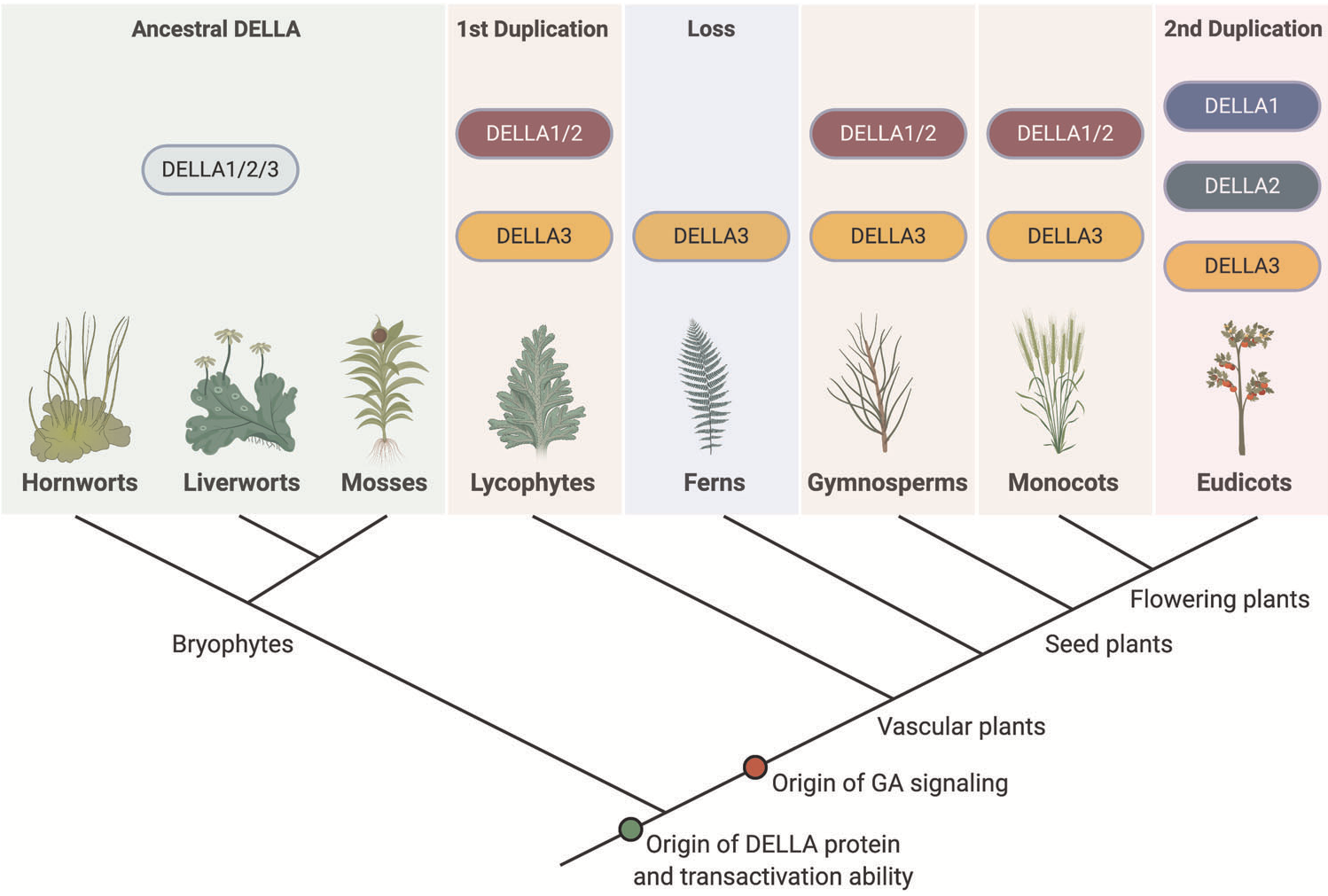
The authors highlight how duplication events (first in the ancestor of vascular plants, then in eudicots) allowed plants to refine DELLA function through distinct expression patterns rather than changing the protein’s chemistry.
## The Core: How DELLAs Control the Cell
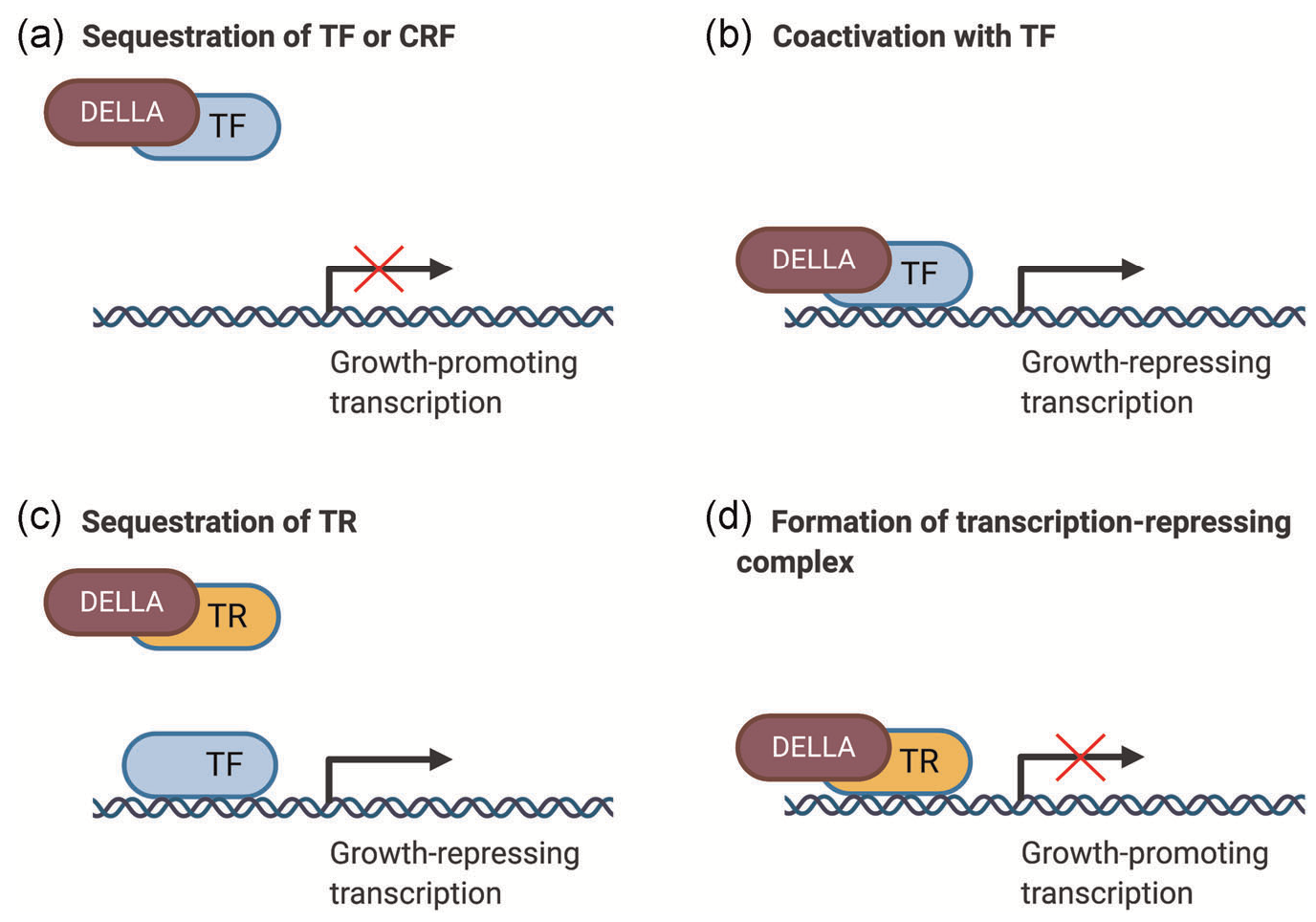
The review identifies four sophisticated mechanisms by which DELLAs regulate transcription without actually binding to DNA:
* **Sequestration**: DELLAs act as a "sponge," binding to growth-promoting factors like PIFs (Light signaling) and preventing them from reaching the DNA.
* **Coactivation**: They join forces with factors like ABI3/5 to turn *on* growth-inhibiting genes.
* **Regulator Sequestration**: They bind to JAZ proteins to release JA-mediated defense responses.
* **Complex Formation**: They form ternary complexes to repress specific flowering genes.
## Evolutionary Insight: Molecular Exploitation
The most profound takeaway is the concept of **Molecular Exploitation**. Similar to how the vertebrate estrogen receptor evolved *before* the hormones it now senses, the DELLA protein was already a "transcriptional hub" involved in stress responses in ancient land plants. When vascular plants eventually developed the GA biosynthetic pathway, the GA-GID1 complex "hijacked" the conserved N-terminal domain of DELLA, effectively putting the plant's growth "brakes" under hormonal control.
## Future Outlook and Limitations
While we understand the "what" and the "how" in Arabidopsis, we still lack a clear picture of:
* **The Ancestral Role**: What exactly did DELLAs do in the first land plants? Current theories point to **stress signaling** (e.g., salt and cold tolerance).
* **Post-Translational Logistics**: How do PTMs like SUMOylation and phosphorylation vary across the plant kingdom?
**Conclusion**: By unravelling the deep history of these proteins, scientists can move beyond simple "knock-outs" and start precision-engineering DELLA interaction surfaces to create crops that grow efficiently despite the stressors of global warming.