
The Digital Shift of Guanxi: How Interests Outpace Mutual Friends in Chinese Social Networks
The evolution of friendships in Chinese online social networks
This paper investigates the evolution of friendships on <b>Douban</b>, a major Chinese online social network. By monitoring 10,000 user profiles over four months, the authors identify <b>Focal Closure</b> (shared discussion groups) as the primary catalyst for friendship formation, surpassing the traditional influence of shared friends or media interests.
TL;DR
Contrary to the belief that common friends drive social growth, this study on <b>Douban</b> reveals that shared discussion groups are the strongest catalysts for new online friendships in China. For the Chinese youth, digital social life is evolving from traditional local ties to global interest-driven "focal closures," where talking about a hobby is a more powerful "bonding agent" than having a mutual acquaintance.
Deep Dive into the Problem: Beyond the Friend-of-a-Friend
In Western social media research, Triadic Closure—the idea that if A knows B and C, B and C will eventually meet—is often hailed as the fundamental law of social evolution. However, the Chinese social fabric is traditionally governed by Guanxi, a complex system of reciprocal bonds often based on existing "bases" like coming from the same hometown or school.
The researchers set out to answer: Does this traditional "Guanxi" translate to the digital world? Or are the 18–30-year-olds (who make up the bulk of Chinese netizens) building a new kind of social architecture?
Methodology: Tracking the Pulse of Douban
The researchers conducted a dual-phase study:
- Static Analysis: Analyzing 100,000 profiles to understand the "topology" of the network (e.g., friend counts and media preferences).
- Temporal Analysis: A 4-month weekly crawl of 10,000 users to watch friendships form and evaporate in real-time.
They categorized social growth into three distinct patterns:
- Triadic Closure: Friend A introduces Friend B to Friend C.
- Focal Closure: A and B become friends because they are in the same discussion group (the "Focus").
- Membership Closure: User A joins a group because their friend User B is already a member.
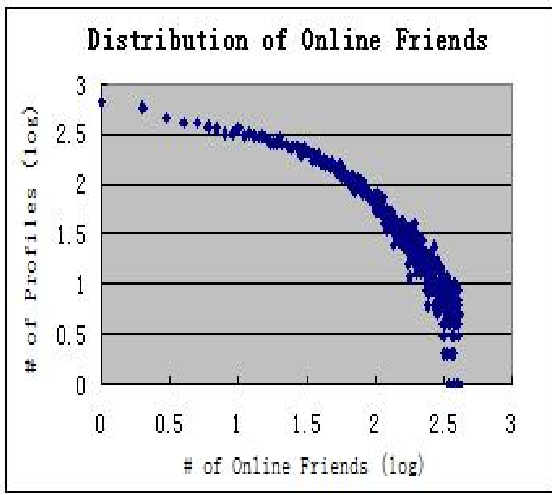 Figure 1: Douban User Profile showcasing the intersection of friends and media interests.
Key Findings: The Power of the "Focus"
The results challenged several common assumptions in social network theory:
1. The Discussion Group Dominance
The data showed that sharing a discussion group was 30% more effective at fostering a new friendship link than sharing a mutual friend. This suggests that "Focal Closure" is the engine of the Douban ecosystem. Interestingly, simply liking the same "Media Item" (pointing to the same book or movie on a profile) was the least effective way to form a bond. Interaction is key; passive similarity is not enough.
2. Deviating from the Power Law
Standard web networks typically follow a Power Law (where a few "hubs" have most of the connections). While Douban's media item followers followed this law, the friendship distribution and group membership did not.
- Why? Maintaining friendships requires a "recurring cost" of time and effort. Unlike a web link, you can't have a million friends and maintain quality interactions.
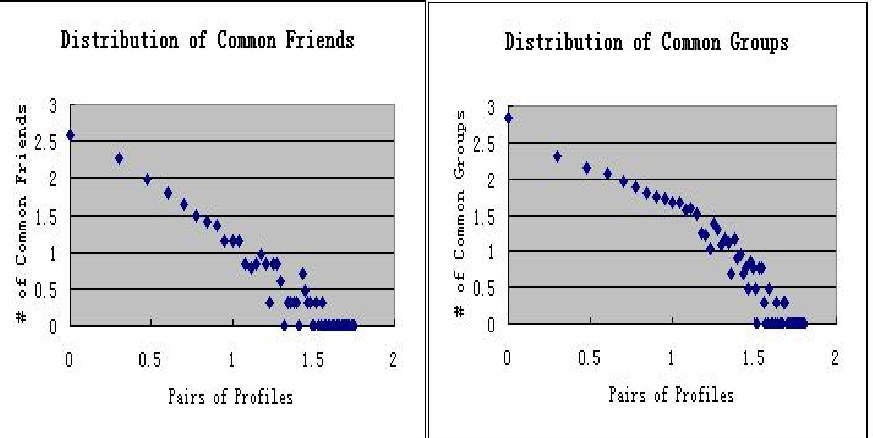 Figure 2: Distribution showing that common discussion groups frequently precede the formation of new links.
3. Influence and the Threshold Model
The study found that users adopt new interests (like reading a book) based on a Threshold Model. For books, the threshold is approximately 2.3 friends—once two or three friends are doing it, the probability of the user joining in spikes. However, joining groups was different: 76% of users joined groups alone, driven by interest rather than peer pressure.
Critical Analysis & Implications
This research highlights a significant cultural evolution. Traditional Guanxi was exclusive and based on "given" attributes (birthplace, school). Douban's "Focal Closure" represents a more inclusive, elective Guanxi where psychological satisfaction and information exchange take precedence.
Limitations
- Platform Specificity: Douban attracts a more "intellectual" and "youthful" demographic. These results might vary on more "mainstream" platforms like WeChat or Weibo.
- Interaction Depth: The study tracks the formation of the link but doesn't necessarily measure the strength or longevity of these "interest-based" friendships compared to traditional ones.
Conclusion
The evolution of friendships on Douban proves that for the modern Chinese netizen, the Discussion Group is the new "Town Square." By providing a space for high-intensity interaction around niche topics, these platforms are allowing users to build social capital that is independent of their physical locations or existing social circles. For developers, the takeaway is clear: Community-building features (foci) are more central to network growth than the social graph (links) itself.
Takeaway: Shared activity (doing things together) is a better predictor of social growth than shared identity (being the same).