
Decoding the DNA of Influence: How Opinion Leaders Evolve on Social Networks
Research on the Evolution of the Influence of Opinion Leaders in Social Networking Sites Taking Zhihu.com as an Example
This study investigates the evolution of opinion leader influence on social networking sites, specifically Zhihu.com, using a hybrid approach of Fuzzy Comprehensive Evaluation (FCE) and Latent Variable Growth Modeling (LGM). By analyzing a longitudinal dataset of over 25,000 users across three years, the research categorizes influence levels and identifies distinct growth patterns ranging from slow acceleration to the "Matthew Effect."
In the digital age, social networking sites (SNS) are more than just communication tools; they are complex ecosystems governed by "Information Transfer Stations"—otherwise known as Opinion Leaders. But is influence a static trait or a dynamic journey? This study deep-dives into three years of data from Zhihu.com to map the trajectory of digital authority using advanced statistical modeling.
TL;DR
This research moves beyond "who has the most followers" to "how does that power grow?" By applying Fuzzy Comprehensive Evaluation and Latent Variable Growth Models (LGM) to 25,559 Zhihu users, the authors prove that influence evolution isn't uniform. While high-tier influencers grow the fastest (the Matthew Effect), they eventually hit a ceiling, while mid-tier users provide the most stable growth—offering a "sweet spot" for platform operations.
The "Why": Moving Beyond Snapshots
Most social media research captures a "snapshot" of a specific event—like a product launch or a viral scandal. However, building influence is a marathon, not a sprint. The authors argue that to truly understand the survival of social platforms, we must track the growth curve of leaders over years, not days. They identified a gap: we know influence exists, but we don't know the physics of its acceleration.
Methodology: The Math Behind the "Like"
The study utilizes a two-step framework to quantify the intangible:
1. The Influence Score (Fuzzy Logic)
Influence is "fuzzy"—there is no single number that defines it. The authors used 12 indicators grouped into:
- Attraction: Peak likes and high-performing answers.
- Quality: Total "Agrees," "Thanks," and "Favorites."
- Activity: Volume of questions and answers.
2. The Growth Model (LGM)
How do these scores change? The Latent Variable Growth Model allows researchers to calculate an ICEPT (initial influence) and a SLOPE (growth rate).
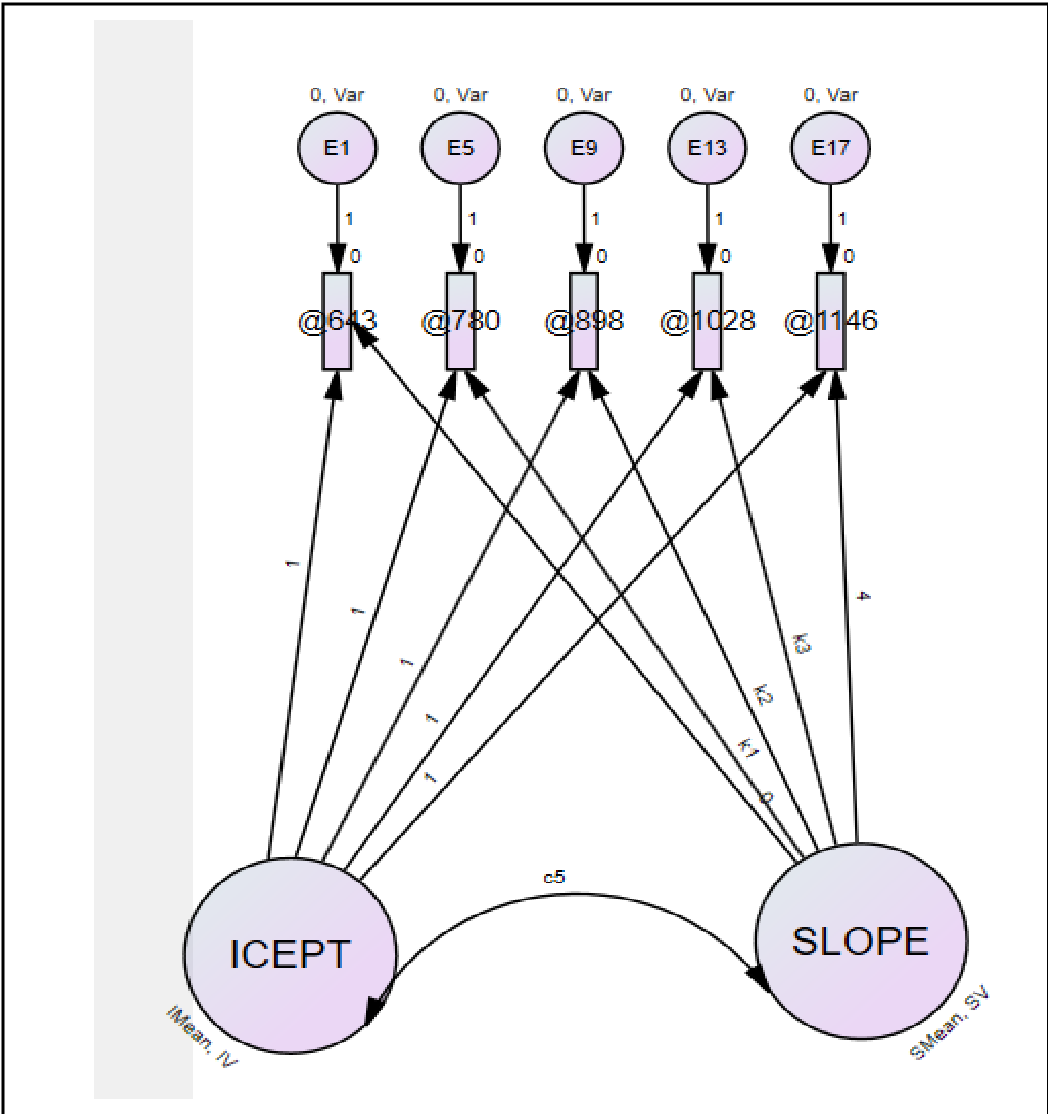 The LGM structure utilized to estimate the evolution of influence across five distinct time points.
Key Findings: The Matthew Effect vs. The Ceiling
The empirical results categorize users into five levels (0 to 4), revealing three distinct evolutionary behaviors:
- The Powerhouse (Level 4): These users have the highest starting points and the steepest growth slopes. However, as they reach the top, their growth rate begins to plateau. This is the "high-level deceleration" effect.
- The Steady Middle (Levels 1-3): These users show a remarkably consistent, linear growth. They are the "backbone" of the community, providing reliable content expansion.
- The Late Bloomers (Level 0): Low-influence users face a "curse" of low exposure initially, but if they persist, their growth rate actually increases in the later stages of their lifecycle.
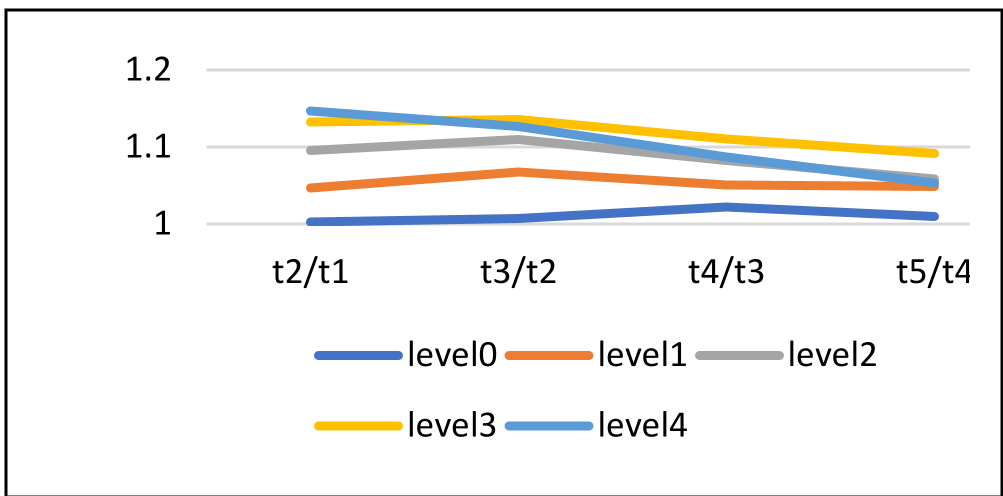 Fig. 7: A comparison of the relative growth rates across different influence tiers highlights the 'rich get richer' phenomenon.
Strategic Insights: Why This Matters for the Industry
For Platforms (Zhihu, X, LinkedIn)
The research suggests that platforms should focus on "Positive Feedback Loops." High-influence leaders drive site stickiness. By organizing exclusive "exchange meetings" or promoting inter-leader interaction, platforms can amplify the Matthew Effect to attract more external users.
For Influencer Marketing
If you are a brand looking for long-term partners, don't just chase the Level 4 giants. The study suggests that Level 2 and 3 leaders have high, stable growth rates and are more likely to have "sticky" followers who are less prone to "ad fatigue" compared to the saturated audiences of top-tier celebrities.
For Aspiring Creators
To break out of Level 0, you must bypass the standard growth curve. The authors recommend "super high-quality answers" early on or direct interaction with high-level leaders to gain the "exposure jump" needed to hit the linear growth phase.
Conclusion & Limitations
By blending fuzzy logic with longitudinal modeling, this paper provides a rare "time-lapse" view of social authority. While it brilliantly maps how influence evolves, it leaves the specific tactics (e.g., specific content types vs. post timing) for future research. In the world of social networking, understanding the curve is just as important as understanding the content.
Takeaway: Influence is a velocity, not a state. Mastering the "Matthew Effect" while recognizing the "Saturation Ceiling" is the key to sustainable social media growth.