
Evolution of Regular Directed Patterns: Decoding Stability in Dynamic Social Networks
Evolution of regular directed patterns in dynamic social networks
This paper introduces a methodology for discovering "Regular Directed Patterns" in dynamic social networks, specifically focusing on the evolution of edges, outdegree, and indegree across consecutive time intervals. By applying an "occurrence rule" algorithm to a Facebook-like Forum dataset, it identifies stable behavioral structures in directed unweighted graphs.
TL;DR
While most graph mining looks at what happens frequently, this research looks at how interactions repeat predictably. The authors present a framework to identify "Regular Directed Patterns"—behavioral motifs in social networks that follow consistent rules over time. Tested on Facebook forum data, the method successfully identifies persistent relationships and categorizes users by their popularity and activity levels.
Background & Positioning
In the landscape of graph theory, dynamic networks are typically treated as snapshots. However, traditional mining often ignores the direction of relationships or focuses solely on frequent patterns (motifs that appear many times). This work positions itself in the niche of Regularity Exploration, arguing that the predictability of an interaction—like a friend visiting a profile every two months—is a more powerful descriptor of social bonds than mere frequency.
The Problem: The "Directional Blind Spot"
Most prior work [6, 7] in regularity focused on undirected graphs. In the real world, social signals are directed: tagging a friend is different from being tagged. Without direction, we cannot distinguish between an "influencer" (high indegree regularity) and a "spammer" (high outdegree regularity). Existing tools failed to capture these nuances in a time-evolving context.
Methodology: The Summary Graph and Occurrence Rules
The authors solve this by transforming a temporal sequence of graphs into a single Summary Graph.
1. Direction Sequences
Each edge is assigned a sequence of values across timestamps:
1: Forward direction ()-1: Backward direction ()0: No interaction
2. The Occurrence Rule
A pattern is "regular" if a specific substring of the direction sequence repeats at least (threshold) times. For example, a sequence 1, 1, 0, 1, 1, 0 has a rule (1, 1, 0) with a length of 3.
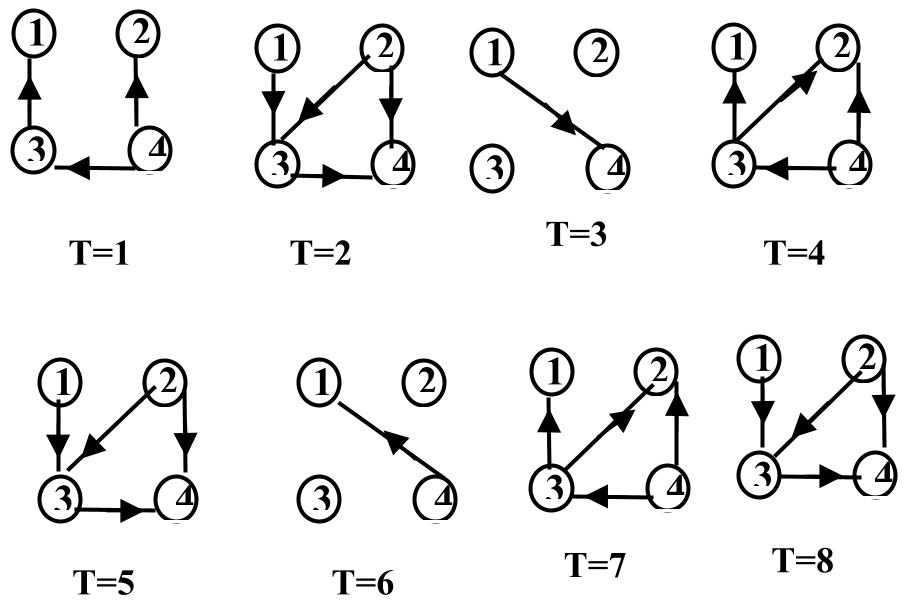 Figure 1: Illustration of a Dynamic Graph and how degree sequences are extracted to define regularity.
Experimental Insights: Social Archetypes
The researchers applied their algorithm to a Facebook-like Forum network (899 users, 24 weeks).
Key Findings:
- Edge Decay: As the length of the "regularity rule" increases, the number of edges following it decreases (see Figure 3). Long-term regular behavior is rare in social networks.
- User Mining:
- Inactive Users: Those with no outdegree sequences.
- Unpopular Users: The 59% of users who never established a regular "indegree" pattern.
- Spammer Detection: The authors suggests that users with outdegree counts exceeding a threshold (e.g., >100) consistently would be flagged, though none were found in this specific student dataset.
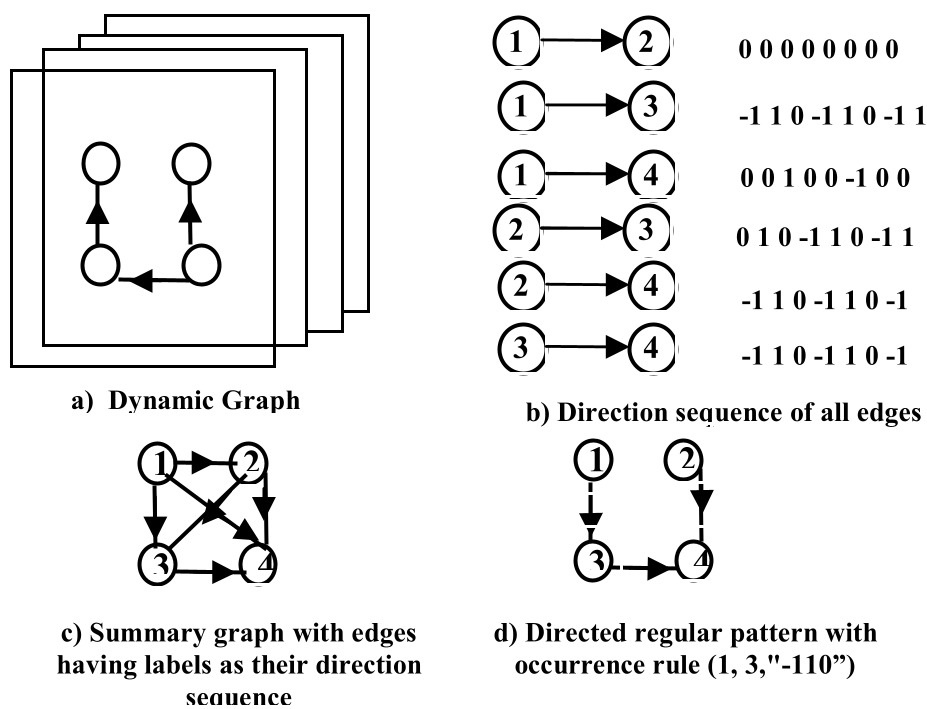 Table 1: Quantifying the discovery of 972 distinct regular patterns within the forum data.
Critical Analysis & Professional Insight
The most profound contribution here is the move toward Local Evolution Rules. By identifying subgraphs where all edges follow the same "Occurrence Rule," the paper allows us to see "Work Groups" or "Social Circles" that pulse with the same frequency.
Limitations:
- Binary Interaction: The model treats interactions as unweighted (-1, 0, 1). In modern social media, the intensity (number of likes/comments) is just as important as the direction.
- Jitter: The current algorithm is sensitive to exact matches. Real-world "regularity" is often "noisy"—someone might visit a profile a day late, breaking the formal rule.
Conclusion
This work provides a robust mathematical foundation for identifying stability in directed networks. For developers of recommendation engines or community health tools, this approach offers a way to classify users not just by "who they know," but by the "rhythm of their involvement." Future research into "fuzzy regularity" could make this even more applicable to chaotic, real-world data streams.