
Decoding Social Rhythms: Mining Regular Directed Patterns in Evolving Networks
9215_Evolution of regular directed patterns in dynamic social networks.
The paper proposes a novel framework for mining Regular Directed Patterns in unweighted, directed dynamic networks. By introducing the concept of "Occurrence Rules", it identifies recurring behaviors in edges, indegree, and outdegree across time-series snapshots to characterize node roles in social networks.
TL;DR
Static snapshots of social networks are misleading. This paper introduces a method to track "Regular Directed Patterns"—edges and node behaviors (indegree/outdegree) that repeat at specific intervals. By extracting "Occurrence Rules" from dynamic graphs, the authors categorize users into functional roles like "Leaders," "Genuine Users," or "Unpopular Spammers" with high precision.
Background & Motivation: Beyond "Frequent" to "Regular"
In the realm of Dynamic Graph Mining, most researchers chase frequent patterns—subgraphs that appear often. However, the authors of this paper argue that Regularity (occurrence at fixed time intervals) is a more potent predictor of human behavior.
Consider a student login: frequent logins matter, but a regular login every Monday morning suggests a different social intent. Furthermore, most prior work treated graphs as undirected. This paper restores the "arrow" to the edge, recognizing that a relationship from Alice to Bob is fundamentally different from Bob to Alice.
Methodology: The "Occurrence Rule" Logic
The core innovation lies in the Summary Graph and the Occurrence Rule (start, length, rule).
- Summary Graph Construction: Instead of processing dozens of snapshots separately, the researchers merge them into one graph. Each edge is labeled with a sequence ( for forward, for backward, for no edge).
- Directional Regularity: An edge is "regular" if its label sequence contains a substring that repeats at least times.
- Degree Evolution: The researchers apply the same logic to a node's Indegree (popularity) and Outdegree (activity levels) sequences.
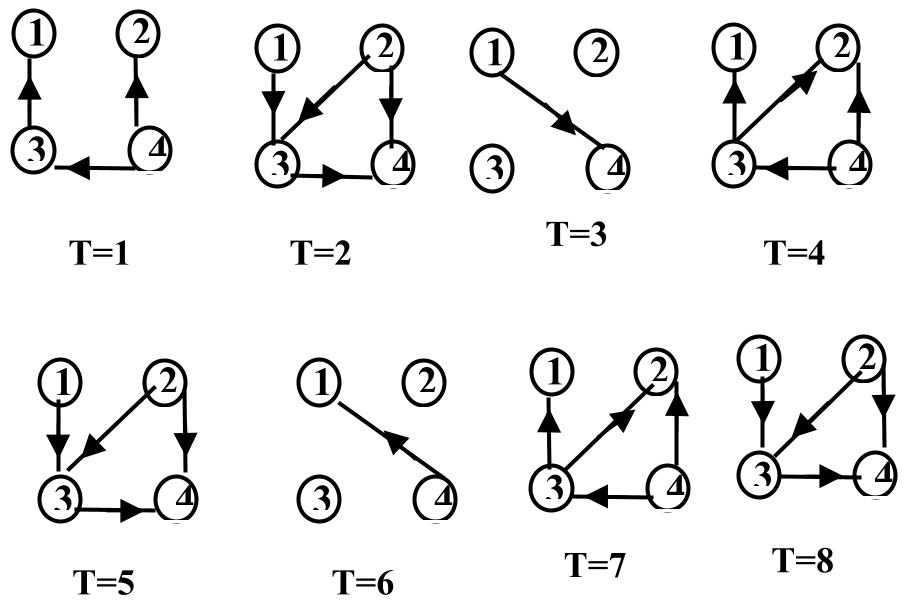 Figure 1: A dynamic graph sequence where edges (1,3), (3,4), and (2,4) form a Regular Directed Pattern (DRP) based on the rule "-1 1 0".
Experimental Results: The Facebook Forum Case Study
The methodology was tested on a 24-week dataset from a student forum. The findings provide a stark clinical view of social interaction:
- The Scaling Law of Relationships: As Figure 3 (in the paper) illustrates, the number of edges decreases sharply as the required length of the regularity rule increases. In short: Long-term regular relationships are rare.
- The "Genuine" vs. "Spammer" Test: By setting an outdegree threshold (e.g., >100 posts per timestamp), the algorithm can automatically flag spammers. In this specific dataset, all participants were found to be genuine.
- Identifying the "Unpopular": 59% of users had no regular indegree patterns, highlighting a massive "long tail" of inactive or unnoticed participants in digital communities.
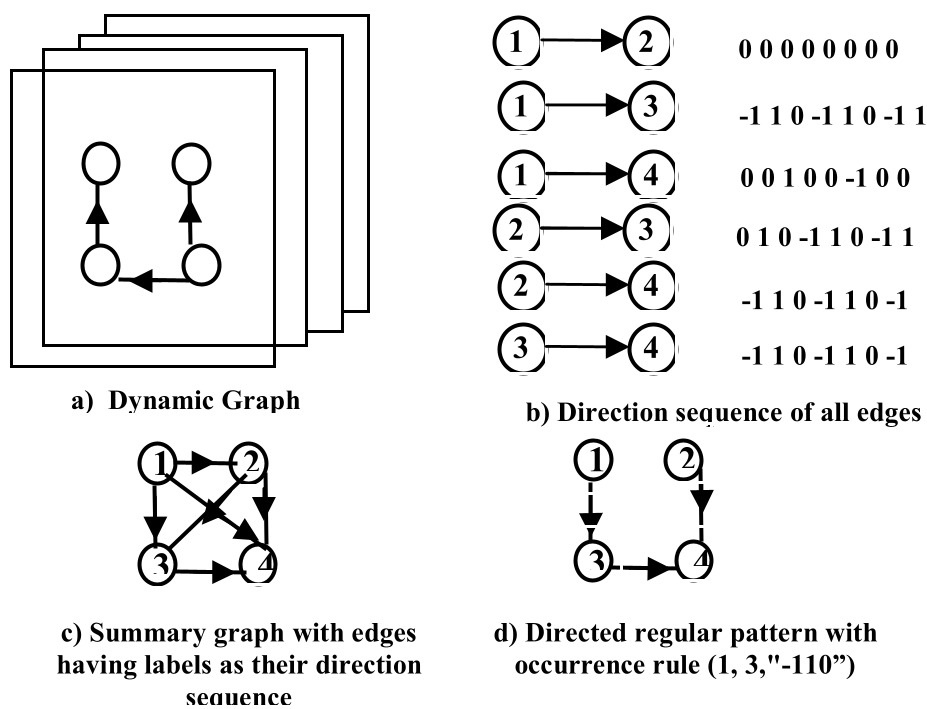 Table 1: Key metrics showing that out of 7,047 unique edges, 2,650 were found to be regular.
Deep Insight: Social Topology via Directed Subgraphs
One of the paper's most provocative insights is the interpretation of regular subgraph shapes:
- Star-like Structures (Outwards): If a central node regularly directs edges toward others, they are labeled a Leader or "Key User."
- Star-like Structures (Inwards): If the edges regularly point to the center, that person acts as a Sub-employee or a focused listener.
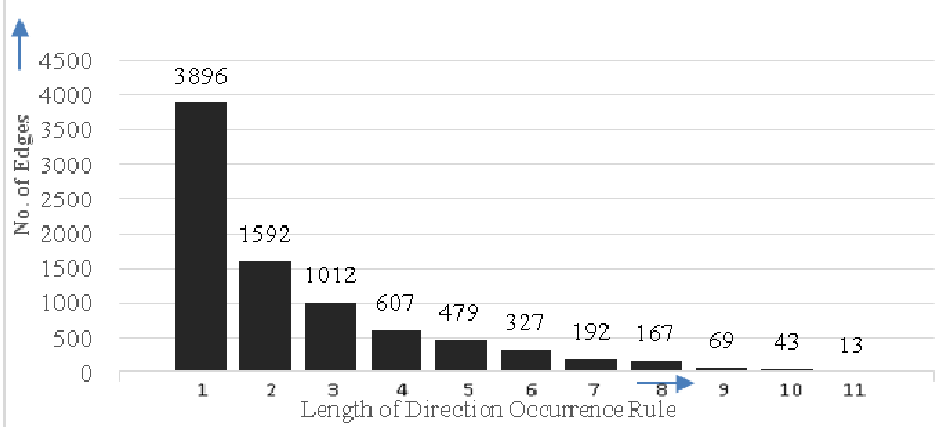 Figure 4: This distribution shows that while most user activity is short-lived, there is a core group maintaining regularity across nearly 11-week spans.
Conclusion & Future Directions
The "Evolution of Regular Directed Patterns" moves dynamic graph mining toward a more nuanced, "physics-like" understanding of social intervals. While the dataset used was a forum, the implications for Targeted Advertising (identifying when a user regularly researches a topic) and Network Security are profound.
Limitations: The current model uses a strict "exact match" for regularity. Future iterations might benefit from "fuzzy" matching to account for human inconsistency (e.g., logging in on Tuesday instead of Monday).
Takeaway for Architects
If you are building recommendation engines or community health monitors, stop looking at "how many" interactions occur. Start looking at the regularity of the direction. It is the heartbeat of the network.