
Evolution of Social Networks: Bridging Strategy and Randomness
Evolution of Social networks
This review paper synthesizes two major paradigms in network modeling: the statistical approach of Random Graph Theory and the strategic approach of Game Theory. It provides a comprehensive framework for the co-evolutionary dynamics of networks and individual behavior, establishing conditions for stochastic stability in complex social systems.
TL;DR
This survey explores the bridge between Random Graph Theory (the "statistical" view) and Strategic Network Formation (the "incentive" view). It introduces the concept of Co-evolution, where the network structure and the players' behaviors influence each other dynamically. The result is a rigorous framework for predicting the long-run emergence of specific architectures like Stars or Small Worlds.
Problem & Motivation: The Interdisciplinary Gap
Why do we care about network evolution? In modern economic and social systems, the structure of connections determines everything from information flow to market stability. However, the scientific community has been split:
- Physicists/Statisticians: Use random graphs (e.g., Erdös–Rényi) to capture statistical regularities but treat nodes as mindless objects.
- Economists/Game Theorists: Treat nodes as rational agents (Pairwise Stability) but often ignore the inherent "noise" and volatility of large-scale systems.
The authors argue that a "good" model must be micro-founded (based on incentives) yet stochastic (accounting for mistakes and environmental changes).
Methodology: The Co-evolutionary Engine
The core of the paper lies in modeling network formation as a continuous-time Markov jump process. This process is governed by two key mechanisms:
- Attachment Mechanism (): The rate at which new links are born.
- Volatility Mechanism (): The rate at which existing links die.
When these rates are coupled with a Local Interaction Game (where players choose actions like R&D effort based on their neighbors), we get a co-evolutionary process.

The Formal Synthesis
The paper provides a breakthrough by showing that if link creation and destruction intensities depend on current action profiles, the system settles into an Inhomogeneous Random Graph. The probability of a link existing is given by: This allows us to use the tools of statistical mechanics to solve strategic economic problems.
Experiments & Results: Stability in Action
The authors analyze several classic architectures through the lens of Stochastic Stability. By "counting mistakes" (perturbations ), they determine which networks survive in the long run.
The "Star" vs. The "Complete" Network
In the Symmetric Connections Model, the outcome depends heavily on the cost of maintenance ():
- Low Cost (): The complete network is uniquely stable.
- Medium Cost: The Star network emerges.
- High Cost: The empty network prevails.
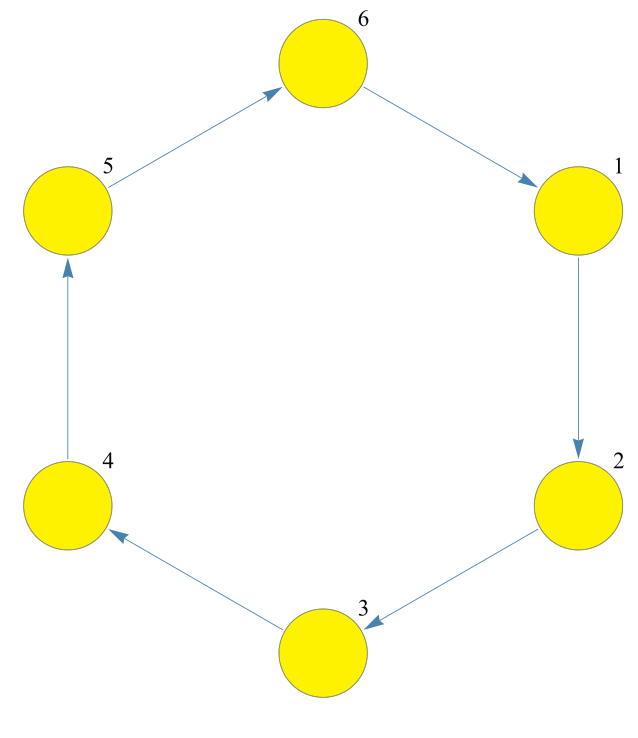 Figure: The Star (i), Empty (ii), and Small-World (iii) architectures are equilibrium outcomes under different incentive/cost parameters.
One of the most striking findings is that in one-sided network formation (where I can link to you without your permission), the predictions are much sharper. For example, in coordination games, the system almost always converges to the "Complete" network where everyone plays the risk-dominant action.
Critical Analysis & Conclusion
Takeaway
The paper successfully demonstrates that social networks are not just random graphs; they are the result of a delicate dance between individual incentives and stochastic environmental noise. The Gibbs Measure derived in Section 4.3 provides a powerful analytical tool for the next generation of social scientists.
Limitations
- Weighted Networks: The current theory focuses mostly on binary (exist/not-exist) links. Real-world social ties have varying strengths.
- Node Volatility: The models assume a "fixed" set of players. In reality, nodes enter and exit systems (e.g., firm bankruptcy or new social media users), which requires different mathematical tools.
Future Outlook
The authors suggest that the next frontier is Network Mechanism Design. Can a central planner (like a government or platform admin) use taxes or subsidies to "nudge" decentralized agents into forming a network that is both stable and socially efficient? That is the billion-dollar question for the future of digital platforms.