Beyond the Numbers: Decoding Why We Share in SNS Communities
Examining information sharing in social networking communities: Applying theories of social capital and attachment
This study investigates the drivers of information sharing in Social Networking Sites (SNS) by integrating Social Capital Theory and Attachment Theory. Using a Structural Equation Model (SEM) on 502 South Korean SNS group members, it identifies identity-based and bond-based attachments as critical mediators for frequent information contribution.
TL;DR
Information sharing is the lifeblood of social networks, yet many "mega-groups" remain ghost towns of passive lurkers. This study reveals that Identity-based attachment (feeling like a "typical member" of a group) is the primary engine of information sharing, vastly outperforming individual interpersonal bonds. Surprisingly, simply growing a group's size can actually decrease member attachment.
The "Lurker" Problem: Motivation vs. Presence
In the era of Facebook, Twitter, and specialized alumni groups, social interaction is effortless. However, most users remain passive. Traditional research focused on what tools people use, but failed to explain the "Why" behind the contribution. The authors argue that information sharing is a pro-social behavior driven by Social Capital. To understand it, we must distinguish between two psychological states:
- Identity-based Attachment: You stay because the group's purpose matches your self-concept (e.g., "I am a Kyung Hee University alumnus").
- Bond-based Attachment: You stay because of specific friends (e.g., "I stay for my friend Min-ho").
Methodology: The Dual-Path Framework
The researchers surveyed 502 members of Korean SNS groups (ranging from open to secret alumni groups) and applied Structural Equation Modeling (SEM) to test how social factors influence these two types of attachment.
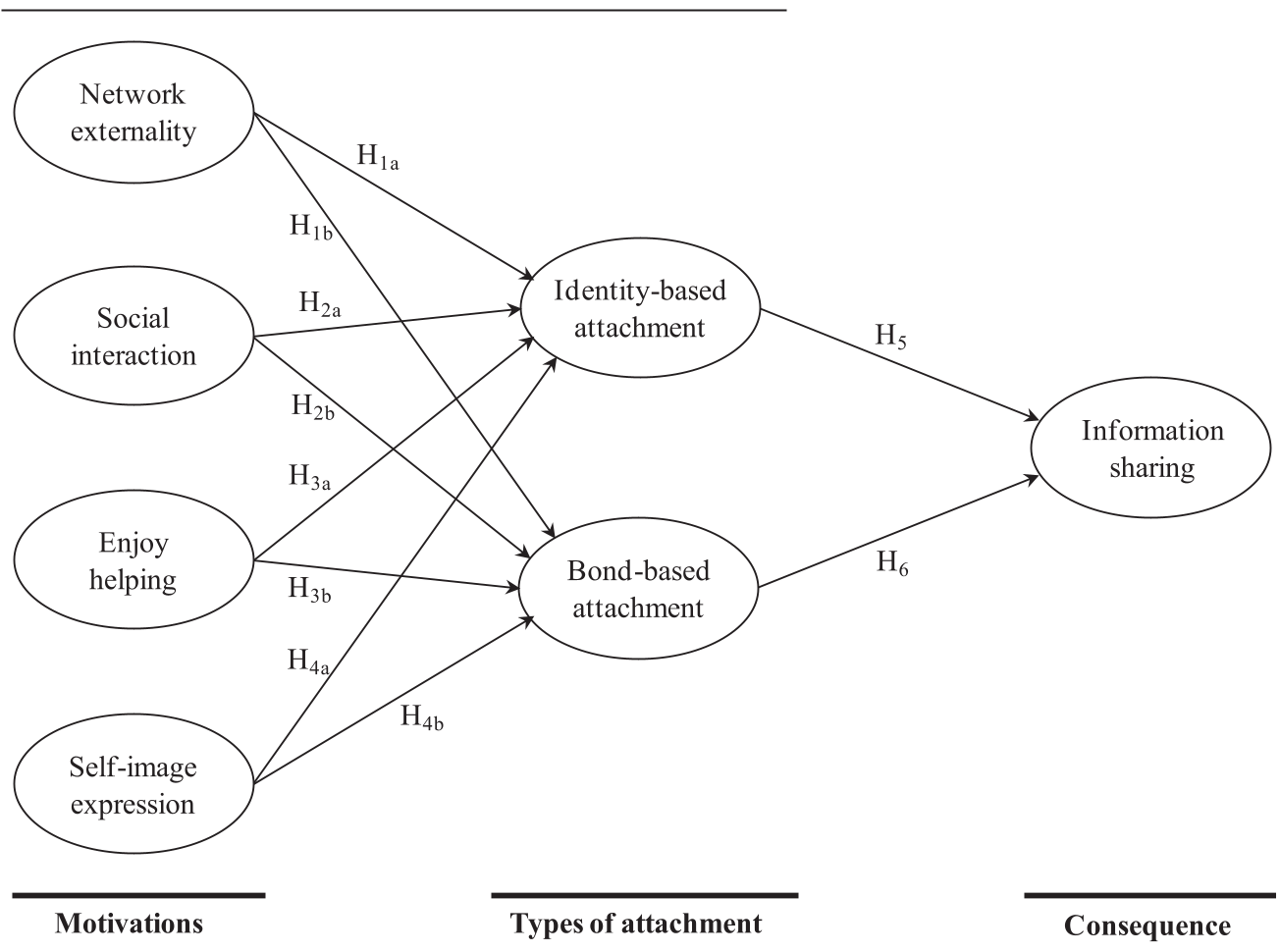
The model tracked four vital "enablers":
- Network Externality: The perceived number of members.
- Social Interaction: Quality of communication.
- Enjoyment of Helping: The altruistic "warm glow."
- Self-image Expression: Using posts to build a reputation.
Key Insights: Why "More" is Sometimes "Less"
The study’s results challenge several industry assumptions:
1. The Paradox of Network Externality
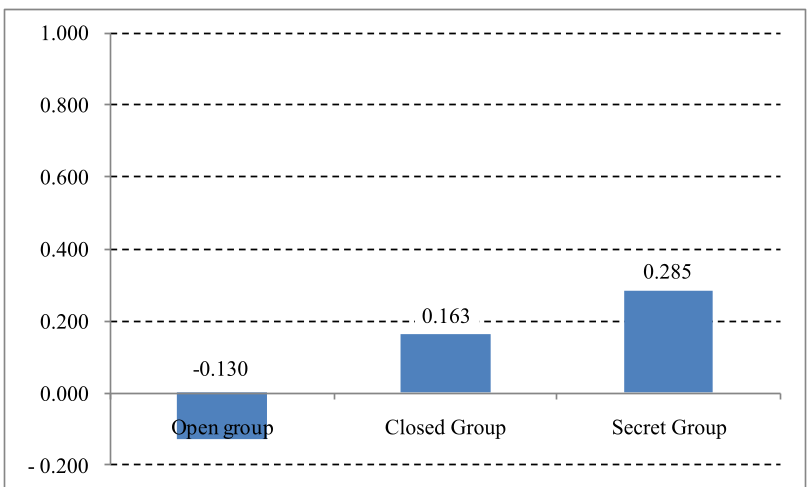
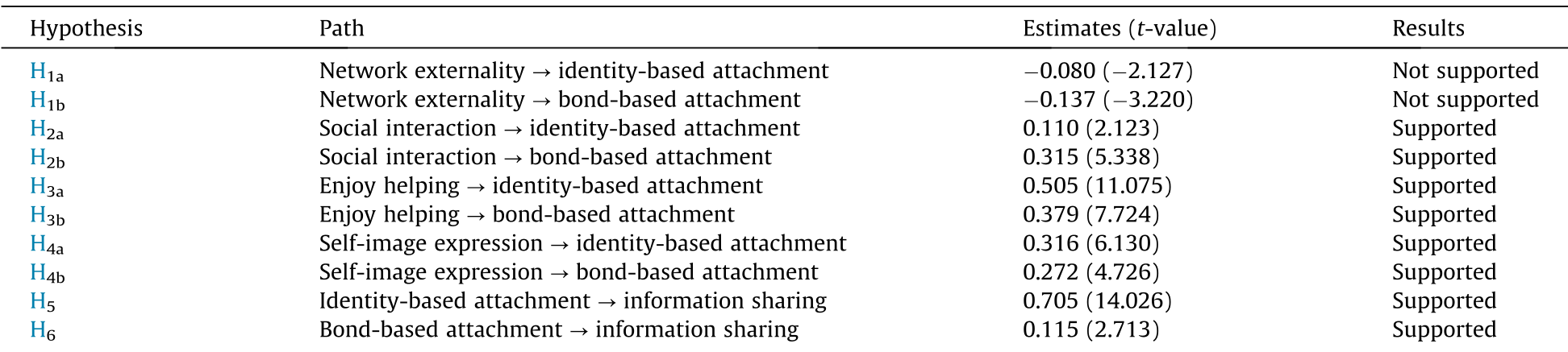
In economics, a larger network is more valuable. But in social attachment, the study found a negative correlation. As the group size grows, members feel less attached. This suggests that "mass-invited" groups lack the intimacy or shared purpose required to make members feel like they belong.
2. Identity is the King of Contribution
As shown in the structural results, Identity-based attachment had a massive path coefficient of 0.705 toward information sharing.
If you want members to share valuable ideas, don't just help them make friends (Bond-based); help them feel like they are part of a mission or a distinct social category.
3. The Power of "Enjoying Helping"
The most significant predictor for identity attachment was the Enjoyment of Helping (β=0.505). This indicates that altruism is a high-octane fuel for digital communities. When members feel they are contributing to the collective good of a group they identify with, their activity levels skyrocket.
Critical Analysis & Conclusion
This paper provides a sophisticated "Product-to-Social" roadmap. While many apps focus on "finding friends," the real value in sustaining a community lies in Shared Identity.
Limitations: The study is localized to South Korea, a society with high social homogeneity. In more individualistic cultures, the balance between "Identity" and "Bond" might shift.
Future Outlook: For community managers, the message is clear: Quality over Quantity. A smaller, "closed" or "secret" group with a high sense of specific identity (as seen in the Appendix study on secret groups) often generates more valuable information exchange than a massive, open public page. To build an active community, stop focusing on the "size" of the net and start focusing on the "strength" of the common thread.