
CVE-VM: Pioneering Collaborative Learning via Distributed Virtual Environments
Experience on the Implementation of a Collaborative Virtual Environment for Educational Applications
The paper presents the CVE-VM (Collaborative Virtual Environment - Virtual Museum), a distributed educational platform built using VRML and Java. It achieves a scalable, multi-user 3D experience over the Internet by implementing a custom communication protocol and utilizing the External Authoring Interface (EAI) to synchronize virtual worlds across dispersed participants.
TL;DR
The paper introduces CVE-VM, a distributed system designed for collaborative education. By merging VRML (for 3D graphics) and Java (for network logic), it allows multiple users to explore and co-construct virtual museums. The study highlights a custom communication protocol that ensures real-time interaction while minimizing network load through "delta-update" mechanisms.
Contextual Positioning
In the landscape of early 2000s web technology, this work represents a significant leap from static "walk-through" VR to Computer-Supported Cooperative Work (CSCW). It moves beyond just viewing content to a constructivist model where users actively modify the virtual space.
The Challenge: Synchronizing the Virtual Reality
Building a Collaborative Virtual Environment (CVE) is not just about 3D modeling; it is a distributed systems problem. Prior works often struggled with:
- State Consistency: Keeping dozens of avatars in the same spot across different computers.
- Bandwidth Bottlenecks: Modern high-speed internet wasn't ubiquitous, making the transmission of 3D data heavy and laggy.
- Heterogeneity: Ensuring the environment runs on different hardware via standard web browsers.
Methodology: The Java-VRML Synergy
The authors leverage the External Authoring Interface (EAI). While VRML acts as the "eyes" (rendering the scene), Java acts as the "brain" (processing logic and network packets).
1. The Communication Protocol
The protocol uses a simplified ID-based message structure to handle:
- Avatar Consistency: Updates position/orientation.
- Interface Construction: Manages logins and user lists.
- Social Interaction: Supports both public and private chat.
2. Efficiency through Thresholds
To solve the bandwidth problem, the authors implemented a "dead reckoning" lite approach. A message is only sent if:
- The avatar moves more than 1.5 meters.
- At least 300 milliseconds have passed since the last update.
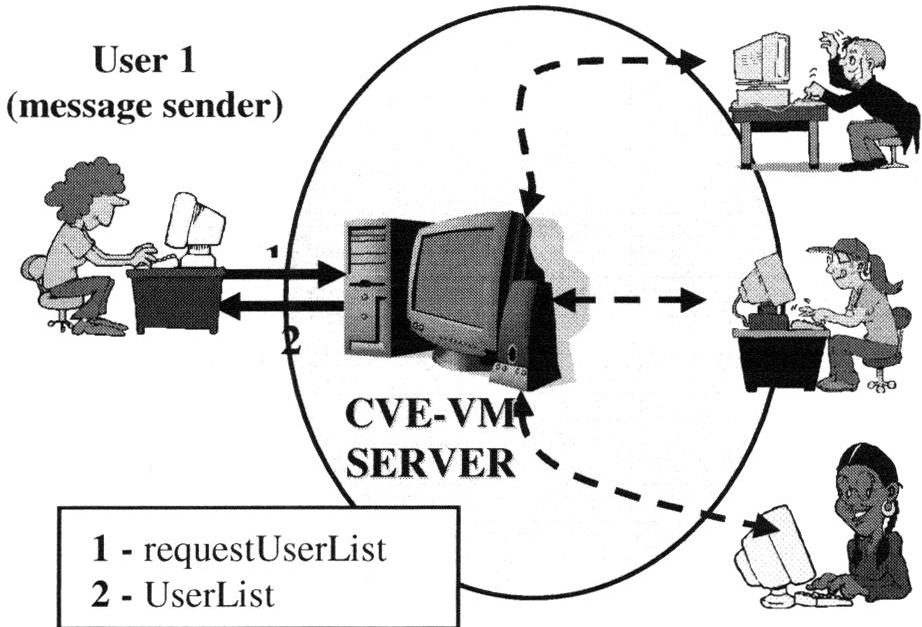 Fig 1: The broadcast mechanism ensuring consistency across User 1, the Server, and other connected peers.
Architecture and Server Management
The server interface serves as the command center, managing user sessions and object lists. This centralized control allows instructors to monitor interactions and disconnect disruptive users if necessary.
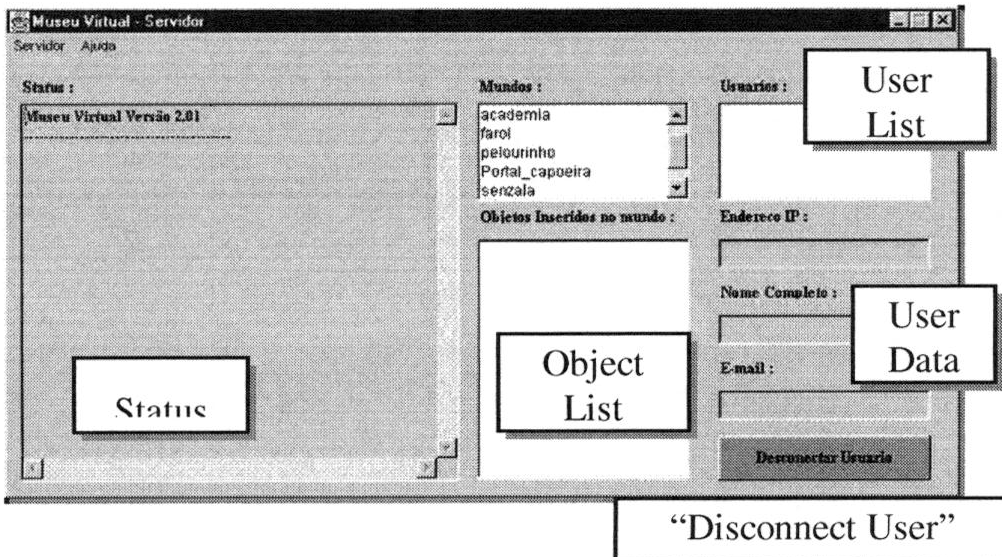 Fig 2: The administrative backend showing the real-time user list and world status.
Experiments: Constructing "Computer History"
The system was tested using specific educational themes. Students didn't just walk through a museum; they interacted with:
- 3D Scenes: Thematic environments like a CAVE simulator.
- Interactive Objects: 3D models of historical hardware (e.g., the abacus).
- Custom Avatars: Representations selected by the user to foster identity and presence.
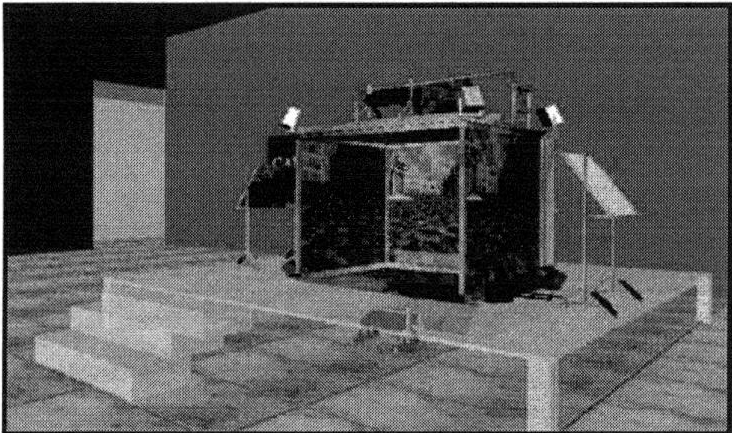 Fig 3: Examples of 3D components including (a) a CAVE scene, (b) a computer-inspired avatar, and (c) an abacus animation.
Critical Insight & Future Outlook
The core value of this work is its multidisciplinary approach. It recognizes that technical excellence in graphics is useless without usability. The authors highlight that "High Information Density" and "Technical Naming" are common pitfalls in VR.
Limitations: The reliance on VRML—a now-legacy technology—limit the direct applicability of the code today. However, the logic of dynamic loading via EAI and message-minimization remains a foundational principle for modern web-based Metaverses.
Takeaway for Today: If you are building a collaborative tool, prioritize the Social Interaction (chat/gestures) and Ease of Co-creation. As this paper proves, the "Virtual Museum" isn't successful when it's a finished product, but when it's a sandbox for learning.