
Automated Extraction of Family Disease Trees: Bridging the Gap in Russian Clinical NLP
Experiencer Detection and Automated Extraction of a Family Disease Tree from Medical Texts in Russian Language
The paper introduces an "Experiencer Detection" module designed to identify whether medical text refers to the patient or a relative, followed by a multi-class classifier to categorize specific family members. Utilizing Russian EHR data, the authors achieved a 0.96 F-score for binary classification and 0.93 for multi-classification (using XGBoost), ultimately visualizing the results as a Family Disease Tree.
TL;DR
Researchers from ITMO University have developed a robust pipeline to parse unstructured Russian Electronic Health Records (EHRs) to identify "experiencers"—distinguishing between the patient and their relatives. By achieving F-scores up to 0.96, the system successfully extracts and visualizes hereditary disease patterns into a structured family tree, even in the absence of advanced syntax parsers for the Russian language.
Context & Motivation: The "Experiencer" Problem
In clinical narratives, a sentence like "The patient's mother suffered from type 2 diabetes" contains critical context. Traditional IE systems might misattribute "diabetes" to the patient. This is the Experiencer Detection problem.
While English-language clinical NLP has benefited from massive datasets and mature tools (like MetaMap or cTAKES), the Russian language faces two major hurdles:
- Morphological Complexity: Russian is highly inflected, making simple keyword matching ineffective.
- Resource Scarcity: High-quality, labeled clinical corpora for Russian are rare, and syntax parsers often fail on the "telegraphic" style of medical shorthand.
Methodology: The Architecture of Detection
The authors proposed a modular framework that treats the problem as a hierarchical classification task.
1. Preprocessing & Vectorization
The pipeline bypasses standard normalization (lemmatization) to preserve technical nuances and uses a custom spell-checker to handle the high frequency of typos in EHRs. They compared:
- Sparse Representations: CountVectorizer (CV) and TF-IDF.
- Dense Representations: Continuous Bag of Words (CBOW) and Skip-Grams (SG) via FastText.
2. The Model Pipeline
The task was split into:
- Binary Task: Is this sentence about the patient or a relative?
- Multi-class Task: Which relative is it? (9 classes: Mother, Father, Brother, etc.)
 Figure 1: The input/output flow of the experiencer detection module.
Experimental Insights: Small Data vs. Big Embeddings
One of the research's most compelling findings is the performance gap between vectorization methods.
- Binary Success: For simple patient/relative detection, Skip-Gram (SG) embeddings reached a 0.96 F-score. The semantic "cluster" of family terms was distinct enough for neural representations to shine.
- Multi-class Reality Check: For identifying the specific relative, CountVectorizer paired with XGBoost won (0.93 F-score). As seen in the confusion matrices below, embeddings struggled with "rare" relatives (uncles, aunts) due to the lack of training data (only 1204 samples total).
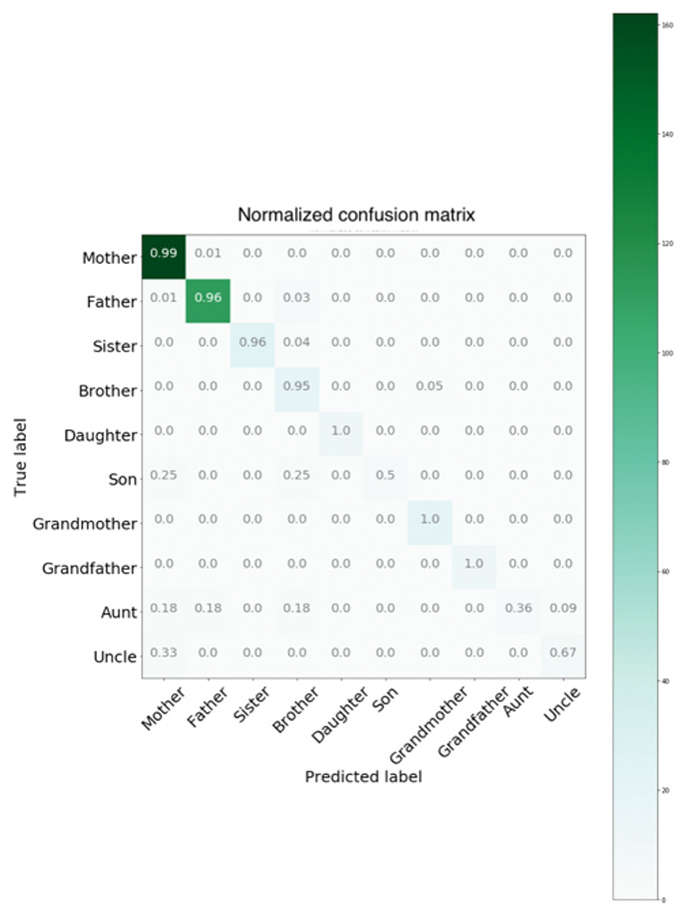 Figure 2: CountVectorizer (Left) vs. Skip-Gram (Right). Note how the sparse model handles class imbalances significantly better.
From Text to Tree: Visualization
The final output isn't just a label but a Family Disease Tree. By extracting the subject (the relative) and the predicate (the disease/event), the system generates a Plotly-based graph that clinical experts can use for hereditary risk assessment.
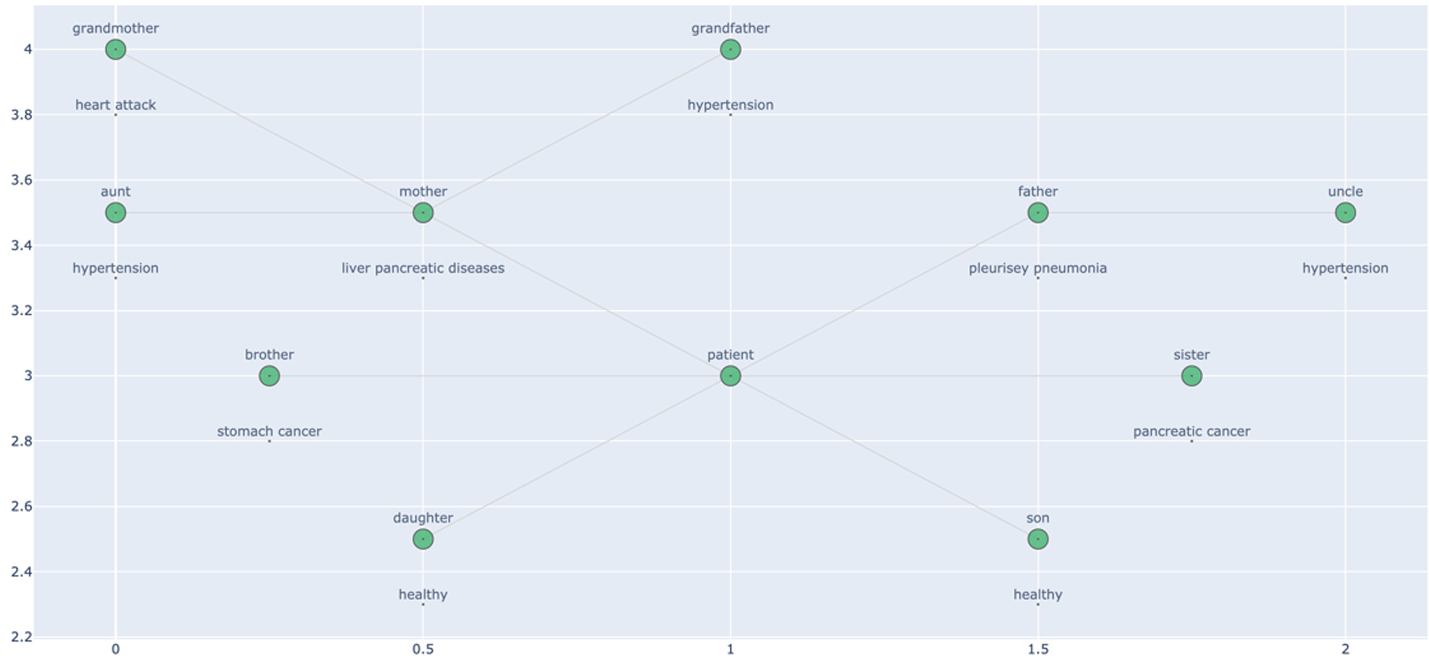 Figure 3: Example of an automated family disease tree generated from EHR text.
Critical Analysis & Future Directions
The authors successfully demonstrated that high-precision clinical IE is possible for Russian without deep-learning "overkill." However, two limitations remain:
- Co-occurrence: The current model assumes one relative per sentence. Real-world notes often say, "Both mother and father have hypertension," which requires a transition from sentence classification to Named Entity Recognition (NER) and link prediction.
- Uncertainty: The paper acknowledges "relation bond uncertainty" (e.g., distinguishing between a half-brother and a brother), which remains an open challenge for purely text-based extraction.
Summary
This work serves as a vital component of a larger Russian medical text-mining suite (including negation and spell-checking). It proves that in highly specialized domains with limited data, the synergy of targeted preprocessing and ensemble learning (XGBoost) remains the SOTA approach for practical deployment.