
Evolution of G2G: Breaking the Isolation in Mobile Social Networking
Experiences running a prototype location-aware mobile social networking system
The paper presents the evolution of G2G, a prototype location-aware mobile social networking system. It introduces key updates including Facebook authentication integration and a cross-operator localization mechanism using the Google Geolocation API to improve proximity detection for J2ME-enabled smartphones.
TL;DR
This paper explores the transition of G2G, a location-aware social networking prototype, from a standalone application into an integrated ecosystem. By tackling the "barrier to entry" via Facebook integration and solving the "cross-operator localization" puzzle using Google's Geolocation API, the authors demonstrate how to maintain user engagement in a crowded mobile market.
Context & Motivation: The Loneliness of New Networks
In the late 2000s, the mobile landscape was fragmented. While systems like DodgeBall and Aka-aki pioneered location-based socializing, they all faced a "Chicken and Egg" problem: a social network is only valuable if your friends are already there.
The authors identified three critical failure points in their early prototype:
- Registration Fatigue: Users hated creating new accounts and manually inviting friends.
- GPS Blindness: GPS is often unavailable in bars, theaters, and coffee shops—precisely where social interaction happens.
- Operator Silos: Detecting proximity between users on different carriers (e.g., Vodafone vs. Orange) was historically difficult without a shared geographical coordinate system.
Methodology: The "Add-on" Strategy
Rather than fighting for a new social graph, the researchers pivoted G2G to become an extension of Facebook.
1. Facebook Graph API Integration
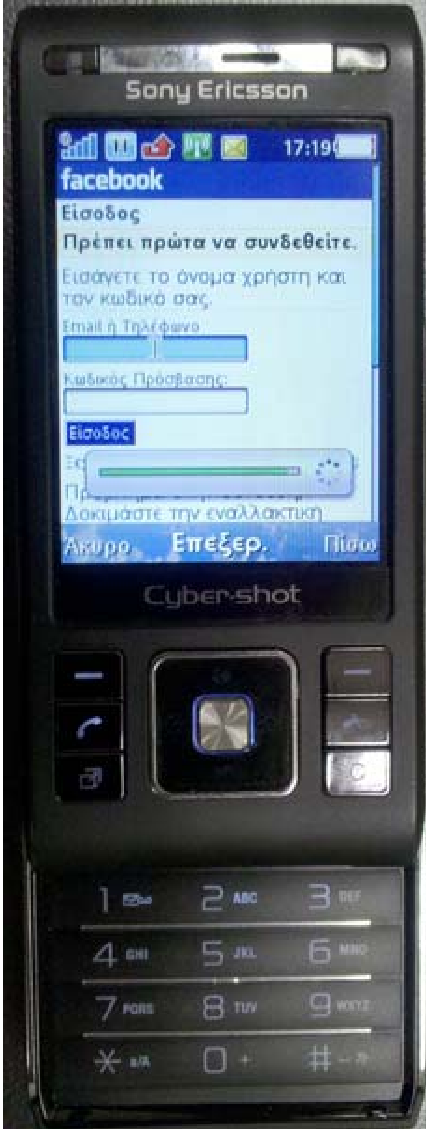
By implementing the OAuth2 protocol, G2G allowed users to sign up with their existing credentials. This didn't just simplify login; it imported the user's entire social graph. When a user's Facebook friend joined G2G, they were automatically matched, solving the "empty clique" problem instantly.
2. Solving Proximity Without GPS
The researchers' most technical insight was the use of the Google Geolocation API to bypass the inconsistencies of mobile operators.
- The Trap: Relying purely on GPS fails indoors.
- The Fix: G2G collects the unique Cell-ID of the user's current tower and queries Google’s massive database to find its lat/long coordinates. This allowed for 90%+ precision in proximity detection even in the heart of a concrete building.
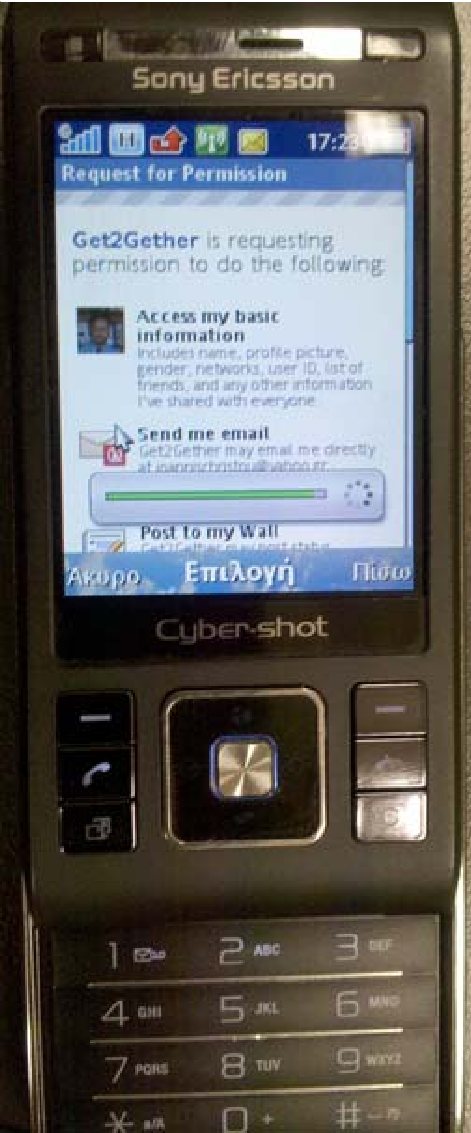 Caption: The flow of integrating Facebook OAuth2 and Graph API into the G2G mobile client.
Experiments and Practical Results
The system evaluation proved that mathematical proximity detection can be highly reliable. Even without GPS, if the "near-by" threshold was set to 1.5 Km, the system's precision exceeded 90%. In practical tests among the AIT community (a cohort of ~200 users), the integration of multimedia "post-it" notes—invisible until a user enters a specific geo-fenced area—created a high level of "digital-physical" engagement.
 Caption: (a) The proximity alert screen; (b) The interface for location-aware multimedia notes.
Critical Insight: The "Social Add-on" Paradigm
The most profound takeaway is that convenience trumps novelty. The authors discovered that even a superior location-tracking algorithm couldn't save an app if the user felt "isolated" from their primary social circle.
Limitations & Future Outlook
While the G2G prototype was successful in its niche, it was limited by the J2ME platform, which has since been superseded by iOS and Android. However, the logic remains relevant: modern apps like Zenly (acquired by Snap) or Life360 succeeded by following this paper's blueprint—focusing on high-accuracy background localization and seamless contact integration.
In the future, the authors envision a shift toward Hyper-local Advertising, where merchants can trigger events or coupons on G2G as a user walks past a shop, bridging the gap between social networking and local commerce.