
Deciphering Student Behavior: How Massive Video Services Fuel Blended Learning Success
Experimental Validation of a Massive Educational Service in a Blended Learning Environment
This paper presents an experimental validation of a massive educational video service implemented within a blended learning model at Politecnico di Torino. By analyzing over 1.2 million annual accesses and student performance data, the study identifies six distinct user behavior patterns and establishes a positive correlation between strategic video usage and academic success.
TL;DR
Politecnico di Torino showcases a decade-long experiment in "Blended Learning," proving that recording live lectures and making them available "just-in-case" drastically improves exam success rates. However, the data reveals a catch: how you watch matters more than that you watch.
Context: Beyond the MOOC Hype
While the world became obsessed with MOOCs (Massive Open Online Courses), many universities faced a more grounded challenge: how to support thousands of on-campus students, including those who work or occasionally miss classes. This paper validates a "MOC" (Massive Online Course)—an internal, massive video service designed to complement, not replace, the physical classroom.
The "Just-in-Case" Motivation
The researchers' intuition was that students don't want to learn in a void. They want the familiarity of their own professors and the flexibility to catch up. The study tracked 9,527 students across core engineering courses to see if the investment in recording 3,000+ videos annually was paying off in actual grades.
Methodology: From Clicks to Profiles
The team didn't just count views. They used data mining to cluster students based on the timing and sequence of their views.
The 6 Degrees of Video Learners
By applying Euclidean distance metrics to access logs, they uncovered six archetypes:
- Synchronous User (39%): Follows the course week-by-week. High success.
- Just-enough User (21%): Only watches what they need to clarify specific doubts. Highest performance.
- Exam-driven User (15%): Downloads everything 3 days before the exam. High failure rate.
- Asynchronous User (4%): Independent learners who do the whole course later. Successful.
- Focused User (6%): Uses videos to recover after a failed first attempt. Highly motivated.
- Drop-out User (12%): Starts strong but quits halfway.
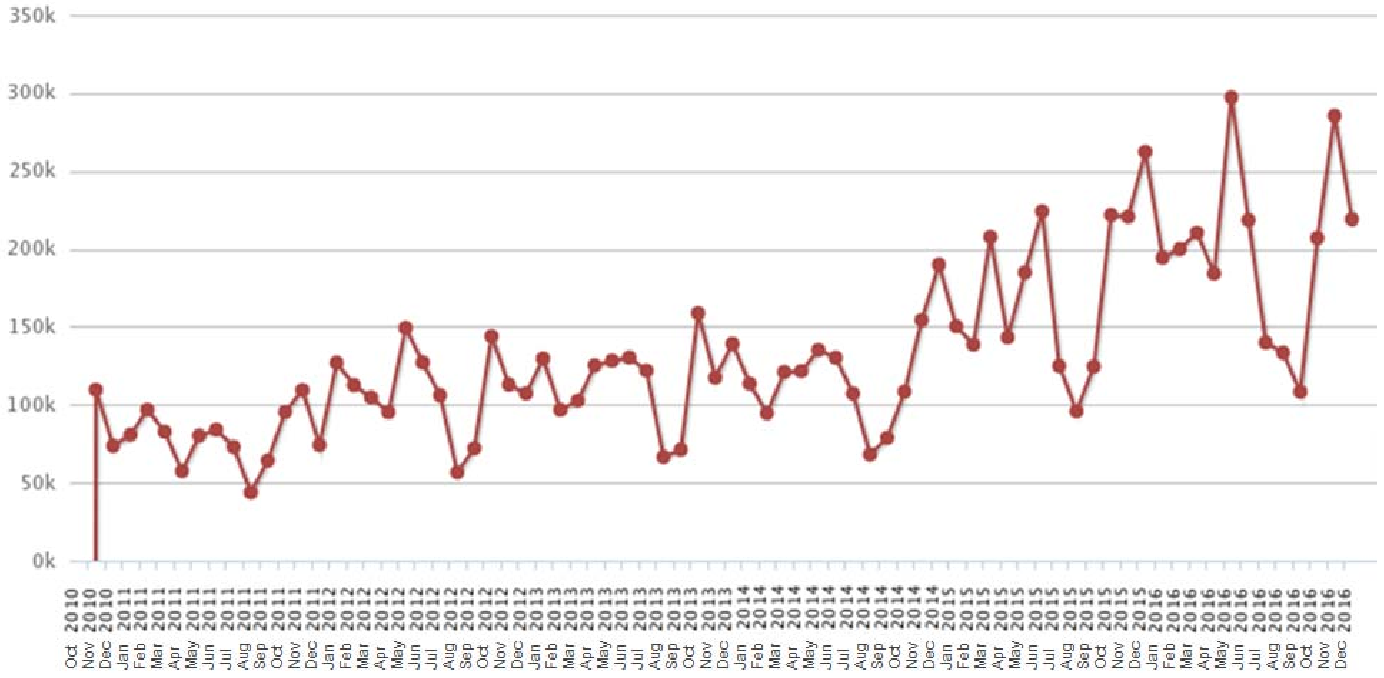 Fig 1: Access peaks coincide with exam sessions, proving the "support" nature of the service.
Experiments & Results: The "Dumb Download" Trap
The most striking find was the correlation between video volume and marks. Students who accessed less than 25% of the videos often had better average marks than those who accessed 100%.
Why? Because the "100% access" group often consisted of "Exam-driven" users who were bulk-downloading files without actually processing the information. In contrast, the top students used the videos surgically—to re-watch a complex "practice" exercise or a difficult "theory" lecture they missed.
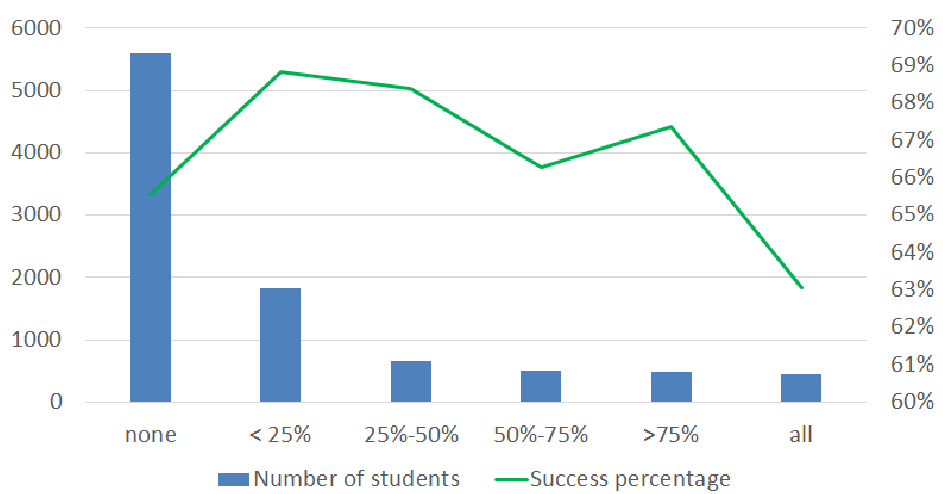 Fig 2: Note how students with selective access (some videos) outperform both non-users and "total download" users.
Deep Insights & Concluding Thoughts
The takeaway for educators is clear: Flexibility is the ultimate feature. A blended model succeeds when it allows a student to be a "Synchronous User" for a hard subject (like Computer Science) but a "Just-enough User" for a subject they find easier (like Chemistry).
Limitations & Future Work
The study admits a major hurdle: tracking "consumption" vs "download." A click tells us the file was requested, but not if the student actually watched it or understood it. Future research aims to use unsupervised AI to find even more granular patterns, potentially predicting student failure before the exam even happens.
Final Thought: Videos aren't a magic pill for learning; they are an insurance policy for the classroom experience.