
Deciphering the Digital Footprint: How Scholars Find Experts on Academic Social Networks
Research on pathways of expert finding on academic social networking sites
This study investigates the behavioral pathways of finding experts on Academic Social Networking Sites (ASNS), specifically ResearchGate. By employing a pathway-based approach that integrates pages and navigations, the research identifies three distinct behavioral archetypes: single, triangular, and multiple seeking pathways.
TL;DR
Finding an expert isn't just about a search query; it’s a journey through a complex web of profiles, publications, and professional relationships. This research explores ResearchGate to map the "Pathways" users take to find experts, revealing that our digital search for talent follows predictable, yet distinct, behavioral patterns.
Positioning: This work shifts the focus from purely algorithmic "Expert Retrieval" to human-centric "Behavioral Analysis," bridging Information Retrieval (IR) and Human-Computer Interaction (HCI).
The "Expertise" Gap
Why do you click on one profile and ignore another? Existing literature is obsessed with improving the accuracy of algorithms—ranking people by citations or "RG Score." However, these metrics ignore the user's intent. The gap lies in understanding the navigation process: how a user moves from a vague interest to a final decision. This paper tackles the "how" and "why" of the discovery process.
Methodology: The Three Levels of Navigation
The authors break down the user experience into three granular levels to capture the complexity of expert finding:
- Page: The specific footprint (e.g., a researcher's overview page).
- Navigation: The act of moving between pages.
- Pathway: The chronological chain of events that represents a complete search task.
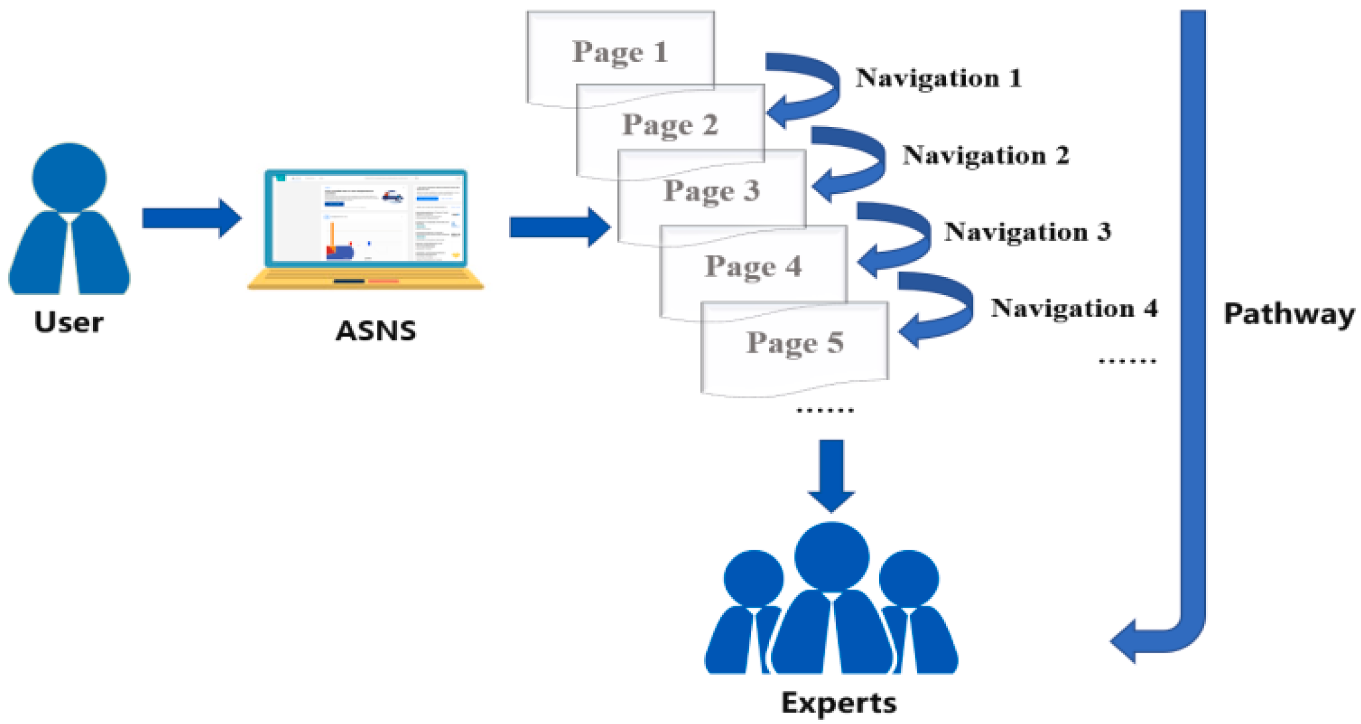
Using four distinct tasks—finding experts for information, collaboration, and guidance—the researchers tracked 24 participants' interactions on ResearchGate.
Core Discovery: The Three Seeking Pathways
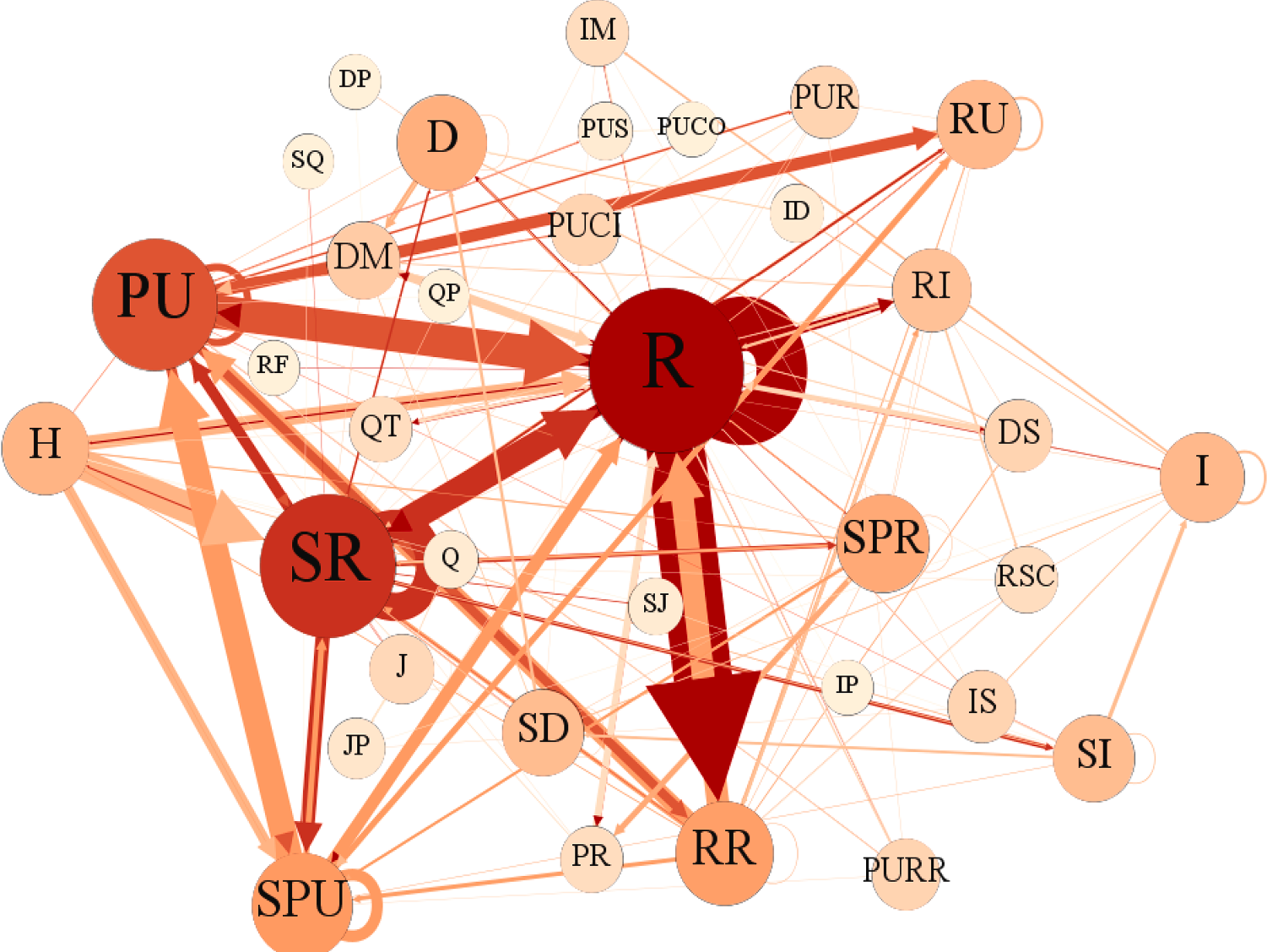
The most significant contribution of this study is the classification of user behavior into three tactical archetypes:
1. Single Seeking Pathway (The Quick Fix)
- Behavior: A simple backbone. The user hits the search box (SR), checks a profile (R), and either finds what they need or leaves.
- Context: Most common when seeking quick information or browsing familiar topics. It is shallow and fast.
2. Triangular Seeking Pathway (The Professional Standard)
- Behavior: Navigations loop between Search, Profile, and Publication pages.
- Context: This is the SOTA (State of the Art) of human browsing. Users refine queries based on the publications they find, then jump back to profiles to verify expertise.
3. Multiple Seeking Pathway (The Deep Dive)
- Behavior: A multi-branched approach involving Institutional and Departmental pages.
- Context: Primarily used for high-stakes decisions like "Seeking a Post-Doc position" or "Studying Abroad." Here, the user investigates a candidate's entire academic ecosystem.
Insights & Results
The experiment produced several counter-intuitive findings:
- Publication Paradox: While publication pages (PU) are critical for verification, their utilization frequency is surprisingly low compared to profile overview pages. Users trust the "Stats Overview" (citations, reads) more than reading the actual publication details during the search phase.
- The Power of the Network: 71.43% of users were satisfied using "Following/Followers" lists to find experts. This suggests that "Academic Kinship" is a more powerful discovery tool than traditional keywords.
- Criteria for Trust: Relevance of research area (96.88%) remains the king, but institutional background becomes significantly more important during "Guidance" tasks (Task 4).
Critical Analysis & Conclusion
Takeaway
For product designers at ResearchGate, LinkedIn, or Academia.edu, the message is clear: Human discovery is relational. Interfaces should not just be search bars; they should be "Relational Maps." Shortening the distance between a paper's citations and the author’s "Follower" list is more valuable than a faster search algorithm.
Limitations & Future Work
The study is limited by a small sample size (24 participants) and a focus on a single platform. Future research should look at "Cross-Platform" pathways—do users start on Google Scholar and end on ResearchGate?
By understanding these pathways, we move closer to a research environment that fosters genuine collaboration through intuitive digital design.