
PPGP: Using Rough Set Theory to Shield Social Networks Without Sacrificing Data Utility
Expert Systems With Applications
The paper introduces the Privacy Preserving Graph Publishing (PPGP) algorithm, a novel framework based on the "upper approximation" concept of Rough Set theory. It aims to anonymize social network data by modifying graph structures while maintaining the utility for mining tasks like clustering, classification, and PageRank.
TL;DR
Researchers have developed a new algorithm, PPGP, that uses the mathematical concept of Rough Sets to anonymize social network graphs. By introducing a controlled level of "structural vagueness" through Upper Approximations, the algorithm prevents identity and link disclosure while keeping the data 90%+ accurate for complex tasks like community detection and classification.
The Social Data Dilemma
In the modern digital economy, social network data is gold. Companies like Yahoo or LinkedIn often need to share user interaction graphs with third-party analysts to improve recommendation engines or detect fraud. However, "anonymizing" data by simply removing names isn't enough. Adversaries can use Structural Attacks—looking at a node's unique pattern of connections—to re-identify individuals.
Current techniques like -anonymity or random edge deletion often destroy the very "knowledge" hidden in the graph, making the resulting data useless for researchers.
The Insight: Embracing Vagueness with Rough Sets
The core innovation of this paper is applying Rough Set theory to graph topology. Unlike traditional sets where an element is either "in" or "out," Rough Sets allow for an "approximation" area.
The authors define a Neighborhood Connected Subset and use its Upper Approximation to identify nodes that are "close enough" to be considered part of a structural equivalence class.
How PPGP Works:
- Neighborhood Definition: For every node , identify its immediate neighbors.
- Upper Approximation: Find nodes that are effectively 2-hops away (the "boundary" of the neighborhood).
- Jaccard Refinement: Use a similarity threshold to filter these approximations.
- Graph Transformation: Modify the edges to reflect this "constrained approximation," effectively masking the exact original structure with a structurally similar but "vague" version.
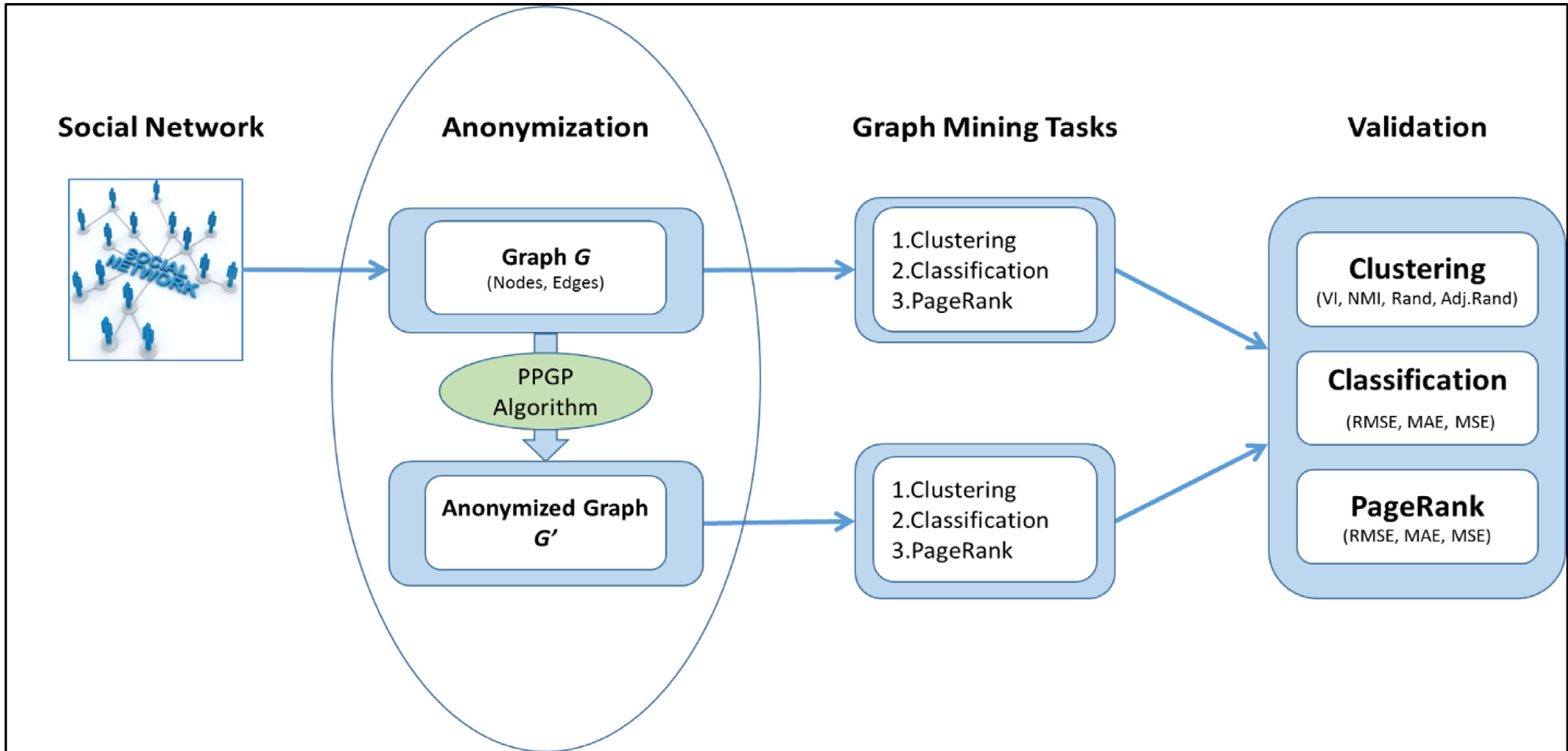 Figure 1: The Privacy Preserving Graph Publishing (PPGP) framework architecture.
Experimental Proof: Privacy Meets Utility
The authors didn't just propose a theory; they tested it across four real-world datasets: the Zachary Karate Club, Dolphin interactions, American College Football, and Yeast protein interactions.
1. Community Detection (Clustering)
Using algorithms like FastGreedy and WalkTrap, the study found that at specific values (usually between 0.1 and 0.3), the Normalized Mutual Information (NMI) remained remarkably high, meaning the identified "communities" in the anonymized graph were nearly identical to the original.
2. Machine Learning Accuracy
The researchers ran k-Nearest Neighbor (kNN) and CART classification. The Mean Squared Error (MSE) showed a "U-shaped" curve, revealing a "sweet spot" (the elbow) where privacy is high but error remains low.
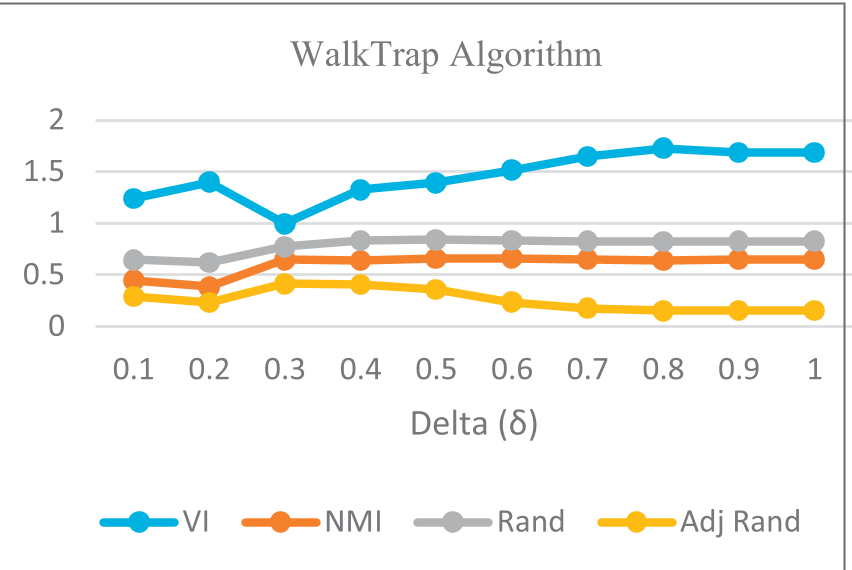 Figure 2: Performance outcomes for clustering on the Zachary dataset, showing the stability of accuracy measures across different threshold values.
Deep Insight: The Value of
The beauty of the PPGP approach lies in the threshold. It acts as a "Privacy Dial" for data owners:
- Low : High privacy, more "vagueness," higher potential for information loss.
- High : Low privacy, structure stays closer to original, high utility.
The study discovered that the "Optimal " for privacy (measured by the Split-join distance) often aligns with the that provides the best mining accuracy. This suggests that the PPGP algorithm naturally preserves the most important structural characteristics of the network.
Critical Analysis & Future Outlook
While PPGP is a major step forward, its complexity makes it challenging for massive graphs like Facebook's global social graph. Furthermore, while it handles identity and link disclosure well, the authors admit that a determined attacker with significant external "background knowledge" might still pose a threat.
Takeaway: This research bridges the gap between pure mathematics (Rough Sets) and practical data security. For organizations looking to share sensitive graph data, PPGP offers a principled way to "fuzz" the data without breaking the underlying insights.
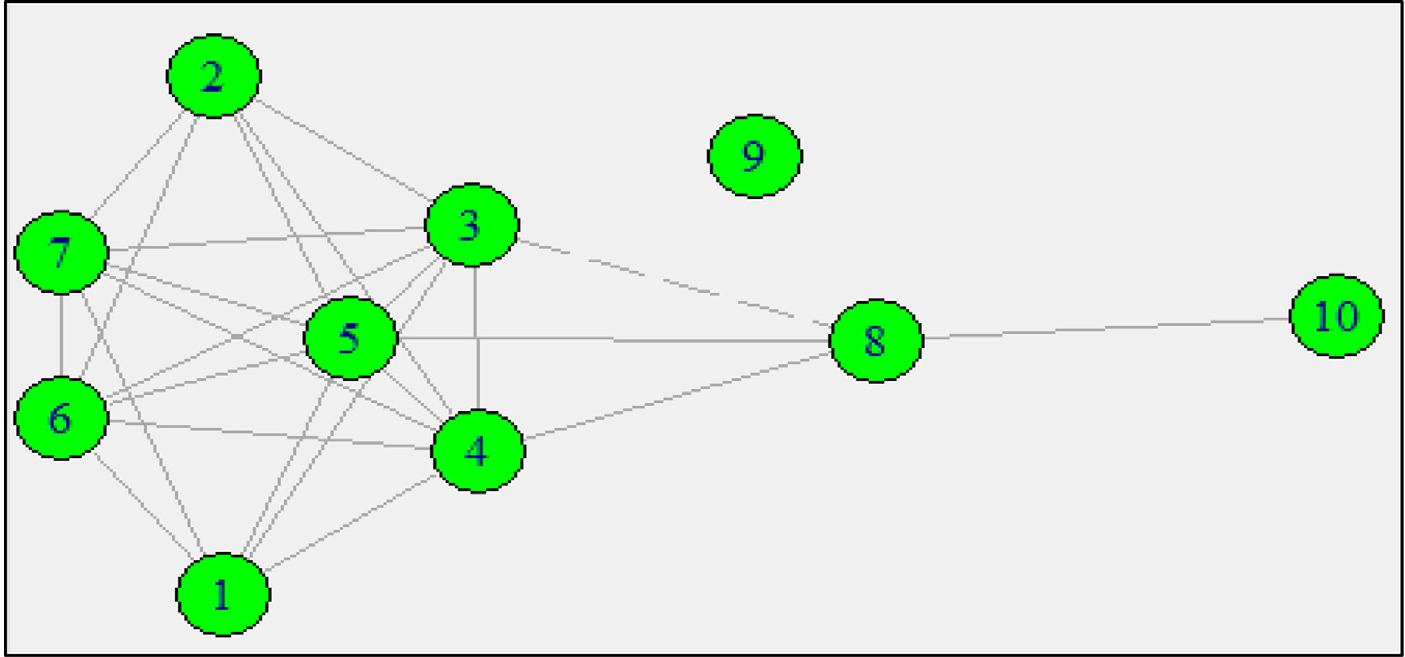 Figure 3: A visual representation of how a standard 'Kite' network is transformed into a vague, anonymized version.