
Harmonizing Social Media with Business Logic: The Contextual OLAP Dimension
Expert Systems With Applications
This paper introduces a novel "Contextual Dimension" for OLAP systems, integrating unstructured social network text into multidimensional data models. By employing hierarchical clustering and the Wonder 3.0 OLAP server, it enables seamless cross-analysis between textual topics and structured business data.
TL;DR
In the era of Big Data, the wall between structured business databases and the chaotic world of social media text remains a significant barrier for decision-making. This paper presents a methodology to automatically transform social network posts into a "Contextual Dimension." By integrating this dimension into a standard OLAP (Online Analytical Processing) environment, analysts can finally "drill down" from a sales spike into the specific social contexts and topics that triggered it.
The Integration Gap: Why Traditional OLAP Fails at Text
Online Analytical Processing (OLAP) is the gold standard for analyzing structured data (e.g., Sales by Date, Location, or Product). However, social media data is a different beast—it is unstructured, multilingual, and semi-structured.
The core challenge is Automaticity and Integration. Prior works often treated text as a secondary attribute or required experts to predefine a taxonomy. The authors identify a critical need for a system that can:
- Automatically detect themes without human intervention.
- Remain language-independent.
- Support traditional OLAP operations like Dice, Roll-up, and Drill-down on textual concepts.
Methodology: The "Secret Sauce" of the Contextual Dimension
The authors decompose the "Contextual Dimension" into two distinct but related hierarchies: the Context Hierarchy and the Domain Hierarchy.
1. The Context Hierarchy (The "What")
This layer determines the broad themes (e.g., "Computer Science" or "Anatomy").
- Preprocessing: Uses Stanford POS and NER tools to filter noise and focus on nouns.
- Disambiguation: Employs the Lesk algorithm and WordNet Domains to ensure "Java" refers to the programming language, not the coffee.
- Clustering: Uses Hierarchical Agglomerative Clustering (HAC) to group similar texts. The optimal "cut" of the dendrogram is determined by the Silhouette Coefficient, ensuring the groups are meaningful.
2. The Domain Hierarchy (The "How It's Talked About")
Once a context is identified, the system builds an AP-Structure based on frequent itemsets. This allows the system to represent the specific vocabulary and associations within a topic, enabling granular queries.
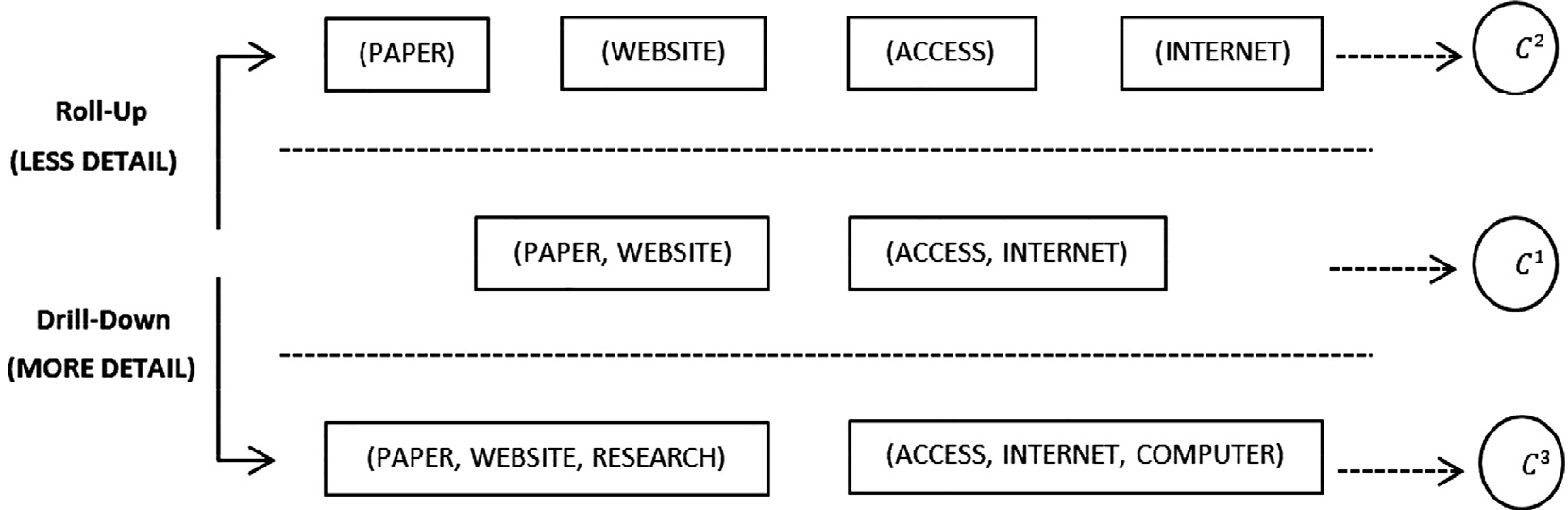 Fig 1: The three-module methodology leading to the generation of the Contextual Dimension.
Experiments: Real-World Validation
The system was tested using the Wonder 3.0 OLAP server on two diverse datasets:
- Sentiment140 (Twitter): English posts.
- Dreamcatchers: A collaborative Spanish platform.
The stability of the context detection was measured using the Silhouette Coefficient across different document volumes (from 5,000 to 30,000 documents). Results showed that as the number of documents grows, the clustering structure stabilizes, particularly around the 60-100 cluster mark for complex social data.
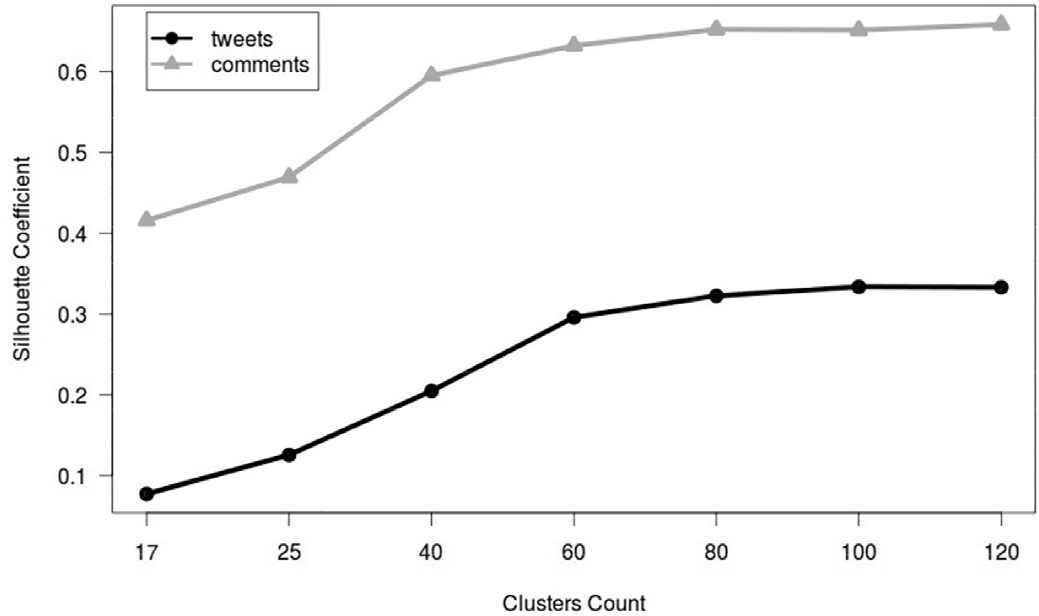 Fig 2: Silhouette Coefficient for various data sizes, indicating the quality of the automatically generated context hierarchy.
Query Performance
A critical aspect of OLAP is speed. Despite the added complexity of textual processing, the system maintained impressive response times:
- Query 1 (1680 docs): 1325 ms
- Query 2 (1680 docs): 290 ms
- Query 4 (910 docs): 539 ms
The difference in speed highlights that once the cube is built, browsing the domain hierarchy (Query 2) is significantly faster than initial context retrieval.
Critical Insight & Future Outlook
While this research 2017-era work relies on classical NLP (WordNet, HAC, Apriori) rather than modern Transformers (BERT, Llama), its architectural logic remains highly relevant. Specifically, the concept of an "AP-Structure" to handle the sparsity of text in a multidimensional cube provides a robust framework for current engineers trying to bridge Vector Databases with SQL-based Business Intelligence.
Limitations: The reliance on external lexical resources like WordNet Domains may limit the system's ability to handle extremely niche slang or rapidly evolving internet neologisms.
Future Work: The authors suggest extending this model to include Sentiment Analysis and Entity Extraction as additional layers within the Contextual Dimension, allowing for even more nuanced business insights—such as "Show me the negative sentiment trends for Internet topics in London during March."
Summary
By treating text not as a blob but as a structured hierarchy, this paper transforms "social noise" into "business signal," providing a scalable path for organizations to include the voice of the customer directly in their analytical workflows.