
Legal Ontologies Over Time: Mapping 30 Years of AI & Law Evolution
Expert Systems With Applications
This paper presents a Systematic Mapping Study (SMS) of legal ontologies developed over the last 30 years. It categorizes 78 primary studies using a multi-dimensional framework covering purpose, generalization levels, legal theories (e.g., Kelsen, Hart, Hohfeld), and engineering methodologies to define the SOTA in AI & Law knowledge representation.
TL;DR
This comprehensive systematic mapping study (SMS) analyzes three decades of legal ontology research. It reveals a field that has transitioned from classical logic-based models to Semantic Web standards (OWL/RDF) but still struggles with formal evaluation and the manual labor of ontology engineering. The research highlights the dominance of positivist legal theories and identifies a significant gap in addressing contemporary "value-based" legal philosophies.
Background & Motivation: Beyond "Reinventing the Wheel"
In the legal world, information is heterogeneous, dispersed, and conceptually dense. Over the last 30 years, Legal Ontologies have emerged as the backbone for Case-Based Reasoning, Semantic Search, and Legal Expert Systems. However, the field has long been criticized for a lack of reusability. Authors Rodrigues et al. argue that to reach a level of "prefabricated models," we must first map what has been built, how it was theorized, and where the "anomalies" lie.
Methodology: The Ten Dimensions of Legal Knowledge
The study utilizes a rigorous SMS protocol to filter 4,315 candidates down to 78 primary studies. These are mapped across several critical dimensions:
- Generality: From Foundation/Upper ontologies to specific Application models.
- Legal Theory: Rooting technical bits in the philosophy of Hans Kelsen, Herbert Hart, and Wesley Hohfeld.
- Purpose: Is the ontology for Understanding, Reasoning, or Semantic Indexing?
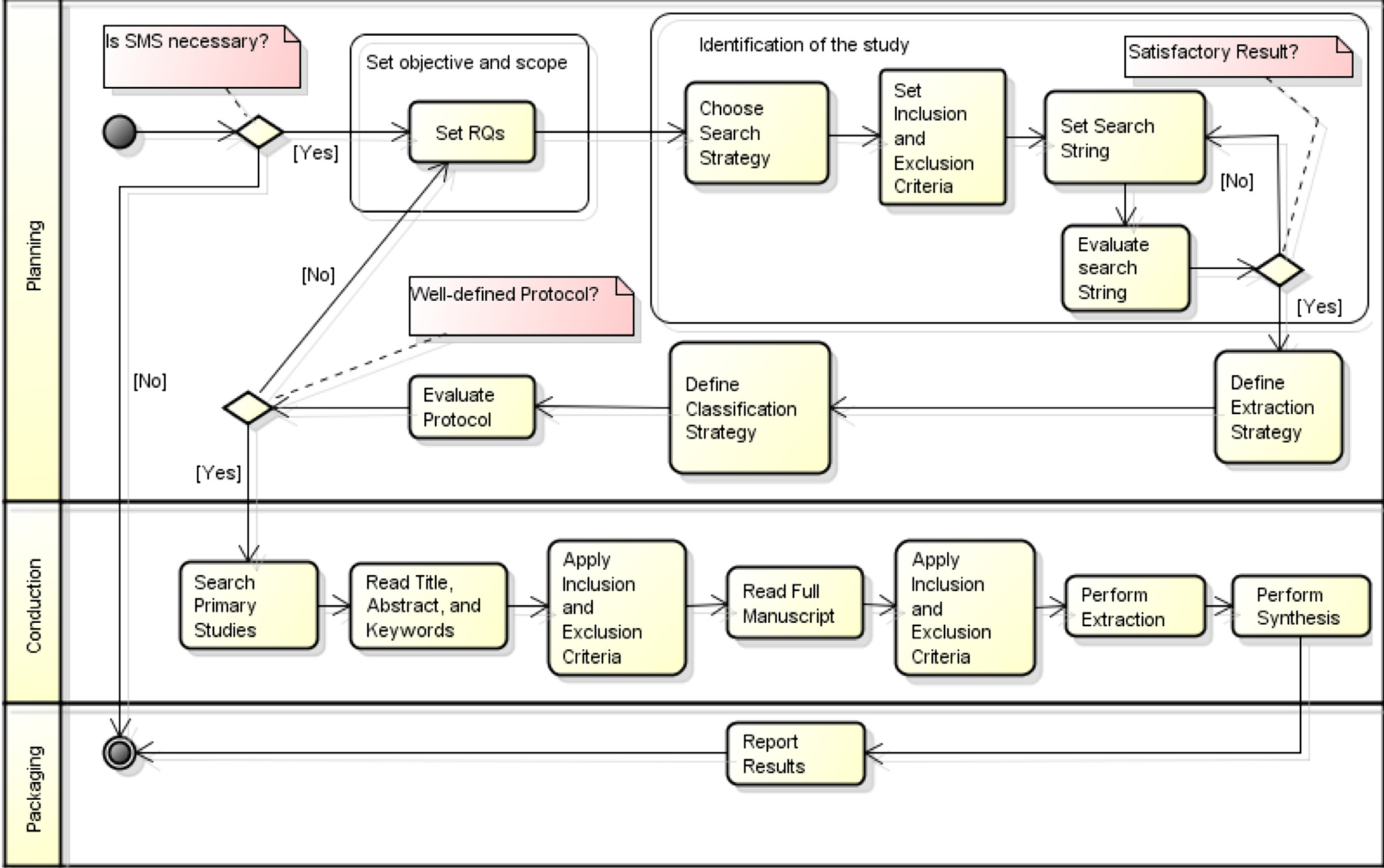 Fig 1: The Systematic Mapping Protocol workflow.
Key Insights: The Philosophical and Technical Landscape
1. The Triad of Legal Theory
One of the most profound insights is the "Kelsen-Hart-Hohfeld" dominance. Nearly 88% of studies that explicitly mention a theory align with these positivist views. This means most ontologies focus on norms, permissions, and obligations as a closed, descriptive system. There is a visible "abyss" when it comes to contemporary theories (like Alexy's) that involve principles and social values.
2. The Rise of the Semantic Web
The maturity of the field is inextricably linked to the Semantic Web. As shown in the study, the mid-2000s saw a vertiginous increase in publications following the standardization of OWL and RDF.
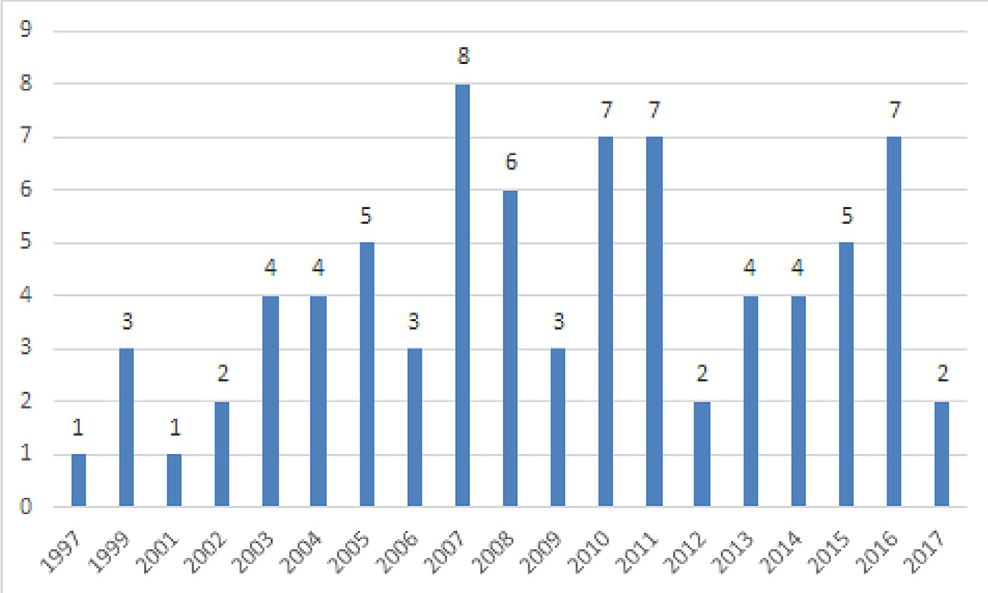 Fig 2: Evolution of Legal Ontology publications, showing the Semantic Web surge.
3. Engineering vs. Evaluation
While Methontology and Ontology Development 101 are popular methodologies, the actual construction (93.5%) remains a manual, artisan task. More concerning is the Evaluation Gap: 41% of studies do not report any formal validation or verification, leaving the reliability of these legal "expert" systems in question.
Dealing with Legal Anomalies
The legal domain is "porous." The study categorizes two types of challenges:
- Syntactic: Incompleteness and cross-referencing between thousands of moving documents.
- Semantic: The "Open-texture" of law—concepts that are intentionally vague to allow for judicial discretion (e.g., "due diligence").
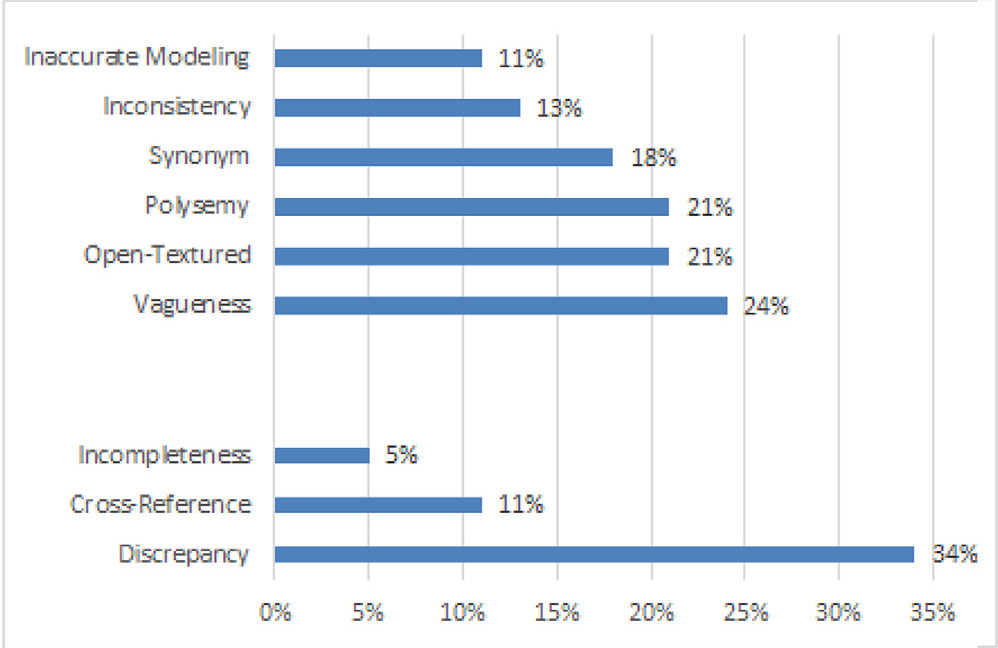 Fig 3: Distribution of identified legal anomalies.
Critical Analysis & Conclusion
This study serves as a "GPS" for anyone entering the AI & Law space. It indicates that while the technical infrastructure (OWL/DL) is mature, the methodological rigor in evaluation and automation in construction are the next frontiers.
Takeaway for Practitioners: Don't build from scratch. Look at the mapped sub-domains (Criminal, Contractual, Privacy) and leverage the identified core ontologies like LKIF or LRI-Core to ensure your system isn't just another isolated "toy" model.
Limitations: The study notes that the search was limited to English-language digital libraries, potentially missing foundational work in other languages (e.g., German, French, or Chinese legal systems).