
Social Network Analytics for Churn: Lessons from 8 Global Telco Datasets
Expert Systems With Applications
This paper presents a comprehensive benchmarking study of Social Network Analytics (SNA) for customer churn prediction in the telecommunications industry, evaluating methods across eight global Call-Detail Record (CDR) datasets. The researchers propose an optimized framework that integrates Relational Learners (RL) with Non-Relational Classifiers (NRC) and identifies the most effective network architecture for churn detection.
TL;DR
Predicting which customers will leave a mobile carrier is a high-stakes game. This study provides the first large-scale statistical benchmark of Social Network Analytics (SNA) for churn, proving that while social ties matter, simpler is often better. By combining traditional classifiers with network-derived scores, companies can significantly boost predictive power without the computational overhead of complex propagation algorithms.
The "Churn Influence" Problem
Why do customers leave? Often, it's because their friends did. Traditional models treat customers like islands, missing the "social contagion" of churn. However, the industry has struggled with how to build these social graphs. Should we care about the direction of the call? Does a 10-minute call count more than a 1-minute call? This paper systematically deconstructs these choices.
Methodology: The RL vs. NRC Battle
The authors split the approach into two main categories:
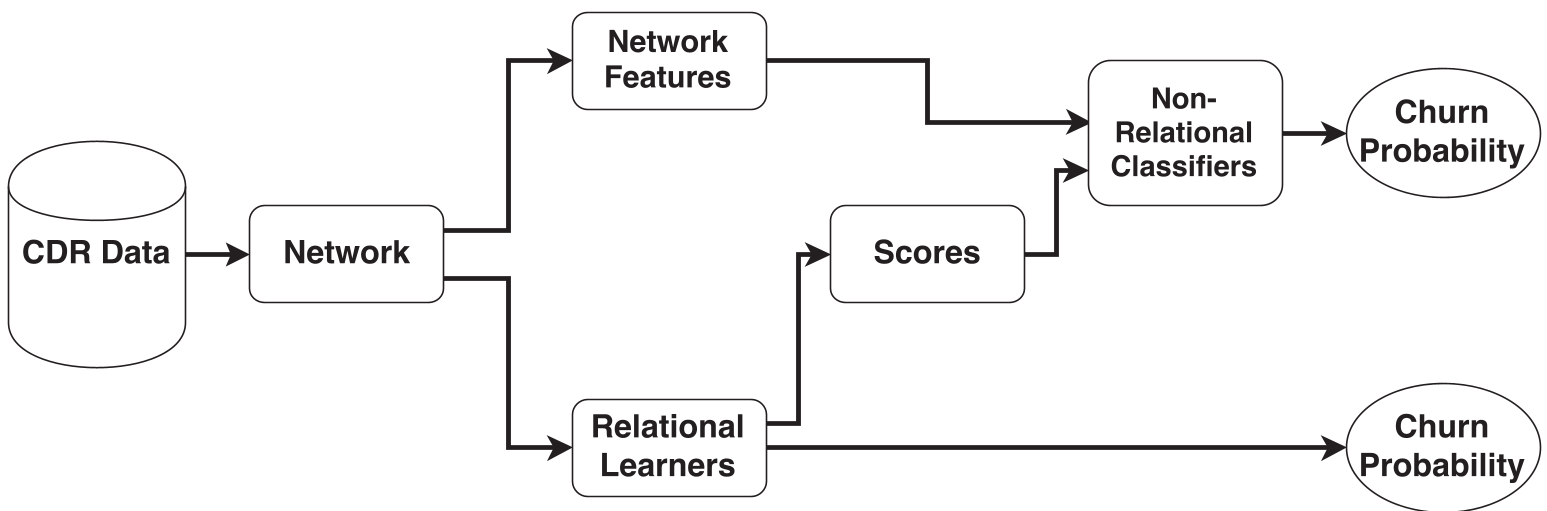
- Relational Learners (RL): These models propagate churn "scores" through the network. If your neighbor is a churner, your score goes up.
- Non-Relational Classifiers (NRC): Traditional models (Logistic Regression, Random Forests, Neural Nets) enriched with local features like "number of friends who churned."
The Model Building Process
The study utilizes a rigorous workflow: preprocessing CDR data, constructing graphs, applying relational classifiers, and evaluating via profit-centric metrics like EMP (Expected Maximum Profit).
Key Insight: Simple Networks, Powerful Results
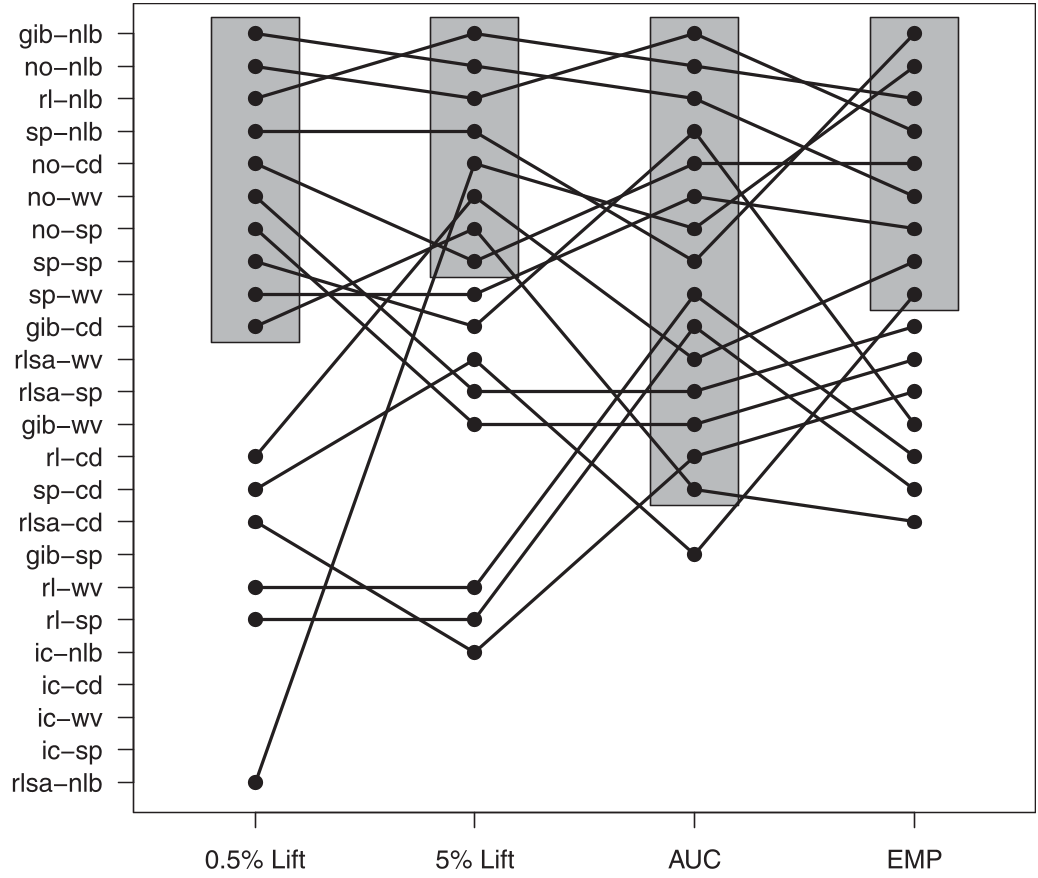
One of the most striking findings involves Network Architecture. The researchers tested over 500 network variations and found:
- Undirected is King: Knowing who called whom (directionality) adds little value compared to just knowing a connection exists.
- Binary Weights Suffice: A simple 0 or 1 (connected or not) is often more robust than using call duration or frequency.
- Recency Matters: Using time-decay to give more weight to recent calls slightly improves performance, reflecting that social influence fades over time.
Results & Discussion
The study highlights that Collective Inference (CI)—the iterative process of re-calculating scores as labels update—actually fails to improve results in telco settings. As seen in the sensitivity analysis, the "churn signal" becomes diluted after just a few iterations in these sparse networks.
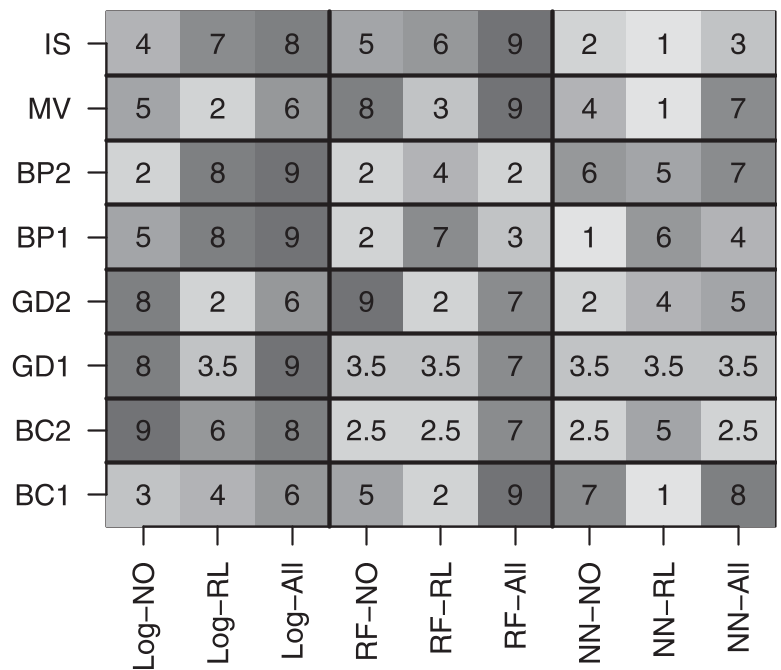
Standard classifiers (like Random Forests) using "Network Variables" (NO) and "Relational Scores" (RL) achieved the best results across almost all datasets.
Critical Analysis & Conclusion
Takeaway for Practitioners
If you are building a churn model today:
- Construct an undirected binary network.
- Extract simple degree and neighbor-churn counts.
- Feed these as features into a Random Forest or XGBoost model.
- Skip the complex iterative propagation (Collective Inference).
Limitations & Future Work
The study lacks "local" variables like pricing plans and demographics due to privacy constraints on the CDR datasets. Future research should explore how these SNA methods interact with deep learning techniques like Graph Convolutional Networks (GCNs) to see if the "simple is best" rule still holds.
Bottom Line: Social Network Analytics is a must-have for churn prediction, but the implementation should remain lean and profit-focused.