
Beyond Biometrics: Reimagining Family Photo Classification with Geometry and Fractional Entropy
Expert systems with applications: X
The paper introduces a novel classification framework to distinguish between "family" and "non-family" photos by combining facial geometric features (spatial and angular) with fractional entropy-based texture analysis. Leveraging Convolutional Neural Networks (CNNs), the method achieves state-of-the-art performance, notably reaching a 97.59% average classification rate on benchmark datasets.
TL;DR
Researchers have developed a new method to classify family vs. non-family photos that looks beyond just individual faces. By combining facial geometric coherence with Fractional Entropy texture analysis, and feeding these into a CNN, the system achieves a staggering 97.59% accuracy on benchmark tests, outperforming traditional face-recognition-based systems.
Background: Why Face Recognition Isn't Enough
Identifying family relationships in social media photos is a "wild" problem. Unlike controlled biometric scans, family photos feature diverse backgrounds, multiple facial expressions, varying lighting, and intentional group arrangements. Existing methods traditionally focus on Kinship Verification (identifying a specific child-parent link) but often fail at the broader task of classifying a group as a "family" because they ignore the spatial logic of how families stand together and the textures of the environments they inhabit.
The Core Insight: Geometry & Texture Coherence
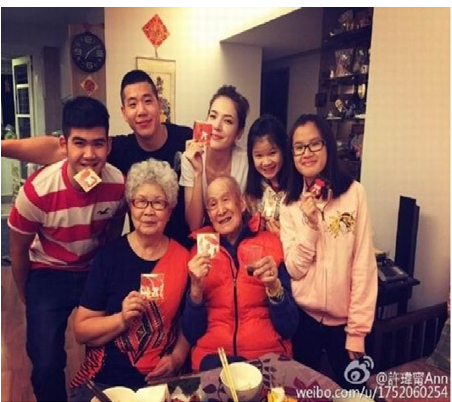
The authors argue that family photos possess an inherent spatial and directional coherence. Family members tend to be arranged in hierarchical or staggered orders, and the background "context" (e.g., a home vs. a corporate office) provides discriminative cues.
1. Geometric Spatial & Angle Features
Instead of looking at the face as a set of pixels, the method extracts:
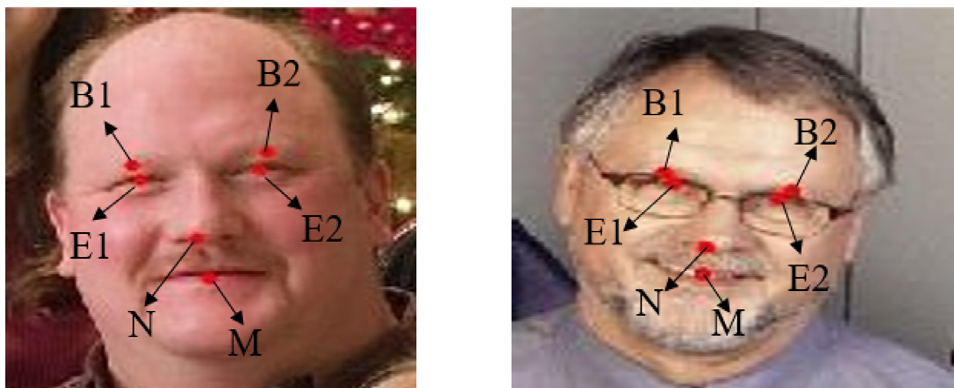
- Distances: Measuring the major and minor axes based on 68 key facial landmarks.
- Angles: Constructing triangles and rectangles between eyebrows, eyes, nose, and mouth to capture the "structural fingerprint" of the faces.
- Averaging Logic: By computing the mean distance and angle across all faces in an image, the method distinguishes the similarity found in families from the randomness in "non-family" groups (like colleagues or strangers).
2. Tsallis Fractional Entropy (Texture Analysis)
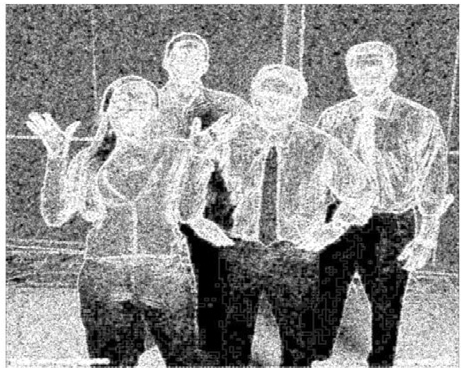
The method introduces Fractional Entropy to study the "roughness" or regularity of patterns in an image. Since families often appear in specific settings (indoor comfort or outdoor leisure), the texture frequency changes sharply at edges and regions of interest.
- Insight: Family photos often show smoother transitions in group arrangement, while non-family photos show higher variations in texture and pose.
Methodology: The Hybrid Architecture
The workflow follows a rigorous pipeline:
- Face Alignment: Detecting landmarks at 3000 FPS.
- Feature Extraction: Generating a 26-dimensional vector (8 distances + 16 angles + Mean/Variance of Fractional Entropy).
- Classification: Passing this low-dimensional but high-value vector into a Convolutional Neural Network (CNN).
Interestingly, the authors found that feeding these "handcrafted" geometric features into a CNN performed better than feeding the CNN raw pixels, especially when the training data size is limited.
Experimental Showdown: Breaking the SOTA
The researchers tested their method on a custom dataset and the large-scale Benchmark dataset.
| Method | Custom Dataset (ACR) | Benchmark Dataset (ACR) |
|---|---|---|
| Wang et al. (2015) | 69.42% | 81.79% |
| Wang et al. (2017) | 80.11% | 90.06% |
| Proposed Method | 86.34% | 97.59% |
Key Findings:
- Whole Image vs. Face Only: Combining facial texture (FEF) with background texture (FEB) provided significantly higher accuracy than using face regions alone.
- The Power of Averaging: Calculating the mean of features across all faces was critical; without this averaging step, performance plummeted significantly.
Critical Insight & Future Outlook
While the system is highly effective, it faces challenges when family and non-family groups share similar background patterns and foreground arrangements. The authors suggest that multimodal features—such as analyzing clothing (dress), skin tone, and body structure—could be the next frontier to reach 100% accuracy.
Conclusion
This paper proves that "family" is more than just a collection of faces—it's a geometric and textural pattern. By mathematically defining the directional coherence of group photos, this research provides a vital tool for solving real-world social challenges like human trafficking and large-scale photo clustering.