
Seeing the Bias: How XAI Empowers Children to Challenge AI "Truth"
Using Explainability to Help Children UnderstandGender Bias in AI
This paper introduces an educational platform designed to teach preadolescents (ages 10-14) about gender bias in machine learning. It leverages Grad-CAM as a visual explainability technique, allowing children to see which image features (e.g., stereotypical objects vs. the person) drive a classifier's predictions, ultimately improving their ability to recognize algorithmic discrimination.
TL;DR
As AI becomes a staple of childhood—from Alexa to educational apps—understanding its flaws is critical. This research proves that using Explainable AI (XAI) techniques like Grad-CAM can help children as young as 10 years old peel back the curtain on algorithmic gender bias. By showing why a model thinks a person is a "woman" (perhaps because of a kitchen utensil in the background), we can move children from blind trust to critical inquiry.
The "Black Box" Problem in the Classroom
Modern Machine Learning (ML) is notorious for being a "black box." For adults, this is a technical hurdle; for children, it’s a cognitive trap. Research indicates that children often view AI as objectively "smarter" than humans and inherently truthful.
The core difficulty lies in Inductive Bias. If an AI classifies a woman in a kitchen correctly, a child assumes the AI "recognized" the woman. They rarely suspect the AI actually ignored the person and focused entirely on the stove. This study addresses this gap by making the invisible visible.
Methodology: Visualizing the "Neural Thought"
The researchers developed a platform where children interact with the three stages of ML: Labeling, Training, and Prediction.
The "secret sauce" is the integration of Grad-CAM (Gradient-weighted Class Activation Mapping). When the model makes a prediction (e.g., "Man"), it generates a saliency map—a red heat map over the regions of the image that carried the most weight in that decision.
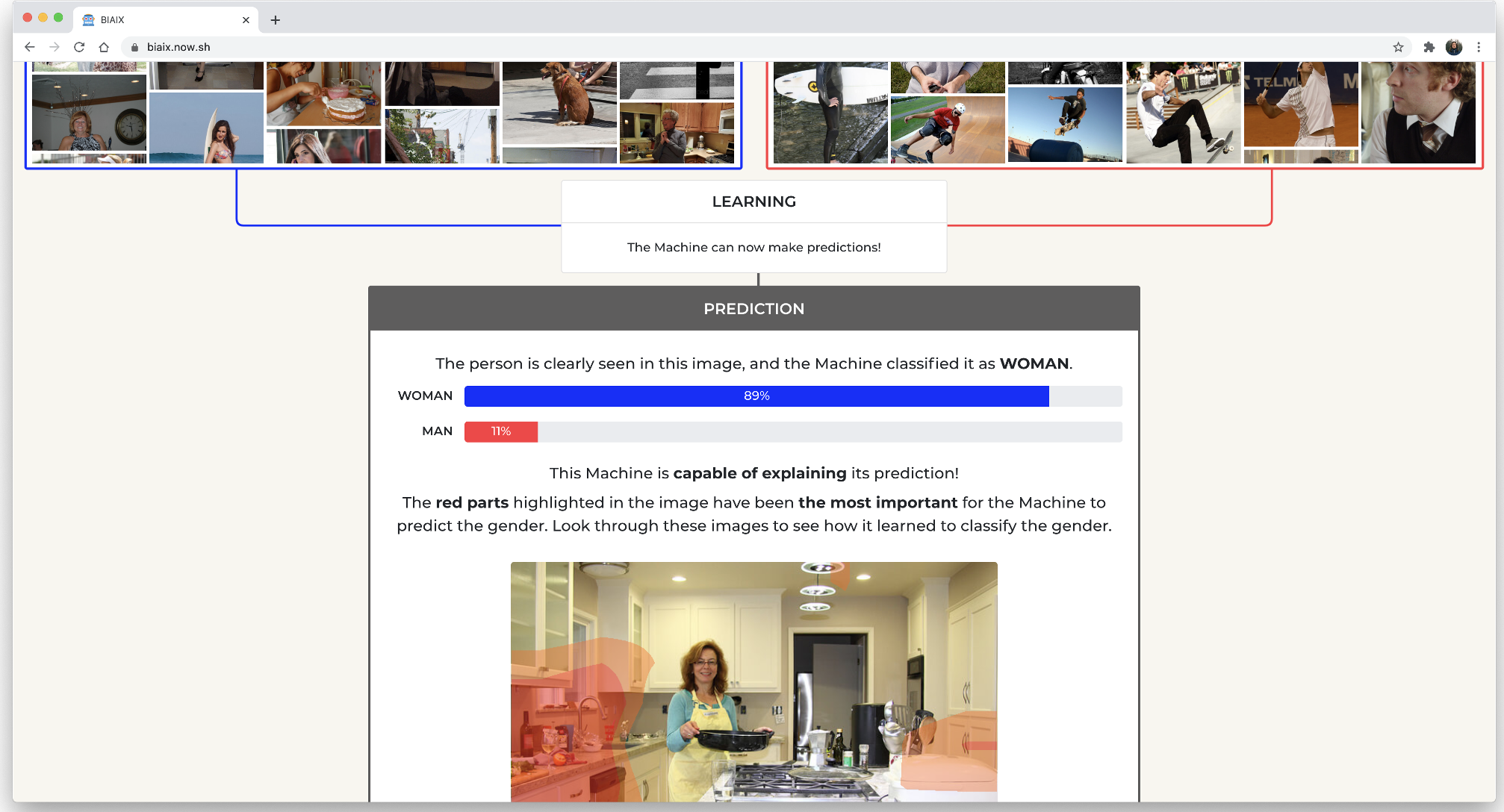 Figure 1: The Bias Visualization Tool showing how Grad-CAM highlights stereotypical objects (like a snowboard) to explain a "Man" prediction.
The Dataset: A Mirror of Society
The team used the MS-COCO dataset, a gold standard in AI research that is unfortunately ripe with gender stereotypes. For instance, images of snowboards are statistically biased toward men, while handbags are biased toward women. This provided the perfect "teachable moment" for children to see how biased data creates biased logic.
Experimental Insights: Breaking the Trust
The study compared a control group (prediction only) with a treatment group (prediction + Grad-CAM explanation).
Key Result: Identifying "Wrong" Evidence
The results were striking. When asked what the system used to make a prediction, the control group assumed the AI was looking at the person 64% of the time. The treatment group, seeing the visual evidence, realized the AI was often looking at "other" things (objects/background) more frequently.
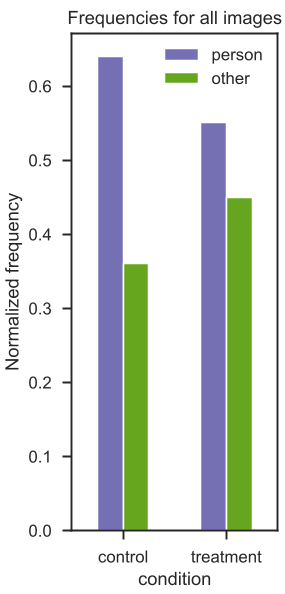 Figure 2: Distribution of participants' ability to recognize that the model relied on background objects rather than the person.
Generalization to Unrelated Bias
Can children take what they learned about gender and apply it to, say, a dog vs. cat classifier? The study suggests yes. Children in the XAI group were better at identifying potential bias in new, unseen scenarios, proving that explainability fosters a deeper conceptual understanding of how data shapes outcomes.
Critical Analysis: The Future of AI Literacy
The significance of this work lies in its shift of XAI’s target audience. Traditionally, Grad-CAM is a tool for PhDs to debug a CNN. Here, it is a transparency bridge for a 12-year-old.
Limitations & Ethics
- Binary Constraints: The study used binary gender (Man/Woman) due to dataset limitations. The authors acknowledge this as a limitation and plan to include non-binary identities in future versions to avoid reinforcing the very "gender reductionism" they seek to critize.
- Contextual Sensitivity: Children's social backgrounds greatly influence how they perceive these biases.
Conclusion: From Users to Critics
This study is a call to action for educators. We shouldn't just teach children how to code AI; we must teach them how to interrogate it. By integrating explainability into early education, we can ensure the next generation of developers and citizens doesn't just build faster models, but fairer ones.
Takeaway: Transparency isn't just a technical feature; it's a fundamental right for the users of AI, regardless of age.